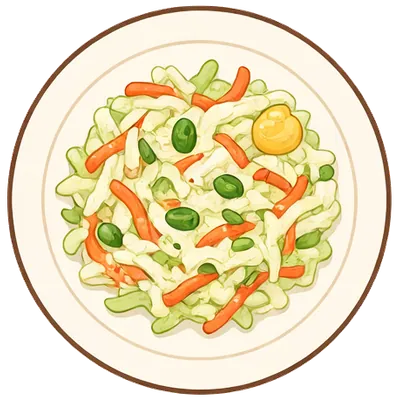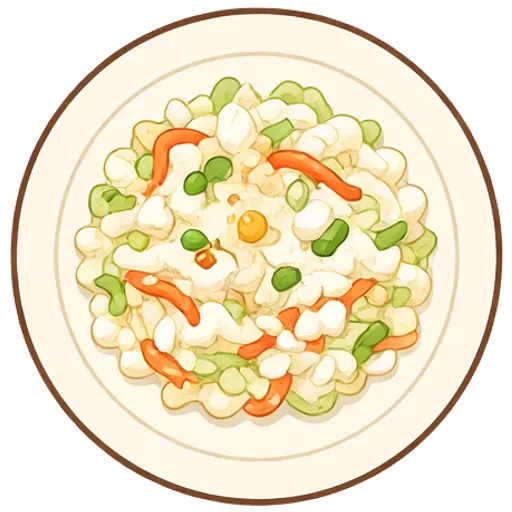
Classic creamy coleslaw
Crunchy, tangy and a little sweet, the cookout coleslaw that tastes better after it sits, so you make it first and forget about it.
- 45 min total
- 10 min hands-on
- Anyone can make this
- Serves 8
- About $0.66 a serving
- 170 calories
- Good the next day
- Vegetarian
- Gluten-free
- Dairy-free

Dolly says: Make the full amount. Whatever’s left keeps for tomorrow.
Ingredients
For 8 servings.
- ¾ cup mayonnaise
- 1 tsp Dijon mustard
- 2 packages coleslaw mix, 14 oz bags
From your pantry
- 2 tbsp apple cider vinegar
- 1 tbsp sugar
- ¾ tsp salt
- ½ tsp black pepper
Each serving has about 170 calories, 2 g protein, 8 g carbs and 16 g fat, and costs about $0.66 at typical US grocery prices. Both are estimates from what the recipe uses.
Missing something?
- No coleslaw mix? Green cabbage or red cabbage works.
Steps
Tap an underlined word for a quick explanation.
the mayonnaise, vinegar, sugar, mustard, salt and pepper in a large bowl until smooth.
Whisk. Whisking means beating quickly with a whisk or a fork to blend things together. It smooths out lumps and mixes eggs, oil or sauces evenly.
How you’ll know: It all looks one even color and texture, with no streaks or lumps.
Add the coleslaw mix and with tongs until it’s all coated.
Toss. Tossing means gently lifting and turning food so everything gets coated, like pasta in sauce or vegetables in oil. It coats every piece evenly without mashing anything.
How you’ll know: Every piece looks glossy or evenly coated, with no dry spots hiding underneath.
Cover and chill at least 30 minutes so the cabbage a little and soaks up the dressing.
Softened. For vegetables it means cooked until they bend and lose their crunch; for butter, left out until it dents easily. Soft onions taste sweet, and soft butter mixes in smoothly.
How you’ll know: Onions squash easily against the pan with your spoon, and butter dents under a finger without looking greasy.
Timer: 30 min
 Dolly’s tip: It looks dry at first. The cabbage lets go of some water as it sits and the dressing loosens up.
, taste, and add more salt or sugar if it needs it, then serve cold.
Stir. Stirring means moving food around with a spoon or spatula so it cooks evenly and doesn’t stick. Unless the recipe says constantly, every so often is plenty, and it gives food time to brown.
How you’ll know: When you drag the spoon across the bottom, nothing is sticking or scorching.
Pinch. A pinch is what you can hold between your thumb and two fingers, less than an eighth of a teaspoon. It’s a small, forgiving amount, so there’s no need to measure.
How you’ll know: It’s a light sprinkle you can barely see on the food, not a little pile.
Dolly’s tip: Keep it in the fridge until you serve it, and put it back within 2 hours.Food safety: Food with mayonnaise, dairy, eggs, cooked meat or cream, like dips, salads and cream desserts, can sit out for 2 hours at most, or 1 hour above 90°F. Keep cold food in the fridge or on ice until serving, and hot food at 140°F or hotter.

Plan this in Dollop, and get the grocery list
When you host a dinner, Dollop builds the menu around your guests’ allergies, works out a cooking timeline back from when everyone sits down, and puts it all on one grocery list.