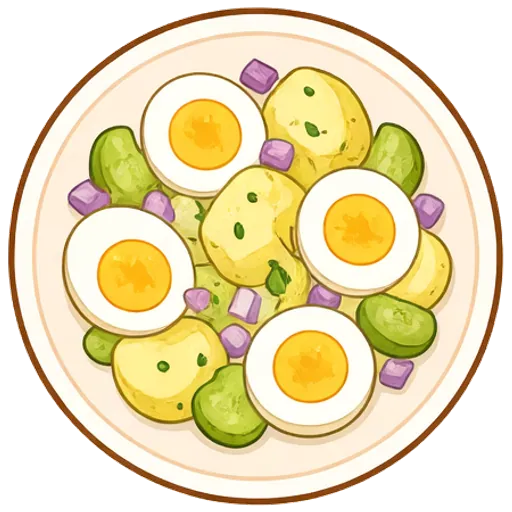
Classic potato salad
Creamy, tangy, old-fashioned potato salad with eggs, pickles and a little mustard, made the day before so it’s cold and ready when you are.
- 120 min total
- 30 min hands-on
- Follow-a-recipe easy
- Serves 8
- About $1.29 a serving
- 350 calories
- Good the next day
- Vegetarian
- Gluten-free
- Dairy-free

Dolly says: Make the full amount. Whatever’s left keeps for tomorrow.
Ingredients
For 8 servings.
- 3 lb red potatoes
- 4 large eggs
- ½ cup dill pickles
- 2 stalks celery
- ½ red onion
- 1 cup mayonnaise
- 1 tbsp yellow mustard
From your pantry
- 4 tsp salt, divided
- 2 tbsp apple cider vinegar
- ½ tsp black pepper
- ¼ tsp paprika
Each serving has about 350 calories, 7 g protein, 29 g carbs and 23 g fat, and costs about $1.29 at typical US grocery prices. Both are estimates from what the recipe uses.
Missing something?
- No red onions? White onions or yellow onions work.
- No yellow mustard? Dijon mustard works.
Steps
Tap an underlined word for a quick explanation.
Scrub the potatoes and cut them into ¾-inch , leaving the skins on.
Cube. Cubing means cutting food into chunky, even squares, usually three quarters of an inch to an inch. Same-size cubes cook at the same speed and brown on every side.
How you’ll know: Your pieces look like a handful of sugar cubes, a little bigger than diced, all close to the same size.
Put them in a large pot, cover with cold water by 1 inch, add 1 tablespoon salt, and over high heat.
Bring to a boil. It means heating a liquid on high until it’s fully boiling before you move on. A lid on the pot gets it there faster, which makes it a good moment to chop something.
How you’ll know: Big bubbles break all over the surface, and they keep coming when you lift the lid.
High heat
Gently lower in the eggs with a spoon, turn the heat to medium, and 11 minutes, until the potatoes are just tender when poked with a knife.
Simmer. Simmering means keeping a liquid just below a boil, with small bubbles rising gently. It cooks food evenly and lets a sauce thicken without scorching on the bottom.
How you’ll know: Small, lazy bubbles break the surface every second or so, and nothing is churning.
Medium heatTimer: 11 min
 Dolly’s tip: The eggs cook right in the potato water, so it’s one pot and one timer.
Food safety: For the safest eggs, cook until the whites are fully set and the yolks begin to thicken. Dishes made with eggs are done at 160°F.
, drop the eggs into a bowl of cold water, and spread the potatoes on a .
Drain. Draining means pouring off liquid, like tipping pasta into a colander or spooning extra fat out of the pan. Pour hot grease into a can or jar, not the sink, where it hardens and clogs the pipes.
How you’ll know: Only a few drips are left, and the food isn’t sitting in a puddle.
Sheet pan. A sheet pan is a flat metal baking tray with a low rim all the way around. The rim catches juices, and the wide surface lets food spread out and brown.
How you’ll know: Everything fits in one layer with a little space between the pieces.
Sprinkle the hot potatoes with the vinegar and let them cool for 20 minutes.
Timer: 20 min
Dolly’s tip: Warm potatoes soak up the vinegar, which seasons them all the way through.Meanwhile, and the eggs, and the pickles, celery and onion.
Peel. Peeling means removing the skin with a vegetable peeler or a small knife. It takes off tough or bitter skins, though potato and carrot skins are fine to leave on unless the recipe insists.
How you’ll know: The color underneath is even all over, with no patches of skin left behind.
Chop. Chopping means cutting food into bite-size pieces that don’t need to be neat. Keep them roughly the same size so everything cooks evenly.
How you’ll know: Your pieces are about half an inch and roughly alike, even if none of them are pretty.
Finely chop. Finely chopping means cutting food into small pieces, a little bigger than minced, about the size of a lentil. Small pieces spread their flavor through the dish and cook quickly.
How you’ll know: Nothing is bigger than a lentil, and the pile looks like confetti rather than paste.
the mayonnaise, mustard, pepper and 1 teaspoon salt together in a large bowl.
Stir. Stirring means moving food around with a spoon or spatula so it cooks evenly and doesn’t stick. Unless the recipe says constantly, every so often is plenty, and it gives food time to brown.
How you’ll know: When you drag the spoon across the bottom, nothing is sticking or scorching.
the potatoes, eggs, pickles, celery and onion until everything is coated.
Fold. Folding means mixing gently by scooping from the bottom and turning it over the top, instead of stirring hard. It keeps light mixtures airy and soft things like berries or herbs in one piece.
How you’ll know: You use slow, wide strokes and stop as soon as there are no streaks left.
Cover and chill at least 1 hour, then dust with paprika and serve cold.
Timer: 60 min
Dolly’s tip: Keep it in the fridge until it’s time to eat, and put it back within 2 hours.Food safety: Food with mayonnaise, dairy, eggs, cooked meat or cream, like dips, salads and cream desserts, can sit out for 2 hours at most, or 1 hour above 90°F. Keep cold food in the fridge or on ice until serving, and hot food at 140°F or hotter.

Plan this in Dollop, and get the grocery list
When you host a dinner, Dollop builds the menu around your guests’ allergies, works out a cooking timeline back from when everyone sits down, and puts it all on one grocery list.