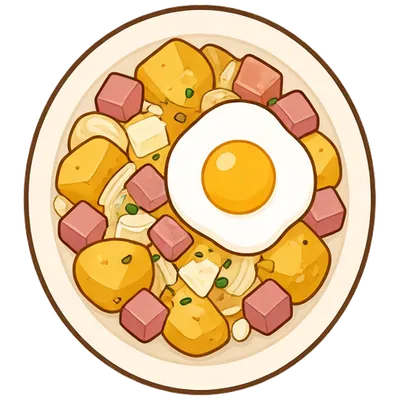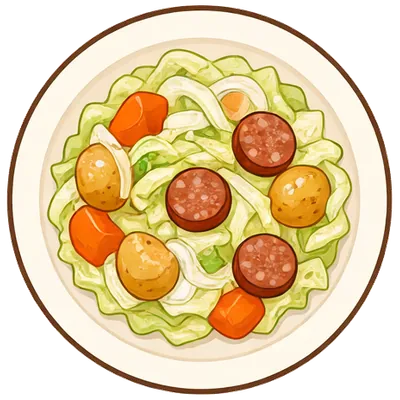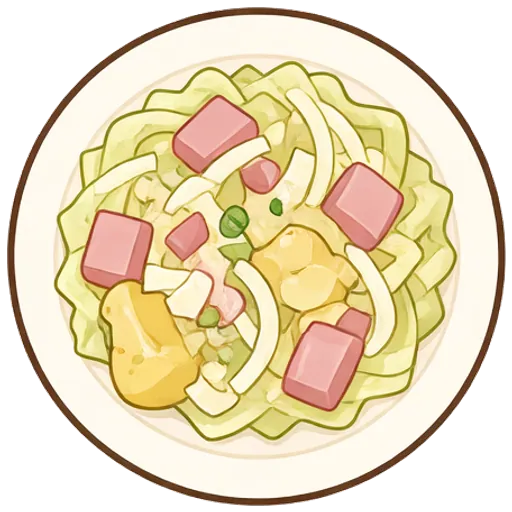
Southern fried cabbage with ham and potatoes
Buttery cabbage fried until sweet and browned at the edges with crispy potatoes and ham, a one-skillet Southern supper for pennies.
- 40 min total
- 35 min hands-on
- Anyone can make this
- Serves 4
- About $1.96 a serving
- 300 calories
- Good the next day
- Gluten-free

Dolly says: Make the full amount. It’s just as good for lunch the next day.
Ingredients
For 4 servings.
- 2 russet potatoes
- 3 tbsp butter
- 8 oz diced cooked ham
- 1 yellow onion, sliced
- ¾ head green cabbage
- 2 cloves garlic, minced
From your pantry
- 1¼ tsp salt, divided
- ½ tsp black pepper
- ¼ tsp red pepper flakes (optional)
- 1 tsp apple cider vinegar
Each serving has about 300 calories, 15 g protein, 36 g carbs and 12 g fat, and costs about $1.96 at typical US grocery prices. Both are estimates from what the recipe uses.
Missing something?
- No russet potatoes? Yukon Gold potatoes work.
- No butter? Ghee works.
- No yellow onions? White onions or red onions work.
- No green cabbage? Red cabbage or coleslaw mix works.
Steps
Tap an underlined word for a quick explanation.
Scrub the potatoes and cut them into ½-inch . the cabbage and it into 1-inch pieces.
Cube. Cubing means cutting food into chunky, even squares, usually three quarters of an inch to an inch. Same-size cubes cook at the same speed and brown on every side.
How you’ll know: Your pieces look like a handful of sugar cubes, a little bigger than diced, all close to the same size.
Core. Coring means cutting out the hard center of things like apples, peppers or cabbage. That center is tough and woody, so it’s the part you throw away.
How you’ll know: What’s left is all tender flesh, with no hard, pale center.
Chop. Chopping means cutting food into bite-size pieces that don’t need to be neat. Keep them roughly the same size so everything cooks evenly.
How you’ll know: Your pieces are about half an inch and roughly alike, even if none of them are pretty.
the butter in a large over medium-high. Add the potatoes and ½ tsp of the salt, cover, and cook 8 to 10 minutes, stirring now and then, until tender and .
Melt. Melting means gently heating something solid, like butter or cheese, until it turns liquid. Low or medium heat keeps it from browning or burning.
How you’ll know: It’s smooth and liquid, and butter may foam a little but hasn’t turned brown.
Skillet. A skillet is a frying pan: wide and flat with low, sloped sides. The shape lets steam escape, so food browns instead of stewing.
How you’ll know: It’s the pan you’d fry an egg in, and a 10 or 12 inch one handles most recipes.
Golden brown. Golden brown is the color of good toast, somewhere between yellow and light brown. It means the outside is cooked and crisp but not burnt.
How you’ll know: It looks like toast and smells toasty; dark brown with a bitter smell means it went too far.
Medium-high heatTimer: 9 min
 Dolly’s tip: The lid steams them through while the bottom browns. Poke one with a fork to check.
Add the ham and onion and cook 4 minutes, stirring, until the onion and the ham browns at the edges.
Softened. For vegetables it means cooked until they bend and lose their crunch; for butter, left out until it dents easily. Soft onions taste sweet, and soft butter mixes in smoothly.
How you’ll know: Onions squash easily against the pan with your spoon, and butter dents under a finger without looking greasy.
Medium-high heatTimer: 4 min
Pile in the cabbage with the rest of the salt, cover, and cook 5 minutes, until it down.
Wilt. Wilting means cooking leafy greens just until they go soft and collapse. Greens shrink a lot, so a big pile of spinach becomes a small handful, and that’s normal.
How you’ll know: The leaves turn soft and deep green and slump into the pan, usually within a minute or two.
Medium heatTimer: 5 min
Dolly’s tip: It looks like far too much cabbage. It shrinks to half in a few minutes.Uncover and cook 5 to 8 minutes more, stirring every minute or two, until the cabbage is tender with browned edges and everything is steaming hot.
Medium-high heatTimer: 6 min 30 sec
Food safety: Rotisserie chicken, deli meat, canned tuna and cooked shrimp are already cooked. Keep them cold until you use them, and heat them until steaming hot if the recipe warms them.
Stir in the garlic, pepper and pepper flakes for 30 seconds, then in the vinegar and serve.
Splash. A splash is a small, quick pour, about a teaspoon to a tablespoon. It’s there to loosen or brighten a dish, so the exact amount doesn’t matter.
How you’ll know: The dish looks a little looser or tastes a little brighter, not soupy.
Medium heat

Plan this in Dollop, and get the grocery list
Dollop puts this dinner on a night that suits your week, lists only what you still need to buy, and walks you through each step while you cook.