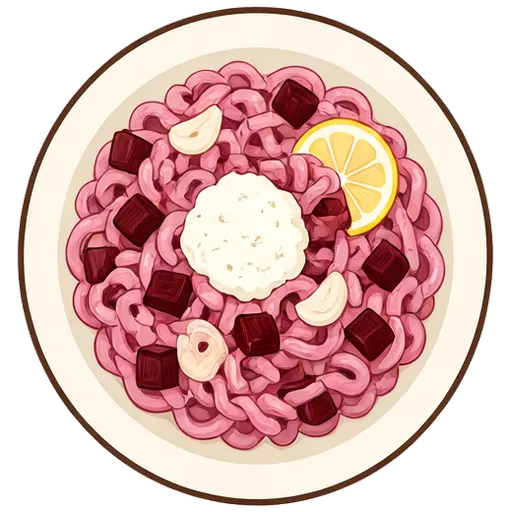
Pink beet pasta
Beets blended with goat cheese, garlic and lemon into a creamy, earthy, shockingly pink sauce that makes a plain Tuesday feel like a celebration.
- 35 min total
- 20 min hands-on
- Follow-a-recipe easy
- Serves 4
- About $2.03 a serving
- 450 calories
- Vegetarian
- Gluten-free

Dolly says: Read the steps once before you start. Everything goes smoother after that.
Ingredients
For 4 servings.
- 2 beets, medium
- 3 oz goat cheese, divided
- 1 clove garlic
- ½ lemon, juiced
- 12 oz gluten-free pasta, any shape; regular pasta works too
- 2 tbsp fresh basil, torn (optional)
From your pantry
- 2 tbsp water
- 1 tbsp salt, plus ½ tsp
- 2 tbsp olive oil
Each serving has about 450 calories, 11 g protein, 73 g carbs and 13 g fat, and costs about $2.03 at typical US grocery prices. Both are estimates from what the recipe uses.
Missing something?
- No lemons? Limes work.
Steps
Tap an underlined word for a quick explanation.
the beets and cut them into 1-inch . Put them in a microwave-safe bowl with the water, cover with a plate, and microwave 8 to 10 minutes, until a fork slides in easily.
Peel. Peeling means removing the skin with a vegetable peeler or a small knife. It takes off tough or bitter skins, though potato and carrot skins are fine to leave on unless the recipe insists.
How you’ll know: The color underneath is even all over, with no patches of skin left behind.
Cube. Cubing means cutting food into chunky, even squares, usually three quarters of an inch to an inch. Same-size cubes cook at the same speed and brown on every side.
How you’ll know: Your pieces look like a handful of sugar cubes, a little bigger than diced, all close to the same size.
Timer: 9 min
 Dolly’s tip: Beet juice stains. Wear a pair of gloves or wash your hands right away, and use a plate instead of your nicest board.
Fill a large pot with water, add the salt, cover and over high heat.
Bring to a boil. It means heating a liquid on high until it’s fully boiling before you move on. A lid on the pot gets it there faster, which makes it a good moment to chop something.
How you’ll know: Big bubbles break all over the surface, and they keep coming when you lift the lid.
High heat
Put the beets with any liquid, 2 ounces of the goat cheese, the garlic, lemon juice, oil and ½ teaspoon salt in a blender.
Cook the pasta until , tasting 2 minutes before the package time. Scoop out 1 cup of , then .
Al dente. Al dente is Italian for “to the tooth”: pasta cooked until tender but with a slight firm bite in the center. It holds up in sauce and keeps softening a little after you drain it.
How you’ll know: Bite a piece a minute before the package time: tender, with a slight firm bite in the middle and no crunch.
Reserve pasta water. It means scooping out a cup of the starchy cooking water before you drain the pasta. A splash helps the sauce cling and turn silky, and it’s the step everyone forgets.
How you’ll know: A mug of cloudy water is sitting by the stove before the pasta goes into the colander.
Drain. Draining means pouring off liquid, like tipping pasta into a colander or spooning extra fat out of the pan. Pour hot grease into a can or jar, not the sink, where it hardens and clogs the pipes.
How you’ll know: Only a few drips are left, and the food isn’t sitting in a puddle.
High heatTimer: 10 min
Dolly’s tip: Gluten-free pasta softens fast, so taste early and pull it with a little bite left.Add ½ cup of to the blender and blend until completely smooth and bright pink.
Reserve pasta water. It means scooping out a cup of the starchy cooking water before you drain the pasta. A splash helps the sauce cling and turn silky, and it’s the step everyone forgets.
How you’ll know: A mug of cloudy water is sitting by the stove before the pasta goes into the colander.
the pasta with the sauce in the pot, loosening with more if needed, and serve with the rest of the goat cheese on top and basil.
Toss. Tossing means gently lifting and turning food so everything gets coated, like pasta in sauce or vegetables in oil. It coats every piece evenly without mashing anything.
How you’ll know: Every piece looks glossy or evenly coated, with no dry spots hiding underneath.
Reserve pasta water. It means scooping out a cup of the starchy cooking water before you drain the pasta. A splash helps the sauce cling and turn silky, and it’s the step everyone forgets.
How you’ll know: A mug of cloudy water is sitting by the stove before the pasta goes into the colander.
Crumble. Crumbling means breaking food into small, rough bits with your fingers or a spoon, like feta or ground meat in the pan. Small bits spread through the dish, so there’s some in every bite.
How you’ll know: The pieces are small and uneven, about pea-size, with no big clumps left.

Plan this in Dollop, and get the grocery list
Dollop puts this dinner on a night that suits your week, lists only what you still need to buy, and walks you through each step while you cook.