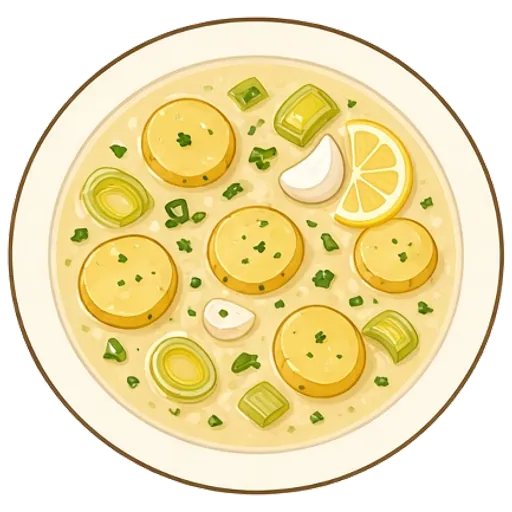
Creamy potato leek soup
Soft, sweet leeks and golden potatoes simmer into a thick, cozy soup that’s creamy without a drop of cream.
- 55 min total
- 25 min hands-on
- Follow-a-recipe easy
- Serves 4
- About $3.35 a serving
- 340 calories
- Good the next day
- Vegan
- Gluten-free
- Dairy-free

Dolly says: Make the full amount. It’s just as good for lunch the next day.
Ingredients
For 4 servings.
- 3 leeks
- 2 lb yukon gold potatoes
- 2 cloves garlic, minced
- 4 cups vegetable broth
- 1 tsp lemons, juice
- 2 tbsp chives, finely chopped (optional)
From your pantry
- 3 tbsp olive oil, divided
- 1½ tsp salt, divided
- 1 cup water
- 1 bay leave
- ½ tsp dried thyme
- ½ tsp black pepper
Each serving has about 340 calories, 7 g protein, 56 g carbs and 11 g fat, and costs about $3.35 at typical US grocery prices. Both are estimates from what the recipe uses.
Missing something?
- No yukon gold potatoes? Russet potatoes or red potatoes work.
- No vegetable broth? Chicken broth works.
- No lemons? Limes work.
- No chives? Green onions work.
Steps
Tap an underlined word for a quick explanation.
off the dark green tops and the root end of the leeks, then each one in half .
Trim. Trimming means cutting off the parts you don’t eat, like stem ends, tough bits or thick fat. It keeps chewy or bitter bits out of the finished dish.
How you’ll know: What’s left is the good part, with no dry ends, woody stems or thick white fat.
Slice. Slicing means cutting food into flat pieces of about the same thickness. Even slices cook evenly, so none are raw while others burn.
How you’ll know: Lay a few side by side: they’re close to the same thickness from one end to the other.
Lengthwise. Lengthwise means cutting along the long side, from stem to tip, which gives long pieces. Crosswise is the other way, straight across the middle, which gives short, round ones.
How you’ll know: Lengthwise halves of a zucchini look like two little canoes; crosswise pieces look like coins.
 Dolly’s tip: Only the white and pale green parts go in the soup. The dark tops are too tough.
each half under running water, fanning the layers open with your fingers to wash out the grit hiding inside.
Rinse. Rinsing means running cold water over rice or canned beans in a strainer while you swish them around. It washes off loose starch and can liquid, so rice cooks up fluffy and beans taste clean.
How you’ll know: The water running out goes from cloudy to mostly clear; it doesn’t have to be perfect.
Dolly’s tip: Leeks grow in sandy soil, so there’s almost always dirt between the layers. This is the step that keeps sand out of your soup.Lay the halves cut side down and them into half-moons, keeping your fingertips curled under.
Thinly slice. Thinly slicing means cutting slices about an eighth of an inch thick, roughly two coins stacked. Thin slices cook in seconds and soften fast, which quick dishes need.
How you’ll know: A slice bends a little when you hold it by one edge, and slow, steady cuts beat fast ones.
Dolly’s tip: Flat side down means nothing rolls, and curled fingers mean the knife only ever meets leek.the potatoes and cut them into 1-inch chunks.
Peel. Peeling means removing the skin with a vegetable peeler or a small knife. It takes off tough or bitter skins, though potato and carrot skins are fine to leave on unless the recipe insists.
How you’ll know: The color underneath is even all over, with no patches of skin left behind.
Heat 2 tbsp of the oil in a large pot over medium heat, add the leeks and ½ tsp of the salt, and them for 8 to 10 minutes, often, until very soft.
Sweat. Sweating means cooking vegetables gently over low to medium-low heat until they soften and release their juices, without browning. It builds a sweet, mellow base for soups and sauces.
How you’ll know: They look glossy and soft with beads of moisture, and they haven’t turned brown.
Stir. Stirring means moving food around with a spoon or spatula so it cooks evenly and doesn’t stick. Unless the recipe says constantly, every so often is plenty, and it gives food time to brown.
How you’ll know: When you drag the spoon across the bottom, nothing is sticking or scorching.
Medium heatTimer: 9 min
Dolly’s tip: If they start turning brown, turn the heat down. You want soft and sweet, not crispy.Add the potatoes, garlic, broth, water, bay leaf, thyme and the rest of the salt, and over high heat.
Bring to a boil. It means heating a liquid on high until it’s fully boiling before you move on. A lid on the pot gets it there faster, which makes it a good moment to chop something.
How you’ll know: Big bubbles break all over the surface, and they keep coming when you lift the lid.
High heat
to low and with the for 20 minutes, until the potatoes are and falling apart at the edges.
Reduce the heat. It means turning the burner down, usually to medium-low or low, so food cooks gently instead of hard. Electric burners cool slowly, so lift the pan off for a moment if it’s bubbling hard.
How you’ll know: Within a minute the bubbling calms to a gentle simmer, or the sizzle turns quiet.
Simmer. Simmering means keeping a liquid just below a boil, with small bubbles rising gently. It cooks food evenly and lets a sauce thicken without scorching on the bottom.
How you’ll know: Small, lazy bubbles break the surface every second or so, and nothing is churning.
Lid ajar. Lid ajar means resting the lid on the pot slightly off-center, leaving a small gap. Some steam escapes, so the sauce thickens and doesn’t boil over, while most of the heat stays in.
How you’ll know: A thin wisp of steam drifts out of the gap, and the pot bubbles gently without spilling.
Fork-tender. Fork-tender means cooked until a fork slides in with almost no push. It’s how you know potatoes, carrots or slow-cooked meat are soft all the way through.
How you’ll know: The fork slides in and out easily, and meat pulls apart with very little effort.
Low heatTimer: 20 min
Turn off the heat, fish out the bay leaf, and mash the potatoes right in the pot with a potato masher or sturdy fork until about half the soup is smooth.
Dolly’s tip: Leave some chunks. Half-smooth is the goal, and it turns creamy without any cream.in the lemon juice and pepper, taste, and add more salt if it needs it.
Stir. Stirring means moving food around with a spoon or spatula so it cooks evenly and doesn’t stick. Unless the recipe says constantly, every so often is plenty, and it gives food time to brown.
How you’ll know: When you drag the spoon across the bottom, nothing is sticking or scorching.
Ladle into bowls and finish with the chives and a of the last tablespoon of olive oil.
Drizzle. Drizzling means pouring a thin, slow stream over the top of something. A thin stream spreads a little flavor a long way.
How you’ll know: You see thin lines across the food, not a puddle collecting underneath.

Plan this in Dollop, and get the grocery list
Dollop puts this dinner on a night that suits your week, lists only what you still need to buy, and walks you through each step while you cook.