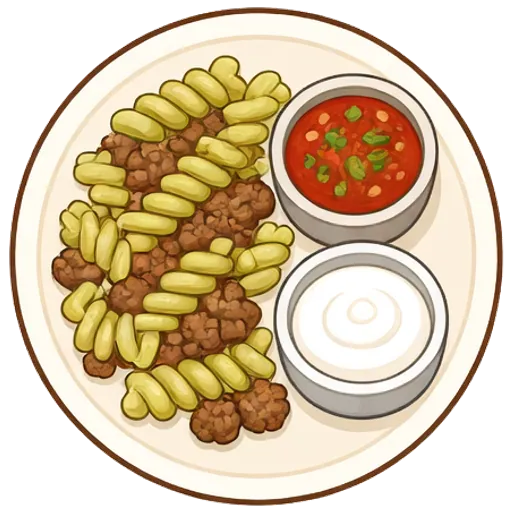
Taco pasta salad
Seasoned ground beef, rotini, black beans, corn, cheddar and salsa in a creamy lime dressing, a cold pasta salad with all the taco night flavor.
- 30 min total
- 18 min hands-on
- Follow-a-recipe easy
- Serves 4
- About $3.89 a serving
- 780 calories
- Good the next day

Dolly says: Make the full amount and pack the rest for the next few days.
Ingredients
For 4 servings.
- 1 lb 90/10 ground beef
- 2 tbsp taco seasoning
- 8 oz rotini
- ½ cup salsa
- ½ cup sour cream
- 1 lime, juiced
- 1 cup cherry tomatoes, halved
- 3 green onions, thinly sliced
- 1 can black beans, drained and rinsed
- 1 can canned corn, drained
- 1 cup shredded cheddar
From your pantry
- 2 tsp salt
- ⅓ cup water
Each serving has about 780 calories, 47 g protein, 84 g carbs and 29 g fat, and costs about $3.89 at typical US grocery prices. Both are estimates from what the recipe uses.
Missing something?
- No 90/10 ground beef? 85/15 ground beef works.
- No salsa? Pico de gallo works.
- No sour cream? Plain Greek yogurt works.
- No limes? Lemons work.
- No green onions? Chives work.
- No black beans? Pinto beans or kidney beans work.
- No shredded cheddar? Cheddar cheese or Mexican blend cheese or Monterey Jack cheese works.
Steps
Tap an underlined word for a quick explanation.
Bring a large pot of water over high heat and add the salt.
Bring to a boil. It means heating a liquid on high until it’s fully boiling before you move on. A lid on the pot gets it there faster, which makes it a good moment to chop something.
How you’ll know: Big bubbles break all over the surface, and they keep coming when you lift the lid.
High heat
While the water heats, cook the beef in a large over medium-high heat, breaking it into crumbles, for 7 to 8 minutes, until with no pink left.
Skillet. A skillet is a frying pan: wide and flat with low, sloped sides. The shape lets steam escape, so food browns instead of stewing.
How you’ll know: It’s the pan you’d fry an egg in, and a 10 or 12 inch one handles most recipes.
Brown. Browning means cooking until the outside turns brown, which is where a lot of savory flavor comes from. Give food room and time without stirring, or it steams and stays gray.
How you’ll know: The food looks brown rather than gray, and the kitchen smells toasty and savory.
Medium-high heatTimer: 7 min 30 sec
 Dolly’s tip: Let it sit between stirs so it browns instead of steaming.
Food safety: Ground beef, pork and lamb are done at 160°F. When it’s cooked through there’s no pink left anywhere in the pan.
in the taco seasoning and water and for 2 minutes, until saucy, then spread the beef on a plate to cool.
Stir. Stirring means moving food around with a spoon or spatula so it cooks evenly and doesn’t stick. Unless the recipe says constantly, every so often is plenty, and it gives food time to brown.
How you’ll know: When you drag the spoon across the bottom, nothing is sticking or scorching.
Simmer. Simmering means keeping a liquid just below a boil, with small bubbles rising gently. It cooks food evenly and lets a sauce thicken without scorching on the bottom.
How you’ll know: Small, lazy bubbles break the surface every second or so, and nothing is churning.
Medium heatTimer: 2 min
Add the rotini to the boiling water and cook as the package says, until tender with a little bite.
High heatTimer: 9 min
, under cold water until cool, and shake off the water.
Drain. Draining means pouring off liquid, like tipping pasta into a colander or spooning extra fat out of the pan. Pour hot grease into a can or jar, not the sink, where it hardens and clogs the pipes.
How you’ll know: Only a few drips are left, and the food isn’t sitting in a puddle.
Rinse. Rinsing means running cold water over rice or canned beans in a strainer while you swish them around. It washes off loose starch and can liquid, so rice cooks up fluffy and beans taste clean.
How you’ll know: The water running out goes from cloudy to mostly clear; it doesn’t have to be perfect.
the salsa, sour cream and lime juice in a large bowl, then the tomatoes and the green onions.
Whisk. Whisking means beating quickly with a whisk or a fork to blend things together. It smooths out lumps and mixes eggs, oil or sauces evenly.
How you’ll know: It all looks one even color and texture, with no streaks or lumps.
Halve. Halving means cutting something into two equal pieces. Even halves cook at the same speed, so one doesn’t dry out while the other finishes.
How you’ll know: The two pieces look like mirror images of each other.
Thinly slice. Thinly slicing means cutting slices about an eighth of an inch thick, roughly two coins stacked. Thin slices cook in seconds and soften fast, which quick dishes need.
How you’ll know: A slice bends a little when you hold it by one edge, and slow, steady cuts beat fast ones.
Add the pasta, beef, beans, corn, tomatoes, cheddar and green onions to the bowl and well.
Toss. Tossing means gently lifting and turning food so everything gets coated, like pasta in sauce or vegetables in oil. It coats every piece evenly without mashing anything.
How you’ll know: Every piece looks glossy or evenly coated, with no dry spots hiding underneath.
Divide among 4 containers and refrigerate.
Dolly’s tip: It keeps 4 days and is best cold. Crush a few tortilla chips over the top at lunch if you have them.

Plan this in Dollop, and get the grocery list
Dollop plans your lunches along with the week’s dinners, puts what you need on the same grocery list, and walks you through each step.