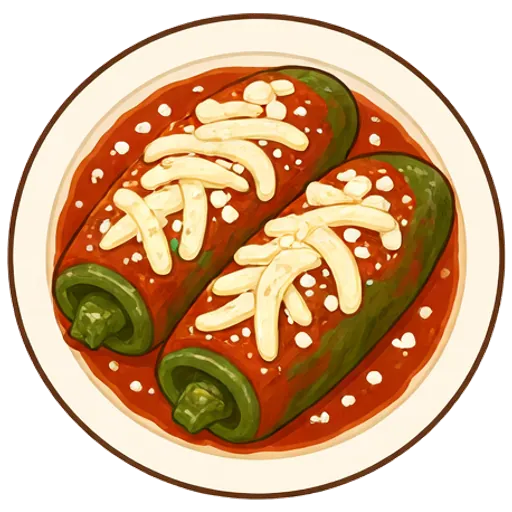
Anaheim chile rellenos
Smoky roasted Anaheim peppers filled with melting jack cheese, wrapped in a cloud of puffy egg batter and bathed in a warm tomato sauce.
- 65 min total
- 55 min hands-on
- A little more hands-on
- Serves 4
- About $1.99 a serving
- 630 calories
- Vegetarian

Dolly says: Read the steps once before you start. Everything goes smoother after that.
Ingredients
For 4 servings.
- 8 Anaheim peppers
- 2 cans tomato sauce, 8 oz cans
- 1 clove garlic, minced
- 8 oz Monterey Jack cheese, cut into 8 sticks
- 4 large eggs, separated
From your pantry
- ½ cup water
- ½ tsp dried oregano
- ¼ tsp ground cumin
- ¾ tsp salt, divided
- ⅓ cup all-purpose flour, divided
- ½ cup vegetable oil
Each serving has about 630 calories, 25 g protein, 25 g carbs and 50 g fat, and costs about $1.99 at typical US grocery prices. Both are estimates from what the recipe uses.
Missing something?
- No tomato sauce? Crushed tomatoes work.
Steps
Tap an underlined word for a quick explanation.
Turn on the with a rack 4 inches below it. Lay the peppers on a foil-lined and broil 5 to 6 minutes a side, until blistered and blackened in spots.
Broil. Broiling means cooking under the oven’s top heating element, with strong heat from above. It browns and crisps the top in minutes, and it can burn fast, so stay close.
How you’ll know: The top bubbles and spots golden brown; check every minute and pull it before it blackens.
Sheet pan. A sheet pan is a flat metal baking tray with a low rim all the way around. The rim catches juices, and the wide surface lets food spread out and brown.
How you’ll know: Everything fits in one layer with a little space between the pieces.
Timer: 5 min 30 sec
 Dolly’s tip: Broilers run hot and uneven. Stay close and turn any pepper that’s charring faster than the rest.
Pile the peppers into a bowl, cover with a plate, and let them 10 minutes.
Steam. Steaming means cooking food over or in a little simmering water with a lid on to trap the steam. It cooks gently and keeps vegetables bright and tender.
How you’ll know: The color turns vivid, and a fork goes in with just a little resistance.
Timer: 10 min
Meanwhile, the tomato sauce, water, garlic, oregano, cumin and ¼ teaspoon of the salt in a small on low 10 minutes. Keep it warm.
Simmer. Simmering means keeping a liquid just below a boil, with small bubbles rising gently. It cooks food evenly and lets a sauce thicken without scorching on the bottom.
How you’ll know: Small, lazy bubbles break the surface every second or so, and nothing is churning.
Saucepan. A saucepan is a pot with tall, straight sides and one long handle. It’s for things that need depth, like rice, sauces or a few boiled eggs.
How you’ll know: The food fills it about halfway, leaving room to bubble without spilling over.
Low heatTimer: 10 min
the skins off the peppers, cut a slit down one side of each, and pull out the seeds with your fingers, leaving the stems on.
Peel. Peeling means removing the skin with a vegetable peeler or a small knife. It takes off tough or bitter skins, though potato and carrot skins are fine to leave on unless the recipe insists.
How you’ll know: The color underneath is even all over, with no patches of skin left behind.
Dolly’s tip: Don’t rinse them, or you’ll wash off the smoky flavor. Anaheims are thin, so small tears are fine; the batter covers them.Tuck a stick of cheese into each pepper, them dry with paper towels, and roll them in all but 1 tablespoon of the flour.
Pat dry. Patting dry means pressing paper towels onto food to soak up the moisture on its surface. Wet food steams instead of browning, so this is how you get a good sear and crisp skin.
How you’ll know: The surface feels tacky, not wet, and the last paper towel comes away barely damp.
Dolly’s tip: The flour is the glue that holds the batter on. Shake off the extra.the egg whites in a large, clean bowl 4 to 5 minutes, until they hold stiff peaks. Gently the yolks, the last tablespoon of flour and ½ teaspoon salt.
Whisk. Whisking means beating quickly with a whisk or a fork to blend things together. It smooths out lumps and mixes eggs, oil or sauces evenly.
How you’ll know: It all looks one even color and texture, with no streaks or lumps.
Fold. Folding means mixing gently by scooping from the bottom and turning it over the top, instead of stirring hard. It keeps light mixtures airy and soft things like berries or herbs in one piece.
How you’ll know: You use slow, wide strokes and stop as soon as there are no streaks left.
Dolly’s tip: A speck of yolk keeps whites from whipping, so crack each egg over a small bowl first. When you lift the whisk, the peak should stand straight up.Heat the oil in a large over medium-high until it and a drop of batter sizzles right away.
Skillet. A skillet is a frying pan: wide and flat with low, sloped sides. The shape lets steam escape, so food browns instead of stewing.
How you’ll know: It’s the pan you’d fry an egg in, and a 10 or 12 inch one handles most recipes.
Shimmering oil. Oil shimmers when it’s hot enough to cook: its surface looks rippled and wavy, like heat over a road. That’s your cue to add the food, just before the oil would start to smoke.
How you’ll know: The oil looks wavy and runs thin like water when you tilt the pan, with no smoke yet.
Medium-high heat
Hold a pepper by the stem, drag it through the batter, spoon more over the top, and lay it in the oil. Fry 3 at a time, 2 to 3 minutes a side, until puffed and .
Golden brown. Golden brown is the color of good toast, somewhere between yellow and light brown. It means the outside is cooked and crisp but not burnt.
How you’ll know: It looks like toast and smells toasty; dark brown with a bitter smell means it went too far.
Medium-high heatTimer: 2 min 30 sec
Dolly’s tip: Lay each one in pointing away from you, and turn them with a spatula and a fork together so the oil doesn’t splash back at you.Food safety: For the safest eggs, cook until the whites are fully set and the yolks begin to thicken. Dishes made with eggs are done at 160°F.
on paper towels and serve right away with the warm sauce spooned over.
Drain. Draining means pouring off liquid, like tipping pasta into a colander or spooning extra fat out of the pan. Pour hot grease into a can or jar, not the sink, where it hardens and clogs the pipes.
How you’ll know: Only a few drips are left, and the food isn’t sitting in a puddle.

Plan this in Dollop, and get the grocery list
Dollop puts this dinner on a night that suits your week, lists only what you still need to buy, and walks you through each step while you cook.
More dinners like this
Sweet potato enchiladas
75 min
Tex-Mex cheese enchiladas
50 min
Cheesy bean and rice burritos
45 min
Potato and egg breakfast tacos
40 min
Vegetarian dinners ›Cozy comfort food ›What to make with eggs and canned tomatoes ›