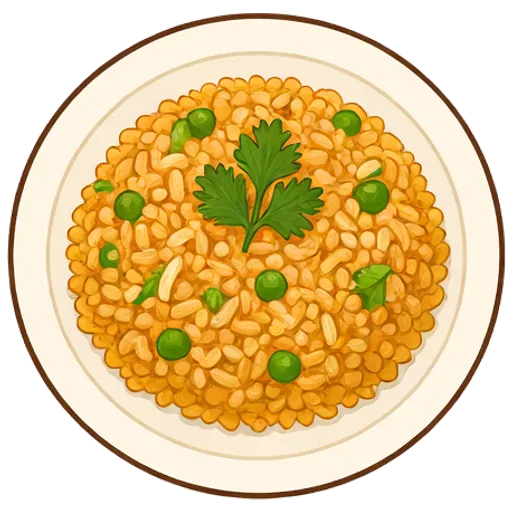
Arroz con gandules
Puerto Rico’s party rice, orange with achiote and packed with pigeon peas, ham, olives and a fresh homemade sofrito.
- 55 min total
- 25 min hands-on
- Follow-a-recipe easy
- Serves 6
- About $1.64 a serving
- 420 calories
- Good the next day
- Gluten-free
- Dairy-free

Dolly says: Make the full amount. It’s just as good for lunch the next day.
Ingredients
For 6 servings.
- 2 cups long-grain white rice
- 1 yellow onion
- 1 green bell pepper
- 4 cloves garlic
- ½ cup cilantro
- 8 oz diced cooked ham
- 2 tsp achiote paste
- 1 can tomato sauce, 8 oz
- ⅓ cup green olives, pimento-stuffed, sliced
- 1 can pigeon peas, 15.5 oz, drained
From your pantry
- 2 tbsp olive oil
- 1 tsp ground cumin
- 1 tsp dried oregano
- 1½ tsp salt
- 2 cups water
- 1 bay leave
Each serving has about 420 calories, 16 g protein, 70 g carbs and 9 g fat, and costs about $1.64 at typical US grocery prices. Both are estimates from what the recipe uses.
Missing something?
- No long-grain white rice? Jasmine rice or basmati rice works.
- No yellow onions? White onions or red onions work.
- No green bell peppers? Red bell peppers or yellow bell peppers work.
- No cilantro? Fresh parsley works.
- No tomato sauce? Crushed tomatoes work.
Steps
Tap an underlined word for a quick explanation.
the onion, pepper and cilantro and the garlic. Together, that’s your sofrito.
Finely chop. Finely chopping means cutting food into small pieces, a little bigger than minced, about the size of a lentil. Small pieces spread their flavor through the dish and cook quickly.
How you’ll know: Nothing is bigger than a lentil, and the pile looks like confetti rather than paste.
Mince. Mincing means chopping something into the tiniest pieces you can, smaller than a grain of rice. Tiny pieces melt into the dish, so you get the flavor without biting into a chunk of garlic.
How you’ll know: Every piece is tiny and about the same size, and the pile starts to look almost like a paste.
the rice in a strainer under cold water until it runs mostly clear, and let it .
Rinse. Rinsing means running cold water over rice or canned beans in a strainer while you swish them around. It washes off loose starch and can liquid, so rice cooks up fluffy and beans taste clean.
How you’ll know: The water running out goes from cloudy to mostly clear; it doesn’t have to be perfect.
Drain. Draining means pouring off liquid, like tipping pasta into a colander or spooning extra fat out of the pan. Pour hot grease into a can or jar, not the sink, where it hardens and clogs the pipes.
How you’ll know: Only a few drips are left, and the food isn’t sitting in a puddle.
 Dolly’s tip: Rinsing washes off loose starch, so the grains cook up separate instead of gluey.
Heat the oil in a large pot with a tight lid over medium and cook the ham 4 minutes, until the edges .
Brown. Browning means cooking until the outside turns brown, which is where a lot of savory flavor comes from. Give food room and time without stirring, or it steams and stays gray.
How you’ll know: The food looks brown rather than gray, and the kitchen smells toasty and savory.
Medium heatTimer: 4 min
Food safety: Rotisserie chicken, deli meat, canned tuna and cooked shrimp are already cooked. Keep them cold until you use them, and heat them until steaming hot if the recipe warms them.
Add the sofrito and cook 5 minutes, , until soft.
Stir. Stirring means moving food around with a spoon or spatula so it cooks evenly and doesn’t stick. Unless the recipe says constantly, every so often is plenty, and it gives food time to brown.
How you’ll know: When you drag the spoon across the bottom, nothing is sticking or scorching.
Medium heatTimer: 5 min
Stir in the achiote paste until it melts into the oil, then add the tomato sauce, olives, cumin, oregano and salt and 2 minutes.
Simmer. Simmering means keeping a liquid just below a boil, with small bubbles rising gently. It cooks food evenly and lets a sauce thicken without scorching on the bottom.
How you’ll know: Small, lazy bubbles break the surface every second or so, and nothing is churning.
Medium heatTimer: 2 min
Dolly’s tip: Mash the achiote against the pot with your spoon. It dissolves and turns everything sunset orange.Add the rice, pigeon peas, water and bay leaf, stir once, and over high heat.
Bring to a boil. It means heating a liquid on high until it’s fully boiling before you move on. A lid on the pot gets it there faster, which makes it a good moment to chop something.
How you’ll know: Big bubbles break all over the surface, and they keep coming when you lift the lid.
High heat
uncovered about 5 minutes, until the water sinks just below the top of the rice.
Boil. Boiling means heating a liquid until big bubbles rise and break all over the surface. It’s the fastest way to cook pasta, potatoes and eggs, because it’s as hot as water gets.
How you’ll know: Bubbles are breaking across the whole surface, not just at the edges, and steam is rising.
High heatTimer: 5 min
Turn the rice over once with a big spoon, cover tightly, turn the heat to low, and cook 20 minutes without lifting the lid.
Low heatTimer: 20 min
Dolly’s tip: No peeking and no stirring. The steam does the cooking, and the golden crust on the bottom, the pegao, is the best part.Let it sit off the heat 5 minutes, take out the bay leaf, and fluff it with a fork before serving.
Timer: 5 min

Plan this in Dollop, and get the grocery list
Dollop puts this dinner on a night that suits your week, lists only what you still need to buy, and walks you through each step while you cook.
More dinners like this
Ham, broccoli and cheese rice casserole
70 min
Microwave chicken jambalaya
30 min
Slow cooker chickpea korma
330 min
Crockpot brown sugar garlic pork loin
360 min
Cozy comfort food ›Make-ahead and freezer-friendly ›What to make with rice and bell peppers ›What to make with canned tomatoes and bell peppers ›What to make with canned tomatoes and rice ›