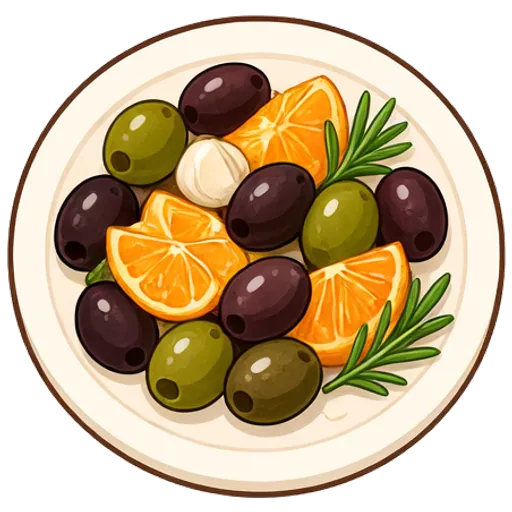
Citrus and herb marinated olives
Jarred olives tossed with orange zest, garlic, rosemary and good olive oil, so they taste like the fancy deli’s and keep all week.
- 70 min total
- 10 min hands-on
- Anyone can make this
- Serves 12
- About $0.94 a serving
- 150 calories
- Good the next day
- Vegan
- Gluten-free
- Dairy-free

Dolly says: Make the full amount. Whatever’s left keeps for tomorrow.
Ingredients
For 12 servings.
- 1 jar Kalamata olives
- 2 jars green olives
- 1 orange
- 3 cloves garlic
- 2 sprigs fresh rosemary
From your pantry
- ½ tsp red pepper flakes
- ½ tsp dried oregano
- ⅓ cup olive oil
Each serving has about 150 calories, 1 g protein, 4 g carbs and 15 g fat, and costs about $0.94 at typical US grocery prices. Both are estimates from what the recipe uses.
Missing something?
- No Kalamata olives? Black olives work.
- No fresh rosemary? Fresh thyme works.
Steps
Tap an underlined word for a quick explanation.
the olives and put them in a bowl or a large jar.
Drain. Draining means pouring off liquid, like tipping pasta into a colander or spooning extra fat out of the pan. Pour hot grease into a can or jar, not the sink, where it hardens and clogs the pipes.
How you’ll know: Only a few drips are left, and the food isn’t sitting in a puddle.
4 wide strips of from the orange with a vegetable peeler.
Peel. Peeling means removing the skin with a vegetable peeler or a small knife. It takes off tough or bitter skins, though potato and carrot skins are fine to leave on unless the recipe insists.
How you’ll know: The color underneath is even all over, with no patches of skin left behind.
Zest. Zest is the thin, colored outer layer of citrus peel, rubbed off on the smallest holes of a grater. It holds the fruit’s fragrant oils, so it adds bright flavor without the sourness of juice.
How you’ll know: You see bright flecks and smell citrus right away; stop when you reach the white layer, which is bitter.
 Dolly’s tip: Press lightly so you get only the orange skin. The white part underneath is bitter.
the garlic.
Thinly slice. Thinly slicing means cutting slices about an eighth of an inch thick, roughly two coins stacked. Thin slices cook in seconds and soften fast, which quick dishes need.
How you’ll know: A slice bends a little when you hold it by one edge, and slow, steady cuts beat fast ones.
Add the , garlic, rosemary, pepper flakes and oregano, pour in the oil, and to coat.
Zest. Zest is the thin, colored outer layer of citrus peel, rubbed off on the smallest holes of a grater. It holds the fruit’s fragrant oils, so it adds bright flavor without the sourness of juice.
How you’ll know: You see bright flecks and smell citrus right away; stop when you reach the white layer, which is bitter.
Stir. Stirring means moving food around with a spoon or spatula so it cooks evenly and doesn’t stick. Unless the recipe says constantly, every so often is plenty, and it gives food time to brown.
How you’ll know: When you drag the spoon across the bottom, nothing is sticking or scorching.
Cover and them in the fridge at least 1 hour, or up to 4 days.
Chill. Chilling means putting something in the fridge until it’s cold all the way through. No-bake desserts firm up as they chill, and chilled cookie dough spreads less in the oven.
How you’ll know: It feels cold in the middle, not just on top, and it holds its shape when you cut or scoop it.
Timer: 60 min
Dolly’s tip: The oil turns cloudy and firm in the fridge. Set them out 30 minutes before serving and it melts back.Food safety: Garlic and fresh herbs in oil can grow botulism at room temperature, and you can’t see, smell or taste it. Keep them in the fridge, set them out for up to 2 hours, and use them within 4 days.
and serve in a bowl, with a small dish for pits.
Stir. Stirring means moving food around with a spoon or spatula so it cooks evenly and doesn’t stick. Unless the recipe says constantly, every so often is plenty, and it gives food time to brown.
How you’ll know: When you drag the spoon across the bottom, nothing is sticking or scorching.
Dolly’s tip: Garlic in oil can sit out for up to 2 hours, counting the half hour it warmed. Then put what’s left back in the fridge and eat it within 4 days of making it.

Plan this in Dollop, and get the grocery list
When you host a dinner, Dollop builds the menu around your guests’ allergies, works out a cooking timeline back from when everyone sits down, and puts it all on one grocery list.