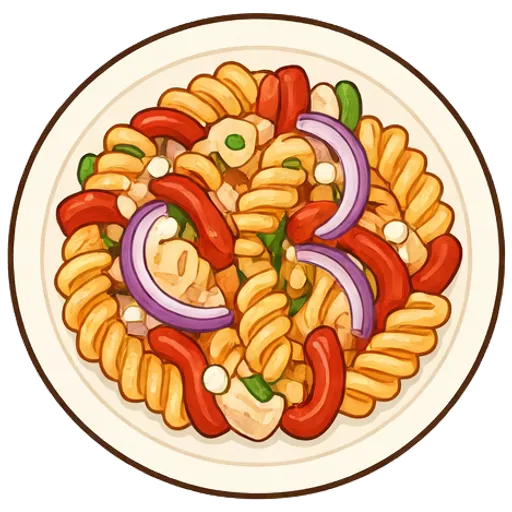
Italian pasta salad
Corkscrew pasta, pepperoni, mozzarella and crunchy vegetables in a zippy homemade Italian dressing, made once and eaten for 4 days.
- 35 min total
- 25 min hands-on
- Anyone can make this
- Serves 8
- About $2.20 a serving
- 530 calories
- Good the next day

Dolly says: Make the full amount. It’s just as good for lunch the next day.
Ingredients
For 8 servings.
- 1 lb rotini
- 1 clove garlic, grated or minced
- 1 tsp Dijon mustard
- 1 red bell pepper, diced
- ¼ red onion, finely chopped
- 1 cup cherry tomatoes, halved
- 8 oz fresh mozzarella, cut into small cubes
- 4 oz sliced pepperoni, quartered
- 1 can black olives, drained
- ¼ cup grated parmesan
From your pantry
- 1½ tbsp salt, divided
- ½ cup olive oil
- ¼ cup red wine vinegar
- 2 tsp Italian seasoning
- ½ tsp sugar
- ¼ tsp black pepper
Each serving has about 530 calories, 17 g protein, 48 g carbs and 29 g fat, and costs about $2.20 at typical US grocery prices. Both are estimates from what the recipe uses.
Missing something?
- No red bell peppers? Yellow bell peppers work.
- No red onions? White onions or yellow onions work.
- No grated parmesan? Parmesan wedge works.
Steps
Tap an underlined word for a quick explanation.
Bring a large pot of water on high and add 1 tablespoon of the salt.
Bring to a boil. It means heating a liquid on high until it’s fully boiling before you move on. A lid on the pot gets it there faster, which makes it a good moment to chop something.
How you’ll know: Big bubbles break all over the surface, and they keep coming when you lift the lid.
High heat
Add the rotini and cook for the full time on the box, about 9 minutes, until tender with no chalky center.
High heatTimer: 9 min
 Dolly’s tip: Pasta firms up in the fridge, so cook it all the way for salad, not firm like you would for a hot dish.
While it cooks, the oil, vinegar, Italian seasoning, garlic, mustard, sugar, pepper and the rest of the salt in a big bowl.
Whisk. Whisking means beating quickly with a whisk or a fork to blend things together. It smooths out lumps and mixes eggs, oil or sauces evenly.
How you’ll know: It all looks one even color and texture, with no streaks or lumps.
the pasta in a colander and it under cold water, it with your hand, until it feels cool. Shake off as much water as you can.
Drain. Draining means pouring off liquid, like tipping pasta into a colander or spooning extra fat out of the pan. Pour hot grease into a can or jar, not the sink, where it hardens and clogs the pipes.
How you’ll know: Only a few drips are left, and the food isn’t sitting in a puddle.
Rinse. Rinsing means running cold water over rice or canned beans in a strainer while you swish them around. It washes off loose starch and can liquid, so rice cooks up fluffy and beans taste clean.
How you’ll know: The water running out goes from cloudy to mostly clear; it doesn’t have to be perfect.
Toss. Tossing means gently lifting and turning food so everything gets coated, like pasta in sauce or vegetables in oil. It coats every piece evenly without mashing anything.
How you’ll know: Every piece looks glossy or evenly coated, with no dry spots hiding underneath.
Dolly’s tip: This is the one time you rinse pasta. It stops the cooking and keeps it from clumping as it cools.the bell pepper, the onion, the tomatoes, the mozzarella and cut the pepperoni slices into quarters.
Dice. Dicing means cutting food into small, even cubes, usually a quarter to half an inch across. Pieces the same size cook at the same speed, so nothing burns while the rest catches up.
How you’ll know: Your pieces are little cubes about the size of a chickpea, and they all look close to the same.
Finely chop. Finely chopping means cutting food into small pieces, a little bigger than minced, about the size of a lentil. Small pieces spread their flavor through the dish and cook quickly.
How you’ll know: Nothing is bigger than a lentil, and the pile looks like confetti rather than paste.
Halve. Halving means cutting something into two equal pieces. Even halves cook at the same speed, so one doesn’t dry out while the other finishes.
How you’ll know: The two pieces look like mirror images of each other.
Cube. Cubing means cutting food into chunky, even squares, usually three quarters of an inch to an inch. Same-size cubes cook at the same speed and brown on every side.
How you’ll know: Your pieces look like a handful of sugar cubes, a little bigger than diced, all close to the same size.
Add the pasta to the dressing and , then add the vegetables, mozzarella, pepperoni, olives and parmesan and toss again.
Toss. Tossing means gently lifting and turning food so everything gets coated, like pasta in sauce or vegetables in oil. It coats every piece evenly without mashing anything.
How you’ll know: Every piece looks glossy or evenly coated, with no dry spots hiding underneath.
Food safety: If you’re pregnant, heat deli meat, hot dogs, salami, pepperoni and smoked salmon until steaming hot, 165°F, just before eating, or leave them out. Eaten cold, they carry a small risk of listeria.
Chill at least 30 minutes before serving. It keeps 4 days in the fridge.
Timer: 30 min
Dolly’s tip: Pasta drinks the dressing overnight. Before you pack a portion, stir in a small splash of vinegar and olive oil to wake it back up.

Plan this in Dollop, and get the grocery list
Dollop puts this dinner on a night that suits your week, lists only what you still need to buy, and walks you through each step while you cook.
More dinners like this
Tuna macaroni salad
30 min
Chicken parmesan casserole
50 min
Pasta e fagioli
55 min
Filipino chicken macaroni salad
90 min
Beginner dinners ›Make-ahead and freezer-friendly ›What to make with bell peppers and tomatoes ›What to make with bell peppers and parmesan ›What to make with tomatoes and parmesan ›