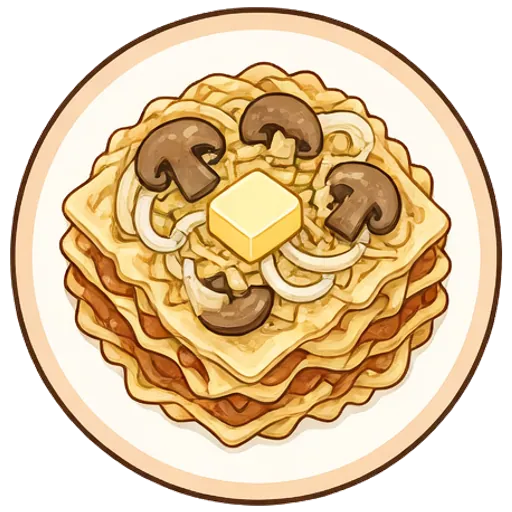
Lazanki (noodles with sauerkraut and mushrooms)
Square noodles tossed with buttery onions, browned mushrooms and tangy braised sauerkraut, the Polish Christmas Eve dish that’s good any cold night.
- 45 min total
- 30 min hands-on
- Follow-a-recipe easy
- Serves 4
- About $1.56 a serving
- 310 calories
- Good the next day
- Vegetarian

Dolly says: Make the full amount. It’s just as good for lunch the next day.
Ingredients
For 4 servings.
- 8 lasagna noodles
- 1 can sauerkraut, 14.5 oz
- 1 yellow onion, diced
- 8 oz baby bella mushrooms, sliced
- 3 tbsp butter
- ½ cup vegetable broth
- ½ cup sour cream, to serve (optional)
From your pantry
- 1 tbsp salt
- 1 tsp black pepper
- 1 bay leave
Each serving has about 310 calories, 9 g protein, 46 g carbs and 10 g fat, and costs about $1.56 at typical US grocery prices. Both are estimates from what the recipe uses.
Missing something?
- No yellow onions? White onions or red onions work.
- No baby bella mushrooms? White mushrooms work.
- No butter? Ghee works.
- No sour cream? Plain Greek yogurt works.
Steps
Tap an underlined word for a quick explanation.
Fill a large pot with water, add the salt, cover and over high heat.
Bring to a boil. It means heating a liquid on high until it’s fully boiling before you move on. A lid on the pot gets it there faster, which makes it a good moment to chop something.
How you’ll know: Big bubbles break all over the surface, and they keep coming when you lift the lid.
High heat
the sauerkraut, it briefly, squeeze it dry and it. the onion and slice the mushrooms.
Drain. Draining means pouring off liquid, like tipping pasta into a colander or spooning extra fat out of the pan. Pour hot grease into a can or jar, not the sink, where it hardens and clogs the pipes.
How you’ll know: Only a few drips are left, and the food isn’t sitting in a puddle.
Rinse. Rinsing means running cold water over rice or canned beans in a strainer while you swish them around. It washes off loose starch and can liquid, so rice cooks up fluffy and beans taste clean.
How you’ll know: The water running out goes from cloudy to mostly clear; it doesn’t have to be perfect.
Chop. Chopping means cutting food into bite-size pieces that don’t need to be neat. Keep them roughly the same size so everything cooks evenly.
How you’ll know: Your pieces are about half an inch and roughly alike, even if none of them are pretty.
Dice. Dicing means cutting food into small, even cubes, usually a quarter to half an inch across. Pieces the same size cook at the same speed, so nothing burns while the rest catches up.
How you’ll know: Your pieces are little cubes about the size of a chickpea, and they all look close to the same.
 Dolly’s tip: A quick rinse takes the edge off the sourness. Skip it if you love it tangy.
the butter in a large over medium-high heat. Add the onion and mushrooms and cook 8 to 10 minutes, stirring now and then, until browned.
Melt. Melting means gently heating something solid, like butter or cheese, until it turns liquid. Low or medium heat keeps it from browning or burning.
How you’ll know: It’s smooth and liquid, and butter may foam a little but hasn’t turned brown.
Skillet. A skillet is a frying pan: wide and flat with low, sloped sides. The shape lets steam escape, so food browns instead of stewing.
How you’ll know: It’s the pan you’d fry an egg in, and a 10 or 12 inch one handles most recipes.
Medium-high heatTimer: 9 min
Add the sauerkraut, pepper, bay leaf and broth, cover, and on low 10 minutes, until the sauerkraut is soft.
Simmer. Simmering means keeping a liquid just below a boil, with small bubbles rising gently. It cooks food evenly and lets a sauce thicken without scorching on the bottom.
How you’ll know: Small, lazy bubbles break the surface every second or so, and nothing is churning.
Low heatTimer: 10 min
While it , break the lasagna noodles into roughly 1-inch squares and cook them 2 minutes less than the package says. .
Simmer. Simmering means keeping a liquid just below a boil, with small bubbles rising gently. It cooks food evenly and lets a sauce thicken without scorching on the bottom.
How you’ll know: Small, lazy bubbles break the surface every second or so, and nothing is churning.
Drain. Draining means pouring off liquid, like tipping pasta into a colander or spooning extra fat out of the pan. Pour hot grease into a can or jar, not the sink, where it hardens and clogs the pipes.
How you’ll know: Only a few drips are left, and the food isn’t sitting in a puddle.
High heatTimer: 9 min
Dolly’s tip: Snap them over the pot. Uneven pieces are fine and totally traditional.Uncover, remove the bay leaf, add the noodles, and cook 2 to 3 minutes over medium heat, , until everything is hot and lightly browned in spots.
Toss. Tossing means gently lifting and turning food so everything gets coated, like pasta in sauce or vegetables in oil. It coats every piece evenly without mashing anything.
How you’ll know: Every piece looks glossy or evenly coated, with no dry spots hiding underneath.
Medium heatTimer: 2 min 30 sec
Serve with a spoonful of sour cream if you like.

Plan this in Dollop, and get the grocery list
Dollop puts this dinner on a night that suits your week, lists only what you still need to buy, and walks you through each step while you cook.