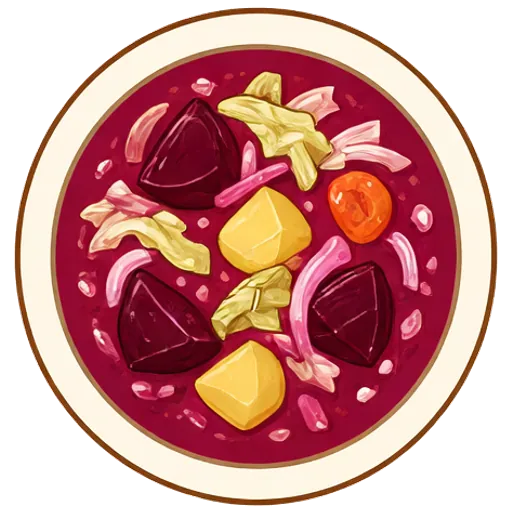
Roasted beet borscht
Ruby-red beets roasted sweet, simmered with cabbage and potatoes and brightened with vinegar and dill, then finished with a cool spoon of sour cream.
- 80 min total
- 25 min hands-on
- Follow-a-recipe easy
- Serves 4
- About $2.19 a serving
- 240 calories
- Good the next day
- Vegetarian

Dolly says: Make the full amount. It’s just as good for lunch the next day.
Ingredients
For 4 servings.
- 4 beets, about 1½ lb
- 2 carrots, cut into coins
- 1 yellow onion, chopped
- 2 Yukon Gold potatoes, diced
- 3 cups green cabbage, thinly sliced
- 3 cloves garlic, minced
- 2 tbsp tomato paste
- 3 vegetable bouillon cubes, check the box: most cubes make 2 cups each
- 2 tbsp fresh dill, chopped
- ½ cup sour cream (optional)
From your pantry
- 2 tbsp olive oil
- 1½ tsp salt, divided
- 6 cups water
- 2 bay leaves
- 2 tbsp red wine vinegar
Each serving has about 240 calories, 6 g protein, 38 g carbs and 7 g fat, and costs about $2.19 at typical US grocery prices. Both are estimates from what the recipe uses.
Missing something?
- No yellow onions? White onions or red onions work.
- No Yukon Gold potatoes? Russet potatoes or red potatoes work.
- No green cabbage? Red cabbage or coleslaw mix works.
- No sour cream? Plain Greek yogurt works.
Steps
Tap an underlined word for a quick explanation.
the oven to 425°F. the beets and cut them into ½-inch , then cut the carrots into coins and the onion.
Preheat. Preheating means turning the oven on before you start, so it’s fully hot when the food goes in. Food that starts in a cold oven cooks unevenly and doesn’t brown the same.
How you’ll know: The oven beeps or its light clicks off, usually 10 to 15 minutes after you turn it on.
Peel. Peeling means removing the skin with a vegetable peeler or a small knife. It takes off tough or bitter skins, though potato and carrot skins are fine to leave on unless the recipe insists.
How you’ll know: The color underneath is even all over, with no patches of skin left behind.
Cube. Cubing means cutting food into chunky, even squares, usually three quarters of an inch to an inch. Same-size cubes cook at the same speed and brown on every side.
How you’ll know: Your pieces look like a handful of sugar cubes, a little bigger than diced, all close to the same size.
Chop. Chopping means cutting food into bite-size pieces that don’t need to be neat. Keep them roughly the same size so everything cooks evenly.
How you’ll know: Your pieces are about half an inch and roughly alike, even if none of them are pretty.
 Dolly’s tip: Beet juice stains. Wear an old shirt and peel them over a paper towel on your board.
Toss the beets, carrots and onion on a large with the oil and 1 teaspoon of the salt.
Sheet pan. A sheet pan is a flat metal baking tray with a low rim all the way around. The rim catches juices, and the wide surface lets food spread out and brown.
How you’ll know: Everything fits in one layer with a little space between the pieces.
for 30 to 35 minutes, until the beets are tender when poked with a fork.
Roast. Roasting means cooking in a hot oven, around 400°F to 450°F, usually spread out on a sheet pan. The dry heat browns the outside and brings out sweetness, especially in vegetables.
How you’ll know: The edges are browned and a little crisp, and a fork slides easily into the thickest piece.
Timer: 32 min 30 sec
the potatoes, the cabbage thinly and the garlic. Put them in a large pot with the tomato paste, water, bouillon cubes, bay leaves and the rest of the salt, and over high heat.
Dice. Dicing means cutting food into small, even cubes, usually a quarter to half an inch across. Pieces the same size cook at the same speed, so nothing burns while the rest catches up.
How you’ll know: Your pieces are little cubes about the size of a chickpea, and they all look close to the same.
Slice. Slicing means cutting food into flat pieces of about the same thickness. Even slices cook evenly, so none are raw while others burn.
How you’ll know: Lay a few side by side: they’re close to the same thickness from one end to the other.
Mince. Mincing means chopping something into the tiniest pieces you can, smaller than a grain of rice. Tiny pieces melt into the dish, so you get the flavor without biting into a chunk of garlic.
How you’ll know: Every piece is tiny and about the same size, and the pile starts to look almost like a paste.
Bring to a boil. It means heating a liquid on high until it’s fully boiling before you move on. A lid on the pot gets it there faster, which makes it a good moment to chop something.
How you’ll know: Big bubbles break all over the surface, and they keep coming when you lift the lid.
High heat
Turn the heat to low and for 15 minutes, until the potatoes are tender.
Simmer. Simmering means keeping a liquid just below a boil, with small bubbles rising gently. It cooks food evenly and lets a sauce thicken without scorching on the bottom.
How you’ll know: Small, lazy bubbles break the surface every second or so, and nothing is churning.
Low heatTimer: 15 min
Stir in the roasted vegetables and the vinegar and simmer for 5 more minutes.
Low heatTimer: 5 min
Pull out the bay leaves, stir in the dill, and taste. It should taste earthy, a little sweet and a little tangy, so add salt or more vinegar until it does.
Splash. A splash is a small, quick pour, about a teaspoon to a tablespoon. It’s there to loosen or brighten a dish, so the exact amount doesn’t matter.
How you’ll know: The dish looks a little looser or tastes a little brighter, not soupy.
Ladle into bowls and top each with a spoonful of sour cream.

Plan this in Dollop, and get the grocery list
Dollop puts this dinner on a night that suits your week, lists only what you still need to buy, and walks you through each step while you cook.
More dinners like this
Sheet pan Greek tofu and potatoes
60 min
Roasted butternut squash soup
80 min
Roasted carrot ginger soup
75 min
Roasted garlic white bean soup
65 min
One-pan dinners ›Vegetarian dinners ›What to make with carrots and potatoes ›What to make with carrots and green cabbage ›