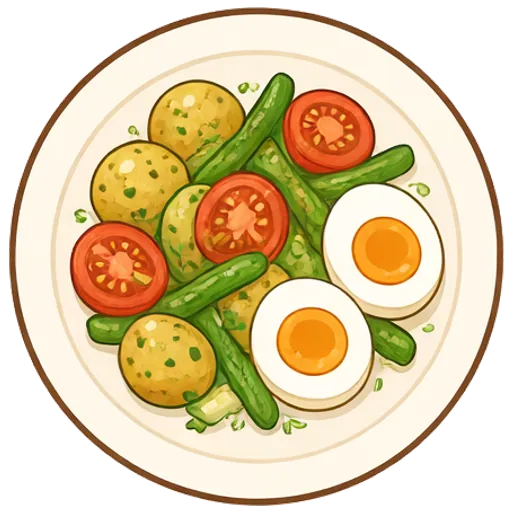
Sheet pan pesto potatoes and green beans with jammy eggs
Crispy roasted baby potatoes, green beans and blistered tomatoes tossed in basil pesto and crowned with soft, jammy eggs.
- 45 min total
- 15 min hands-on
- Anyone can make this
- Serves 2
- About $4.49 a serving
- 570 calories
- Vegetarian
- Gluten-free

Dolly says: Most of the time here is hands-off, so you can sit down while it cooks.
Ingredients
For 2 servings.
- 1 lb baby potatoes, halved
- 8 oz green beans, trimmed
- 1 cup cherry tomatoes
- 4 large eggs
- ¼ cup basil pesto
- ½ lemon
- 2 tbsp grated parmesan
From your pantry
- 1 tbsp olive oil
- ½ tsp salt
- ¼ tsp black pepper
Each serving has about 570 calories, 23 g protein, 52 g carbs and 32 g fat, and costs about $4.49 at typical US grocery prices. Both are estimates from what the recipe uses.
Missing something?
- No baby potatoes? Red potatoes or Yukon Gold potatoes work.
- No green beans? Frozen green beans work.
- No lemons? Limes work.
- No grated parmesan? Parmesan wedge works.
Steps
Tap an underlined word for a quick explanation.
the oven to 425°F. On a , the potatoes with the oil, salt and pepper and turn them cut side down.
Preheat. Preheating means turning the oven on before you start, so it’s fully hot when the food goes in. Food that starts in a cold oven cooks unevenly and doesn’t brown the same.
How you’ll know: The oven beeps or its light clicks off, usually 10 to 15 minutes after you turn it on.
Sheet pan. A sheet pan is a flat metal baking tray with a low rim all the way around. The rim catches juices, and the wide surface lets food spread out and brown.
How you’ll know: Everything fits in one layer with a little space between the pieces.
Toss. Tossing means gently lifting and turning food so everything gets coated, like pasta in sauce or vegetables in oil. It coats every piece evenly without mashing anything.
How you’ll know: Every piece looks glossy or evenly coated, with no dry spots hiding underneath.
Halve. Halving means cutting something into two equal pieces. Even halves cook at the same speed, so one doesn’t dry out while the other finishes.
How you’ll know: The two pieces look like mirror images of each other.
for 15 minutes.
Roast. Roasting means cooking in a hot oven, around 400°F to 450°F, usually spread out on a sheet pan. The dry heat browns the outside and brings out sweetness, especially in vegetables.
How you’ll know: The edges are browned and a little crisp, and a fork slides easily into the thickest piece.
Timer: 15 min
Add the green beans and tomatoes to the pan, them in the oil, and until the potatoes are underneath and the beans are tender with a few spots, 12 to 15 minutes more.
Toss. Tossing means gently lifting and turning food so everything gets coated, like pasta in sauce or vegetables in oil. It coats every piece evenly without mashing anything.
How you’ll know: Every piece looks glossy or evenly coated, with no dry spots hiding underneath.
Roast. Roasting means cooking in a hot oven, around 400°F to 450°F, usually spread out on a sheet pan. The dry heat browns the outside and brings out sweetness, especially in vegetables.
How you’ll know: The edges are browned and a little crisp, and a fork slides easily into the thickest piece.
Golden brown. Golden brown is the color of good toast, somewhere between yellow and light brown. It means the outside is cooked and crisp but not burnt.
How you’ll know: It looks like toast and smells toasty; dark brown with a bitter smell means it went too far.
Brown. Browning means cooking until the outside turns brown, which is where a lot of savory flavor comes from. Give food room and time without stirring, or it steams and stays gray.
How you’ll know: The food looks brown rather than gray, and the kitchen smells toasty and savory.
Timer: 13 min
Meanwhile, bring a small of water . Lower in the eggs with a spoon and boil for 7 minutes.
Saucepan. A saucepan is a pot with tall, straight sides and one long handle. It’s for things that need depth, like rice, sauces or a few boiled eggs.
How you’ll know: The food fills it about halfway, leaving room to bubble without spilling over.
Bring to a boil. It means heating a liquid on high until it’s fully boiling before you move on. A lid on the pot gets it there faster, which makes it a good moment to chop something.
How you’ll know: Big bubbles break all over the surface, and they keep coming when you lift the lid.
High heatTimer: 7 min
 Dolly’s tip: Seven minutes gives a jammy yolk. Go to 9 if you like it firmer.
Food safety: Soft yolks are a small risk. If you’re pregnant, or cooking for small children or older people, cook the eggs until the yolks are firm, or use pasteurized eggs.
Move the eggs to a bowl of cold water for 2 minutes, then tap and them.
Peel. Peeling means removing the skin with a vegetable peeler or a small knife. It takes off tough or bitter skins, though potato and carrot skins are fine to leave on unless the recipe insists.
How you’ll know: The color underneath is even all over, with no patches of skin left behind.
Timer: 2 min
Spoon the pesto over the hot vegetables, squeeze in the lemon and right on the pan.
Toss. Tossing means gently lifting and turning food so everything gets coated, like pasta in sauce or vegetables in oil. It coats every piece evenly without mashing anything.
How you’ll know: Every piece looks glossy or evenly coated, with no dry spots hiding underneath.
Divide between two plates, top with the eggs and sprinkle with parmesan.
Halve. Halving means cutting something into two equal pieces. Even halves cook at the same speed, so one doesn’t dry out while the other finishes.
How you’ll know: The two pieces look like mirror images of each other.

Plan this in Dollop, and get the grocery list
Dollop puts this dinner on a night that suits your week, lists only what you still need to buy, and walks you through each step while you cook.
More dinners like this
Sheet-pan nacho potato wedges
50 min
Sheet pan potatoes and eggs
50 min
Sheet pan white beans and peppers
40 min
Sheet pan white beans and broccoli with lemon and parmesan
30 min
One-pan dinners ›Vegetarian dinners ›What to make with eggs and parmesan ›What to make with eggs and potatoes ›What to make with eggs and tomatoes ›