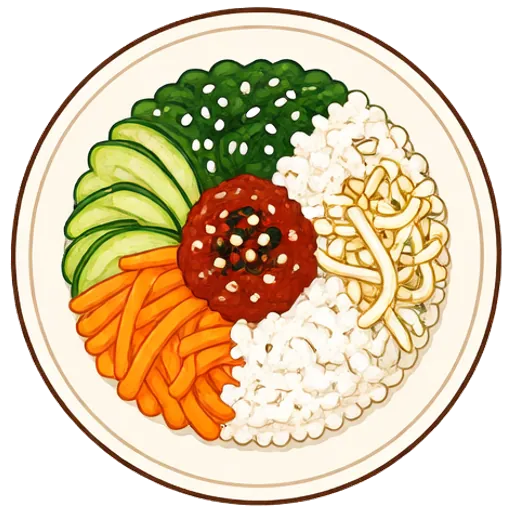
Vegetable bibimbap
A Korean rice bowl crowded with garlicky spinach, bean sprouts, carrots, zucchini and mushrooms, topped with a fried egg and sweet-spicy gochujang sauce to mix it all together.
- 60 min total
- 45 min hands-on
- A little more hands-on
- Serves 4
- About $3.32 a serving
- 690 calories
- Vegetarian
- Dairy-free

Dolly says: Read the steps once before you start. Everything goes smoother after that.
Ingredients
For 4 servings.
- 2 cups sushi rice, rinsed
- 3 tbsp gochujang
- 2 tbsp sesame oil, divided
- 2 cups bean sprouts
- 1 package baby spinach
- 3 cloves garlic, minced, divided
- 2 carrots, cut into matchsticks
- 1 zucchini, cut into matchsticks
- 8 oz baby bella mushrooms, sliced
- 4 large eggs
- 1 tbsp sesame seeds (optional)
From your pantry
- 2¼ cups water
- 1 tbsp sugar
- 1 tbsp rice vinegar
- ½ tsp salt
- 3 tbsp vegetable oil, divided
- 1 tbsp soy sauce
Each serving has about 690 calories, 19 g protein, 101 g carbs and 23 g fat, and costs about $3.32 at typical US grocery prices. Both are estimates from what the recipe uses.
Missing something?
- No baby spinach? Kale or arugula works.
- No zucchini? Yellow squash works.
- No baby bella mushrooms? White mushrooms work.
Steps
Tap an underlined word for a quick explanation.
Put the rice and water in a medium and over high heat.
Rinse. Rinsing means running cold water over rice or canned beans in a strainer while you swish them around. It washes off loose starch and can liquid, so rice cooks up fluffy and beans taste clean.
How you’ll know: The water running out goes from cloudy to mostly clear; it doesn’t have to be perfect.
Saucepan. A saucepan is a pot with tall, straight sides and one long handle. It’s for things that need depth, like rice, sauces or a few boiled eggs.
How you’ll know: The food fills it about halfway, leaving room to bubble without spilling over.
Bring to a boil. It means heating a liquid on high until it’s fully boiling before you move on. A lid on the pot gets it there faster, which makes it a good moment to chop something.
How you’ll know: Big bubbles break all over the surface, and they keep coming when you lift the lid.
High heat
Stir once, cover, turn the heat to low and cook 15 minutes, then leave it covered off the heat.
Low heatTimer: 15 min
Stir the gochujang, sugar, vinegar, 1 teaspoon sesame oil and 1 tablespoon water together to make the sauce.
Bring a pot of water over high heat.
Bring to a boil. It means heating a liquid on high until it’s fully boiling before you move on. A lid on the pot gets it there faster, which makes it a good moment to chop something.
How you’ll know: Big bubbles break all over the surface, and they keep coming when you lift the lid.
High heat
the bean sprouts 2 minutes and lift them out with tongs, then boil the spinach 30 seconds and .
Boil. Boiling means heating a liquid until big bubbles rise and break all over the surface. It’s the fastest way to cook pasta, potatoes and eggs, because it’s as hot as water gets.
How you’ll know: Bubbles are breaking across the whole surface, not just at the edges, and steam is rising.
Drain. Draining means pouring off liquid, like tipping pasta into a colander or spooning extra fat out of the pan. Pour hot grease into a can or jar, not the sink, where it hardens and clogs the pipes.
How you’ll know: Only a few drips are left, and the food isn’t sitting in a puddle.
High heatTimer: 2 min 30 sec
Squeeze the spinach dry.
the sprouts and the spinach, in separate bowls, each with 1 teaspoon sesame oil, a little garlic and of salt.
Toss. Tossing means gently lifting and turning food so everything gets coated, like pasta in sauce or vegetables in oil. It coats every piece evenly without mashing anything.
How you’ll know: Every piece looks glossy or evenly coated, with no dry spots hiding underneath.
Pinch. A pinch is what you can hold between your thumb and two fingers, less than an eighth of a teaspoon. It’s a small, forgiving amount, so there’s no need to measure.
How you’ll know: It’s a light sprinkle you can barely see on the food, not a little pile.
Heat 1 tablespoon vegetable oil in a large over medium-high heat.
Skillet. A skillet is a frying pan: wide and flat with low, sloped sides. The shape lets steam escape, so food browns instead of stewing.
How you’ll know: It’s the pan you’d fry an egg in, and a 10 or 12 inch one handles most recipes.
Medium-high heat
Cook the carrots 2 minutes and move them to a plate, then the zucchini 2 minutes.
Medium-high heatTimer: 4 min
 Dolly’s tip: Cooking each vegetable on its own keeps its color and crunch, and it all goes fast in one pan.
Salt each lightly.
Add 1 tablespoon vegetable oil and the mushrooms and cook 4 to 5 minutes, until . Add the rest of the garlic and the soy sauce and 30 seconds.
Brown. Browning means cooking until the outside turns brown, which is where a lot of savory flavor comes from. Give food room and time without stirring, or it steams and stays gray.
How you’ll know: The food looks brown rather than gray, and the kitchen smells toasty and savory.
Toss. Tossing means gently lifting and turning food so everything gets coated, like pasta in sauce or vegetables in oil. It coats every piece evenly without mashing anything.
How you’ll know: Every piece looks glossy or evenly coated, with no dry spots hiding underneath.
Medium-high heatTimer: 4 min 30 sec
Wipe out the , add the rest of the vegetable oil and fry the eggs over medium heat 3 to 4 minutes, until the whites are set and the yolks start to thicken.
Skillet. A skillet is a frying pan: wide and flat with low, sloped sides. The shape lets steam escape, so food browns instead of stewing.
How you’ll know: It’s the pan you’d fry an egg in, and a 10 or 12 inch one handles most recipes.
Medium heatTimer: 3 min 30 sec
Food safety: For the safest eggs, cook until the whites are fully set and the yolks begin to thicken. Dishes made with eggs are done at 160°F.
Fill bowls with rice, arrange the vegetables in piles on top, add an egg and with the rest of the sesame oil.
Drizzle. Drizzling means pouring a thin, slow stream over the top of something. A thin stream spreads a little flavor a long way.
How you’ll know: You see thin lines across the food, not a puddle collecting underneath.
Serve with the gochujang sauce and sesame seeds, and mix everything together before eating.
Dolly’s tip: Start with a spoonful of sauce and add more. It’s spicy.

Plan this in Dollop, and get the grocery list
Dollop puts this dinner on a night that suits your week, lists only what you still need to buy, and walks you through each step while you cook.
More dinners like this
Chinese claypot rice with mushrooms and bok choy
60 min
Mushroom takikomi gohan (Japanese mushroom rice)
55 min
Tofu fried rice
65 min
Sticky crispy tofu rice bowls
45 min
Vegetarian dinners ›Easy Korean dinner recipes ›What to make with eggs and spinach ›What to make with eggs and carrots ›What to make with carrots and spinach ›