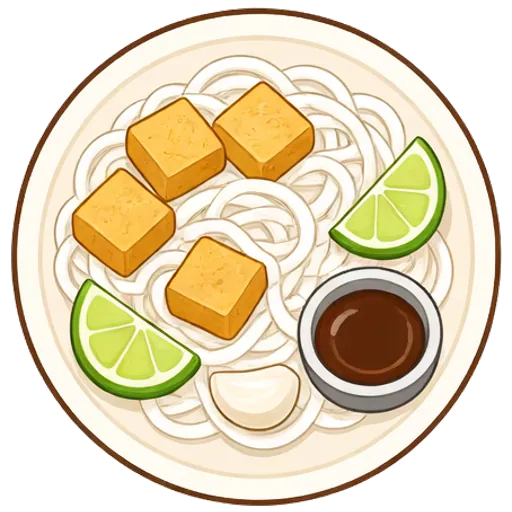
Vietnamese tofu noodle salad
Rice noodles, crispy tofu, crunchy vegetables, mint and peanuts with a sweet, tangy lime dressing, a vegan and gluten-free noodle bowl that packs beautifully.
- 35 min total
- 18 min hands-on
- Follow-a-recipe easy
- Serves 4
- About $2.67 a serving
- 530 calories
- Good the next day
- Vegan
- Gluten-free
- Dairy-free

Dolly says: Make the full amount and pack the rest for the next few days.
Ingredients
For 4 servings.
- 1 package extra-firm tofu
- 3 tbsp gluten-free tamari, divided
- 8 oz rice noodles
- 3 limes, juiced
- 1 clove garlic, grated
- 1 tsp chili garlic sauce
- 1 English cucumber, cut into matchsticks
- ⅓ cup peanuts, roughly chopped
- 1 cup shredded carrots
- ½ cup fresh mint, leaves
- ½ cup cilantro
From your pantry
- 1 tbsp cornstarch
- 2 tbsp vegetable oil
- 2 tbsp sugar
- 3 tbsp water
Each serving has about 530 calories, 21 g protein, 72 g carbs and 20 g fat, and costs about $2.67 at typical US grocery prices. Both are estimates from what the recipe uses.
Missing something?
- No extra-firm tofu? Firm tofu works.
- No limes? Lemons work.
- No English cucumbers? Cucumbers or mini cucumbers work.
- No shredded carrots? Carrots work.
- No cilantro? Fresh parsley works.
Steps
Tap an underlined word for a quick explanation.
Bring a large pot of water over high heat.
Bring to a boil. It means heating a liquid on high until it’s fully boiling before you move on. A lid on the pot gets it there faster, which makes it a good moment to chop something.
How you’ll know: Big bubbles break all over the surface, and they keep coming when you lift the lid.
High heat
Cut the tofu into ¾-inch , them dry, and them with the cornstarch.
Cube. Cubing means cutting food into chunky, even squares, usually three quarters of an inch to an inch. Same-size cubes cook at the same speed and brown on every side.
How you’ll know: Your pieces look like a handful of sugar cubes, a little bigger than diced, all close to the same size.
Pat dry. Patting dry means pressing paper towels onto food to soak up the moisture on its surface. Wet food steams instead of browning, so this is how you get a good sear and crisp skin.
How you’ll know: The surface feels tacky, not wet, and the last paper towel comes away barely damp.
Toss. Tossing means gently lifting and turning food so everything gets coated, like pasta in sauce or vegetables in oil. It coats every piece evenly without mashing anything.
How you’ll know: Every piece looks glossy or evenly coated, with no dry spots hiding underneath.
Heat the oil in a large nonstick over medium-high heat and cook the tofu, turning every few minutes, for 10 to 12 minutes, until and .
Skillet. A skillet is a frying pan: wide and flat with low, sloped sides. The shape lets steam escape, so food browns instead of stewing.
How you’ll know: It’s the pan you’d fry an egg in, and a 10 or 12 inch one handles most recipes.
Golden brown. Golden brown is the color of good toast, somewhere between yellow and light brown. It means the outside is cooked and crisp but not burnt.
How you’ll know: It looks like toast and smells toasty; dark brown with a bitter smell means it went too far.
Crispy. Crispy means the outside is dry, firm and crunchy. It comes from high heat, a little oil and room in the pan, because crowded food steams and goes soft.
How you’ll know: It sounds crunchy when you tap or bite it, and it doesn’t flop when you lift it.
Medium-high heatTimer: 11 min
 Dolly’s tip: Let each side sit until it lifts easily. It’ll stick if you rush it.
Food safety: Tofu is safe to eat straight from the package; cooking is only for texture and flavor.
Turn off the heat, the tofu with 1 tablespoon tamari, and tip it onto a plate to cool.
Toss. Tossing means gently lifting and turning food so everything gets coated, like pasta in sauce or vegetables in oil. It coats every piece evenly without mashing anything.
How you’ll know: Every piece looks glossy or evenly coated, with no dry spots hiding underneath.
Cook the noodles in the boiling water as the package says, then and them under cold water until cool.
Drain. Draining means pouring off liquid, like tipping pasta into a colander or spooning extra fat out of the pan. Pour hot grease into a can or jar, not the sink, where it hardens and clogs the pipes.
How you’ll know: Only a few drips are left, and the food isn’t sitting in a puddle.
Rinse. Rinsing means running cold water over rice or canned beans in a strainer while you swish them around. It washes off loose starch and can liquid, so rice cooks up fluffy and beans taste clean.
How you’ll know: The water running out goes from cloudy to mostly clear; it doesn’t have to be perfect.
High heatTimer: 4 min
the lime juice, sugar, water, garlic, chili garlic sauce and the rest of the tamari until the sugar dissolves.
Whisk. Whisking means beating quickly with a whisk or a fork to blend things together. It smooths out lumps and mixes eggs, oil or sauces evenly.
How you’ll know: It all looks one even color and texture, with no streaks or lumps.
Cut the cucumber into matchsticks and the peanuts.
Chop. Chopping means cutting food into bite-size pieces that don’t need to be neat. Keep them roughly the same size so everything cooks evenly.
How you’ll know: Your pieces are about half an inch and roughly alike, even if none of them are pretty.
the noodles with half the dressing, divide among 4 containers, and top with the cucumber, carrots, mint, cilantro, tofu and peanuts.
Toss. Tossing means gently lifting and turning food so everything gets coated, like pasta in sauce or vegetables in oil. It coats every piece evenly without mashing anything.
How you’ll know: Every piece looks glossy or evenly coated, with no dry spots hiding underneath.
Dolly’s tip: Pack the rest of the dressing in a small jar and pour it over at lunch. The bowls keep 4 days in the fridge.

Plan this in Dollop, and get the grocery list
Dollop plans your lunches along with the week’s dinners, puts what you need on the same grocery list, and walks you through each step.