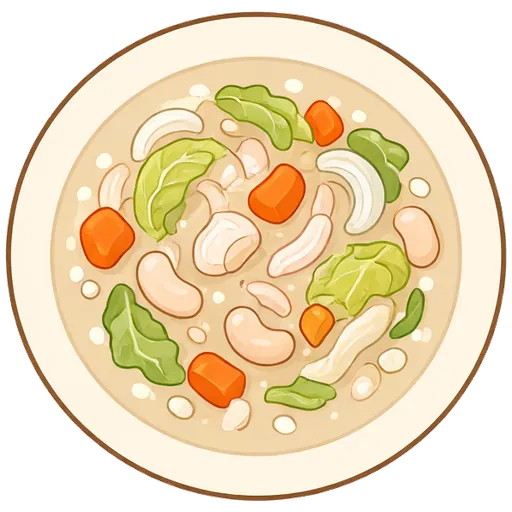
White bean and cabbage soup
Silky cabbage, creamy white beans and lots of garlic in a savory broth, the Tuscan kind of soup that gets better every time you reheat it.
- 45 min total
- 20 min hands-on
- Anyone can make this
- Serves 4
- About $2.38 a serving
- 350 calories
- Good the next day
- Vegetarian
- Gluten-free

Dolly says: Make the full amount. It’s just as good for lunch the next day.
Ingredients
For 4 servings.
- 1 yellow onion, diced
- 2 carrots, diced (optional)
- 4 cloves garlic, minced
- ½ head green cabbage, cored and chopped
- 2 cans cannellini beans, drained and rinsed
- 6 cups vegetable broth
- ¼ cup grated parmesan (optional)
From your pantry
- 3 tbsp olive oil, plus more for serving
- 1½ tsp salt, divided
- 1 tsp italian seasoning
- ¼ tsp red pepper flakes
- ½ tsp black pepper
Each serving has about 350 calories, 16 g protein, 49 g carbs and 11 g fat, and costs about $2.38 at typical US grocery prices. Both are estimates from what the recipe uses.
Missing something?
- No yellow onions? White onions or red onions work.
- No green cabbage? Red cabbage or coleslaw mix works.
- No vegetable broth? Chicken broth works.
- No grated parmesan? Parmesan wedge works.
Steps
Tap an underlined word for a quick explanation.
the onion and carrots and the garlic. Cut out the cabbage and the leaves into bite-size pieces.
Dice. Dicing means cutting food into small, even cubes, usually a quarter to half an inch across. Pieces the same size cook at the same speed, so nothing burns while the rest catches up.
How you’ll know: Your pieces are little cubes about the size of a chickpea, and they all look close to the same.
Mince. Mincing means chopping something into the tiniest pieces you can, smaller than a grain of rice. Tiny pieces melt into the dish, so you get the flavor without biting into a chunk of garlic.
How you’ll know: Every piece is tiny and about the same size, and the pile starts to look almost like a paste.
Core. Coring means cutting out the hard center of things like apples, peppers or cabbage. That center is tough and woody, so it’s the part you throw away.
How you’ll know: What’s left is all tender flesh, with no hard, pale center.
Chop. Chopping means cutting food into bite-size pieces that don’t need to be neat. Keep them roughly the same size so everything cooks evenly.
How you’ll know: Your pieces are about half an inch and roughly alike, even if none of them are pretty.
Heat the oil in a large pot over medium heat. Add the onion, carrots and ½ teaspoon salt and cook, stirring, 6 minutes, until soft.
Medium heatTimer: 6 min
Stir in the garlic, Italian seasoning and red pepper flakes for 1 minute, .
Fragrant. Fragrant means cooking until you can clearly smell it, usually garlic or spices, often in about 30 seconds. That’s the moment the flavor is ready, just before it can burn.
How you’ll know: You can smell it from a step back, and garlic is pale gold, not brown.
Medium heat
Add the cabbage and another ½ teaspoon salt and cook, stirring often, 6 to 8 minutes, until it has to about half its size.
Wilt. Wilting means cooking leafy greens just until they go soft and collapse. Greens shrink a lot, so a big pile of spinach becomes a small handful, and that’s normal.
How you’ll know: The leaves turn soft and deep green and slump into the pan, usually within a minute or two.
Medium heatTimer: 7 min
Add the beans, broth and the rest of the salt. over high heat, then and 15 minutes, until the cabbage is silky.
Bring to a boil. It means heating a liquid on high until it’s fully boiling before you move on. A lid on the pot gets it there faster, which makes it a good moment to chop something.
How you’ll know: Big bubbles break all over the surface, and they keep coming when you lift the lid.
Reduce the heat. It means turning the burner down, usually to medium-low or low, so food cooks gently instead of hard. Electric burners cool slowly, so lift the pan off for a moment if it’s bubbling hard.
How you’ll know: Within a minute the bubbling calms to a gentle simmer, or the sizzle turns quiet.
Simmer. Simmering means keeping a liquid just below a boil, with small bubbles rising gently. It cooks food evenly and lets a sauce thicken without scorching on the bottom.
How you’ll know: Small, lazy bubbles break the surface every second or so, and nothing is churning.
Low heatTimer: 15 min
Mash a ladleful of beans against the side of the pot to the broth a little. with the pepper and taste for salt.
Thicken. Thickening means cooking a sauce or soup until it’s less runny, by simmering it down or adding something like cornstarch. A thicker sauce clings to food instead of pooling on the plate.
How you’ll know: It coats the back of a spoon, and a line drawn through it with your finger holds its shape.
Season. Seasoning means adding salt, pepper or spices to bring out a food’s flavor. A little at a few stages tastes better than a lot all at the end.
How you’ll know: When you taste it, it tastes bright and like itself, not flat and not salty.
 Dolly’s tip: Soup that tastes flat almost always needs more salt. Add it a pinch at a time.
Ladle into bowls, with olive oil and sprinkle with parmesan.
Drizzle. Drizzling means pouring a thin, slow stream over the top of something. A thin stream spreads a little flavor a long way.
How you’ll know: You see thin lines across the food, not a puddle collecting underneath.

Plan this in Dollop, and get the grocery list
Dollop puts this dinner on a night that suits your week, lists only what you still need to buy, and walks you through each step while you cook.