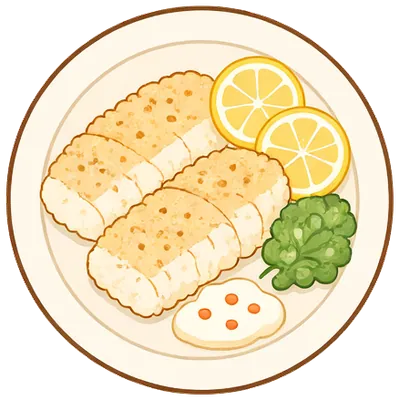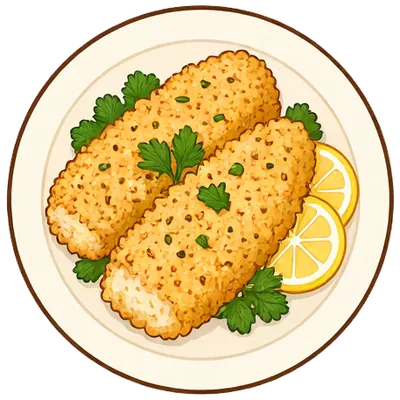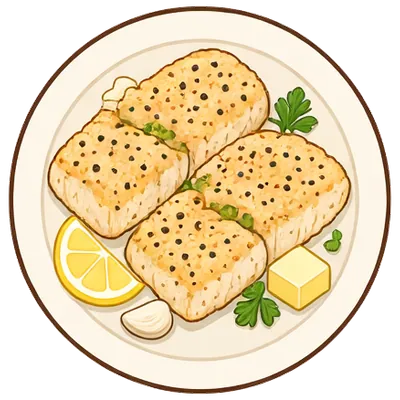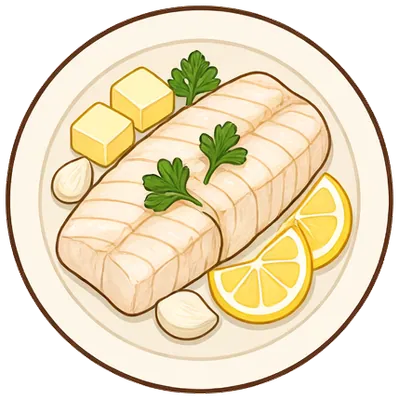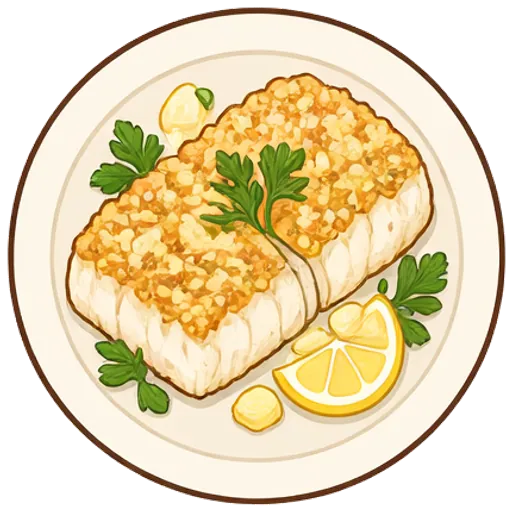
Baked cod
New England-style cod under a buttery, crunchy cracker topping, with a squeeze of lemon to finish.
- 30 min total
- 10 min hands-on
- Anyone can make this
- Serves 4
- About $4.53 a serving
- 300 calories

Dolly says: I’d make this on a weeknight. It’s on the table in 30 minutes.
Ingredients
For 4 servings.
- 4 cod fillets, about 6 oz each, thawed if frozen
- 1 lemon, half juiced, half cut into wedges
- 20 butter crackers
- 3 tbsp butter, melted
- 2 tbsp fresh parsley, chopped, divided
From your pantry
- ½ tsp salt
- ¼ tsp black pepper
- ½ tsp garlic powder
Each serving has about 300 calories, 32 g protein, 12 g carbs and 14 g fat, and costs about $4.53 at typical US grocery prices. Both are estimates from what the recipe uses.
Missing something?
- No cod fillets? Tilapia fillets work.
- No lemons? Limes work.
- No butter? Ghee works.
- No fresh parsley? Cilantro works.
Steps
Tap an underlined word for a quick explanation.
the oven to 400°F and brush a baking dish big enough to hold the fish with a little of the butter.
Preheat. Preheating means turning the oven on before you start, so it’s fully hot when the food goes in. Food that starts in a cold oven cooks unevenly and doesn’t brown the same.
How you’ll know: The oven beeps or its light clicks off, usually 10 to 15 minutes after you turn it on.
Melt. Melting means gently heating something solid, like butter or cheese, until it turns liquid. Low or medium heat keeps it from browning or burning.
How you’ll know: It’s smooth and liquid, and butter may foam a little but hasn’t turned brown.
the cod dry, set it in the dish, with the salt and pepper and the lemon juice over.
Pat dry. Patting dry means pressing paper towels onto food to soak up the moisture on its surface. Wet food steams instead of browning, so this is how you get a good sear and crisp skin.
How you’ll know: The surface feels tacky, not wet, and the last paper towel comes away barely damp.
Season. Seasoning means adding salt, pepper or spices to bring out a food’s flavor. A little at a few stages tastes better than a lot all at the end.
How you’ll know: When you taste it, it tastes bright and like itself, not flat and not salty.
Drizzle. Drizzling means pouring a thin, slow stream over the top of something. A thin stream spreads a little flavor a long way.
How you’ll know: You see thin lines across the food, not a puddle collecting underneath.
Crush the crackers in a zip-top bag with the bottom of a mug, then them with the rest of the butter, the garlic powder and half the parsley.
Stir. Stirring means moving food around with a spoon or spatula so it cooks evenly and doesn’t stick. Unless the recipe says constantly, every so often is plenty, and it gives food time to brown.
How you’ll know: When you drag the spoon across the bottom, nothing is sticking or scorching.
Press the buttery crumbs over the top of each fillet in an even layer.
for 15 to 20 minutes, until the crumbs are and the fish flakes easily in the thickest part.
Bake. Baking means cooking in the oven with dry heat all around the food. It cooks evenly from every side, so you can mostly leave it alone.
How you’ll know: It’s golden on top and passes the recipe’s check, like a clean toothpick or the right temperature.
Golden brown. Golden brown is the color of good toast, somewhere between yellow and light brown. It means the outside is cooked and crisp but not burnt.
How you’ll know: It looks like toast and smells toasty; dark brown with a bitter smell means it went too far.
Timer: 18 min
 Dolly’s tip: If the crumbs brown before the fish is done, lay a piece of foil loosely over the top.
Food safety: Fish is done at 145°F, when the middle looks opaque and flakes apart easily with a fork.
Scatter the rest of the parsley over and serve with the lemon wedges.

Plan this in Dollop, and get the grocery list
Dollop puts this dinner on a night that suits your week, lists only what you still need to buy, and walks you through each step while you cook.