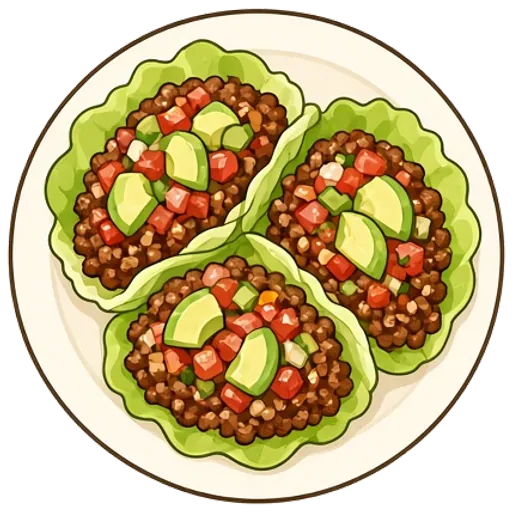
Beef taco lettuce wraps
Juicy homemade taco beef spooned into crisp lettuce cups and piled with avocado and pico for a fresh, crunchy taco night.
- 30 min total
- 25 min hands-on
- Anyone can make this
- Serves 4
- About $5.34 a serving
- 510 calories
- Good the next day
- Gluten-free
- Dairy-free

Dolly says: I’d make this on a weeknight. It’s on the table in 30 minutes.
Ingredients
For 4 servings.
- 1½ lb ground beef (85/15)
- 1 tbsp tomato paste
- 2 heads butter lettuce
- 2 avocados
- 1 cup pico de gallo
- 1 lime, cut into wedges
- 2 tbsp cilantro, chopped (optional)
From your pantry
- 1 tbsp chili powder
- 1½ tsp ground cumin
- 1 tsp garlic powder
- ½ tsp onion powder
- ½ tsp smoked paprika
- ½ tsp dried oregano
- 1¼ tsp salt
- ½ cup water
Each serving has about 510 calories, 35 g protein, 14 g carbs and 36 g fat, and costs about $5.34 at typical US grocery prices. Both are estimates from what the recipe uses.
Missing something?
- No ground beef? Lean ground beef works.
- No butter lettuce? Iceberg lettuce or green leaf lettuce or romaine lettuce works.
- No avocados? Guacamole works.
- No pico de gallo? Salsa works.
- No limes? Lemons work.
- No cilantro? Fresh parsley works.
Steps
Tap an underlined word for a quick explanation.
the chili powder, cumin, garlic powder, onion powder, paprika, oregano and salt together in a small bowl.
Stir. Stirring means moving food around with a spoon or spatula so it cooks evenly and doesn’t stick. Unless the recipe says constantly, every so often is plenty, and it gives food time to brown.
How you’ll know: When you drag the spoon across the bottom, nothing is sticking or scorching.
Put the beef in a large over medium-high heat and break it into chunks with a wooden spoon.
Skillet. A skillet is a frying pan: wide and flat with low, sloped sides. The shape lets steam escape, so food browns instead of stewing.
How you’ll know: It’s the pan you’d fry an egg in, and a 10 or 12 inch one handles most recipes.
Medium-high heat
Cook without for 3 minutes, until underneath, then break it up and cook 4 to 5 minutes more, until no pink is left.
Stir. Stirring means moving food around with a spoon or spatula so it cooks evenly and doesn’t stick. Unless the recipe says constantly, every so often is plenty, and it gives food time to brown.
How you’ll know: When you drag the spoon across the bottom, nothing is sticking or scorching.
Brown. Browning means cooking until the outside turns brown, which is where a lot of savory flavor comes from. Give food room and time without stirring, or it steams and stays gray.
How you’ll know: The food looks brown rather than gray, and the kitchen smells toasty and savory.
Medium-high heatTimer: 8 min
Food safety: Ground beef, pork and lamb are done at 160°F. When it’s cooked through there’s no pink left anywhere in the pan.
Spoon off most of the fat, then in the spice mix and tomato paste and cook 1 minute, .
Stir. Stirring means moving food around with a spoon or spatula so it cooks evenly and doesn’t stick. Unless the recipe says constantly, every so often is plenty, and it gives food time to brown.
How you’ll know: When you drag the spoon across the bottom, nothing is sticking or scorching.
Fragrant. Fragrant means cooking until you can clearly smell it, usually garlic or spices, often in about 30 seconds. That’s the moment the flavor is ready, just before it can burn.
How you’ll know: You can smell it from a step back, and garlic is pale gold, not brown.
Medium heatTimer: 1 min
 Dolly’s tip: Tilt the pan and spoon the fat into a mug or a can, never down the sink.
Add the water and 3 to 4 minutes, until the sauce and clings to the meat.
Simmer. Simmering means keeping a liquid just below a boil, with small bubbles rising gently. It cooks food evenly and lets a sauce thicken without scorching on the bottom.
How you’ll know: Small, lazy bubbles break the surface every second or so, and nothing is churning.
Thicken. Thickening means cooking a sauce or soup until it’s less runny, by simmering it down or adding something like cornstarch. A thicker sauce clings to food instead of pooling on the plate.
How you’ll know: It coats the back of a spoon, and a line drawn through it with your finger holds its shape.
Medium heatTimer: 3 min 30 sec
Separate the lettuce leaves, and them dry, and the avocado.
Rinse. Rinsing means running cold water over rice or canned beans in a strainer while you swish them around. It washes off loose starch and can liquid, so rice cooks up fluffy and beans taste clean.
How you’ll know: The water running out goes from cloudy to mostly clear; it doesn’t have to be perfect.
Pat dry. Patting dry means pressing paper towels onto food to soak up the moisture on its surface. Wet food steams instead of browning, so this is how you get a good sear and crisp skin.
How you’ll know: The surface feels tacky, not wet, and the last paper towel comes away barely damp.
Dice. Dicing means cutting food into small, even cubes, usually a quarter to half an inch across. Pieces the same size cook at the same speed, so nothing burns while the rest catches up.
How you’ll know: Your pieces are little cubes about the size of a chickpea, and they all look close to the same.
Dolly’s tip: The small inner leaves make the best cups. Use two outer ones stacked if they tear.Spoon the beef into the lettuce cups, top with avocado and pico, and serve with lime wedges and cilantro if you like.

Plan this in Dollop, and get the grocery list
Dollop puts this dinner on a night that suits your week, lists only what you still need to buy, and walks you through each step while you cook.