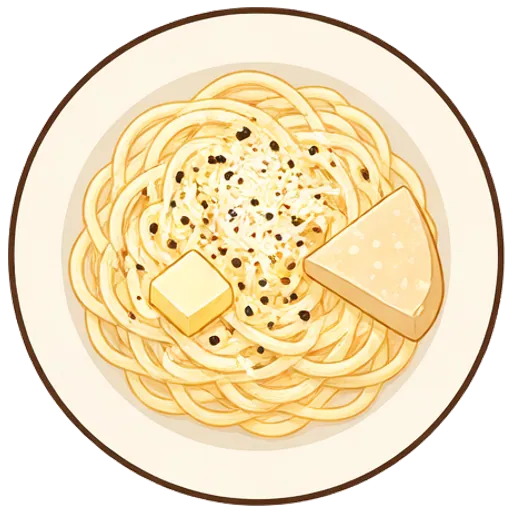
Cacio e pepe
Three ingredients, cheese, pepper and pasta, tossed into a creamy, peppery sauce that feels like a trick the first time it works.
- 30 min total
- 25 min hands-on
- A little more hands-on
- Serves 2
- About $2.34 a serving
- 720 calories
- Vegetarian

Dolly says: Read the steps once before you start. Everything goes smoother after that.
Ingredients
For 2 servings.
- 1¼ cups parmesan wedge, finely grated
- 8 oz spaghetti
- 2 tbsp butter
From your pantry
- 2 tsp salt
- 2 tsp black pepper, coarsely ground, plus more to serve
Each serving has about 720 calories, 33 g protein, 88 g carbs and 26 g fat, and costs about $2.34 at typical US grocery prices. Both are estimates from what the recipe uses.
Missing something?
- No parmesan wedge? Grated parmesan works.
- No spaghetti? Fettuccine works.
- No butter? Ghee works.
Steps
Tap an underlined word for a quick explanation.
Finely the parmesan on the small holes of a box grater into a medium bowl. It should look fluffy, like snow.
Grate. Grating means rubbing food across the holes of a grater to make fine shreds or flakes. It spreads cheese, garlic or ginger evenly through a dish so it melts right in.
How you’ll know: Even shreds fall off the back of the grater, and you stop while the piece is still big enough to hold.
 Dolly’s tip: Cheese from a tub won’t melt smoothly here. This is the one dish where the wedge really matters.
Bring about 3 quarts of water in a large pot over high heat with 2 teaspoons salt.
Bring to a boil. It means heating a liquid on high until it’s fully boiling before you move on. A lid on the pot gets it there faster, which makes it a good moment to chop something.
How you’ll know: Big bubbles break all over the surface, and they keep coming when you lift the lid.
High heat
Dolly’s tip: Less water and less salt than usual. The water gets extra starchy, and the cheese brings plenty of salt.Add the spaghetti and cook 2 minutes less than the package says, stirring often.
High heatTimer: 8 min
While it cooks, the butter in a large over medium heat, add the pepper, and toast it about 1 minute, .
Melt. Melting means gently heating something solid, like butter or cheese, until it turns liquid. Low or medium heat keeps it from browning or burning.
How you’ll know: It’s smooth and liquid, and butter may foam a little but hasn’t turned brown.
Skillet. A skillet is a frying pan: wide and flat with low, sloped sides. The shape lets steam escape, so food browns instead of stewing.
How you’ll know: It’s the pan you’d fry an egg in, and a 10 or 12 inch one handles most recipes.
Fragrant. Fragrant means cooking until you can clearly smell it, usually garlic or spices, often in about 30 seconds. That’s the moment the flavor is ready, just before it can burn.
How you’ll know: You can smell it from a step back, and garlic is pale gold, not brown.
Medium heatTimer: 1 min
Scoop out 2 cups of with a mug, then the spaghetti.
Reserve pasta water. It means scooping out a cup of the starchy cooking water before you drain the pasta. A splash helps the sauce cling and turn silky, and it’s the step everyone forgets.
How you’ll know: A mug of cloudy water is sitting by the stove before the pasta goes into the colander.
Drain. Draining means pouring off liquid, like tipping pasta into a colander or spooning extra fat out of the pan. Pour hot grease into a can or jar, not the sink, where it hardens and clogs the pipes.
How you’ll know: Only a few drips are left, and the food isn’t sitting in a puddle.
Pour ½ cup into the , add the spaghetti, and for 1 to 2 minutes, until the pasta is and most of the water has soaked in.
Reserve pasta water. It means scooping out a cup of the starchy cooking water before you drain the pasta. A splash helps the sauce cling and turn silky, and it’s the step everyone forgets.
How you’ll know: A mug of cloudy water is sitting by the stove before the pasta goes into the colander.
Skillet. A skillet is a frying pan: wide and flat with low, sloped sides. The shape lets steam escape, so food browns instead of stewing.
How you’ll know: It’s the pan you’d fry an egg in, and a 10 or 12 inch one handles most recipes.
Toss. Tossing means gently lifting and turning food so everything gets coated, like pasta in sauce or vegetables in oil. It coats every piece evenly without mashing anything.
How you’ll know: Every piece looks glossy or evenly coated, with no dry spots hiding underneath.
Al dente. Al dente is Italian for “to the tooth”: pasta cooked until tender but with a slight firm bite in the center. It holds up in sauce and keeps softening a little after you drain it.
How you’ll know: Bite a piece a minute before the package time: tender, with a slight firm bite in the middle and no crunch.
Medium heatTimer: 1 min 30 sec
Stir 3 tablespoons of the into the cheese with a fork to make a thick paste. The water should be warm by now, not .
Reserve pasta water. It means scooping out a cup of the starchy cooking water before you drain the pasta. A splash helps the sauce cling and turn silky, and it’s the step everyone forgets.
How you’ll know: A mug of cloudy water is sitting by the stove before the pasta goes into the colander.
Boil. Boiling means heating a liquid until big bubbles rise and break all over the surface. It’s the fastest way to cook pasta, potatoes and eggs, because it’s as hot as water gets.
How you’ll know: Bubbles are breaking across the whole surface, not just at the edges, and steam is rising.
Dolly’s tip: Very hot water or a hot pan makes the cheese seize into clumps. Warm is what you want.Take the off the heat, wait 30 seconds, then add the cheese paste and hard with tongs, adding splashes of , until creamy and glossy.
Skillet. A skillet is a frying pan: wide and flat with low, sloped sides. The shape lets steam escape, so food browns instead of stewing.
How you’ll know: It’s the pan you’d fry an egg in, and a 10 or 12 inch one handles most recipes.
Toss. Tossing means gently lifting and turning food so everything gets coated, like pasta in sauce or vegetables in oil. It coats every piece evenly without mashing anything.
How you’ll know: Every piece looks glossy or evenly coated, with no dry spots hiding underneath.
Reserve pasta water. It means scooping out a cup of the starchy cooking water before you drain the pasta. A splash helps the sauce cling and turn silky, and it’s the step everyone forgets.
How you’ll know: A mug of cloudy water is sitting by the stove before the pasta goes into the colander.
Timer: 30 sec
Dolly’s tip: If it clumps, add a splash more water and keep tossing. Most clumps melt back in.Serve right away, with more pepper cracked over the top.

Plan this in Dollop, and get the grocery list
Dollop puts this dinner on a night that suits your week, lists only what you still need to buy, and walks you through each step while you cook.
More dinners like this
Creamy tomato penne
30 min
Garlicky spaghetti with peas and parmesan
20 min
Spaghetti aglio e olio
25 min
Air fryer pasta bake for two
25 min
30-minute dinners ›High-protein dinners ›What to make with pasta and parmesan ›