Cilantro lime rice
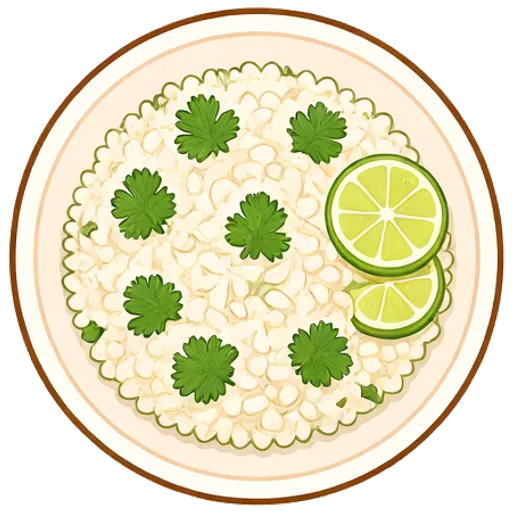
Fluffy rice with fresh lime and a big handful of cilantro, just like your favorite burrito place, the side that makes taco night feel complete.
- 35 min total
- 10 min hands-on
- Anyone can make this
- Serves 4
- About $0.31 a serving
- 210 calories
- Good the next day
- Vegan
- Gluten-free
- Dairy-free

Dolly says: Make the full amount. Whatever’s left keeps for tomorrow.
Ingredients
For 4 servings.
- 1 cup long-grain white rice, long-grain
- 1 clove garlic, minced
- 1 lime, zested and juiced
- ½ cup cilantro, chopped
From your pantry
- 1 tbsp olive oil
- 1½ cups water
- ¾ tsp salt
Each serving has about 210 calories, 4 g protein, 39 g carbs and 4 g fat, and costs about $0.31 at typical US grocery prices. Both are estimates from what the recipe uses.
Missing something?
- No long-grain white rice? Jasmine rice or basmati rice works.
- No limes? Lemons work.
- No cilantro? Fresh parsley works.
Steps
Tap an underlined word for a quick explanation.
the rice in a strainer under cold water, swishing it with your fingers, until the water runs mostly clear.
Rinse. Rinsing means running cold water over rice or canned beans in a strainer while you swish them around. It washes off loose starch and can liquid, so rice cooks up fluffy and beans taste clean.
How you’ll know: The water running out goes from cloudy to mostly clear; it doesn’t have to be perfect.
 Dolly’s tip: Rinsing washes off loose starch, which is what makes rice sticky and clumpy.
Heat the oil in a medium over medium heat, add the rice and garlic, and 2 minutes, until the rice smells toasty.
Saucepan. A saucepan is a pot with tall, straight sides and one long handle. It’s for things that need depth, like rice, sauces or a few boiled eggs.
How you’ll know: The food fills it about halfway, leaving room to bubble without spilling over.
Stir. Stirring means moving food around with a spoon or spatula so it cooks evenly and doesn’t stick. Unless the recipe says constantly, every so often is plenty, and it gives food time to brown.
How you’ll know: When you drag the spoon across the bottom, nothing is sticking or scorching.
Medium heatTimer: 2 min
Add the water and salt and over high heat.
Bring to a boil. It means heating a liquid on high until it’s fully boiling before you move on. A lid on the pot gets it there faster, which makes it a good moment to chop something.
How you’ll know: Big bubbles break all over the surface, and they keep coming when you lift the lid.
High heat
once, cover, turn the heat to low, and cook 18 minutes without lifting the lid.
Stir. Stirring means moving food around with a spoon or spatula so it cooks evenly and doesn’t stick. Unless the recipe says constantly, every so often is plenty, and it gives food time to brown.
How you’ll know: When you drag the spoon across the bottom, nothing is sticking or scorching.
Low heatTimer: 18 min
Dolly’s tip: No peeking. The steam trapped under the lid is what cooks the rice.While it cooks, and juice the lime and the cilantro.
Zest. Zest is the thin, colored outer layer of citrus peel, rubbed off on the smallest holes of a grater. It holds the fruit’s fragrant oils, so it adds bright flavor without the sourness of juice.
How you’ll know: You see bright flecks and smell citrus right away; stop when you reach the white layer, which is bitter.
Chop. Chopping means cutting food into bite-size pieces that don’t need to be neat. Keep them roughly the same size so everything cooks evenly.
How you’ll know: Your pieces are about half an inch and roughly alike, even if none of them are pretty.
Take the pot off the heat and let it , still covered, for 5 minutes.
Rest. Resting means letting cooked meat sit for a few minutes before you cut it. It keeps cooking gently, and more of the juice stays in the meat instead of running onto the board.
How you’ll know: Loosely covered with foil, it stays hot, and very little juice runs out when you slice it.
Timer: 5 min
Fluff the rice with a fork, then gently the lime zest, lime juice and cilantro.
Fold. Folding means mixing gently by scooping from the bottom and turning it over the top, instead of stirring hard. It keeps light mixtures airy and soft things like berries or herbs in one piece.
How you’ll know: You use slow, wide strokes and stop as soon as there are no streaks left.
Dolly’s tip: Fold gently. Hard stirring breaks the grains and makes the rice mushy.

Plan this in Dollop, and get the grocery list
When you host a dinner, Dollop builds the menu around your guests’ allergies, works out a cooking timeline back from when everyone sits down, and puts it all on one grocery list.