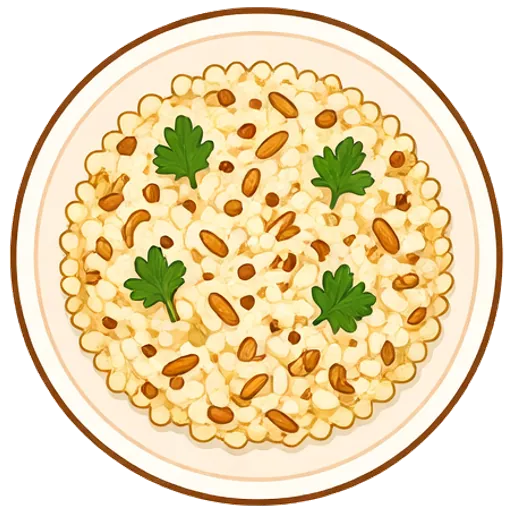
Buttery rice pilaf with toasted orzo
Rice and tiny pasta toasted golden in butter, then simmered in broth until fluffy, a savory side that tastes like it came from a good restaurant.
- 35 min total
- 10 min hands-on
- Anyone can make this
- Serves 4
- About $0.58 a serving
- 280 calories
- Good the next day
- Vegetarian

Dolly says: Make the full amount. Whatever’s left keeps for tomorrow.
Ingredients
For 4 servings.
- 1 cup long-grain white rice, long-grain
- 2 tbsp butter
- ⅓ cup orzo
- 2 cups vegetable broth
- 2 tbsp fresh parsley, chopped (optional)
From your pantry
- ½ tsp salt
Each serving has about 280 calories, 5 g protein, 49 g carbs and 6 g fat, and costs about $0.58 at typical US grocery prices. Both are estimates from what the recipe uses.
Missing something?
- No long-grain white rice? Jasmine rice or basmati rice works.
- No butter? Ghee works.
- No fresh parsley? Cilantro works.
Steps
Tap an underlined word for a quick explanation.
the rice in a strainer under cold water until the water runs mostly clear, then let it .
Rinse. Rinsing means running cold water over rice or canned beans in a strainer while you swish them around. It washes off loose starch and can liquid, so rice cooks up fluffy and beans taste clean.
How you’ll know: The water running out goes from cloudy to mostly clear; it doesn’t have to be perfect.
Drain. Draining means pouring off liquid, like tipping pasta into a colander or spooning extra fat out of the pan. Pour hot grease into a can or jar, not the sink, where it hardens and clogs the pipes.
How you’ll know: Only a few drips are left, and the food isn’t sitting in a puddle.
the butter in a medium over medium heat.
Melt. Melting means gently heating something solid, like butter or cheese, until it turns liquid. Low or medium heat keeps it from browning or burning.
How you’ll know: It’s smooth and liquid, and butter may foam a little but hasn’t turned brown.
Saucepan. A saucepan is a pot with tall, straight sides and one long handle. It’s for things that need depth, like rice, sauces or a few boiled eggs.
How you’ll know: The food fills it about halfway, leaving room to bubble without spilling over.
Medium heat
Add the orzo and 2 to 3 minutes, until it’s and smells nutty.
Stir. Stirring means moving food around with a spoon or spatula so it cooks evenly and doesn’t stick. Unless the recipe says constantly, every so often is plenty, and it gives food time to brown.
How you’ll know: When you drag the spoon across the bottom, nothing is sticking or scorching.
Golden brown. Golden brown is the color of good toast, somewhere between yellow and light brown. It means the outside is cooked and crisp but not burnt.
How you’ll know: It looks like toast and smells toasty; dark brown with a bitter smell means it went too far.
Medium heatTimer: 2 min 30 sec
 Dolly’s tip: It goes from golden to dark fast at the end, so keep stirring and have the rice ready.
Add the rice and 1 minute to coat it in the butter.
Stir. Stirring means moving food around with a spoon or spatula so it cooks evenly and doesn’t stick. Unless the recipe says constantly, every so often is plenty, and it gives food time to brown.
How you’ll know: When you drag the spoon across the bottom, nothing is sticking or scorching.
Medium heatTimer: 1 min
Pour in the broth and salt and over high heat.
Bring to a boil. It means heating a liquid on high until it’s fully boiling before you move on. A lid on the pot gets it there faster, which makes it a good moment to chop something.
How you’ll know: Big bubbles break all over the surface, and they keep coming when you lift the lid.
High heat
once, cover, turn the heat to low, and cook 18 minutes without lifting the lid.
Stir. Stirring means moving food around with a spoon or spatula so it cooks evenly and doesn’t stick. Unless the recipe says constantly, every so often is plenty, and it gives food time to brown.
How you’ll know: When you drag the spoon across the bottom, nothing is sticking or scorching.
Low heatTimer: 18 min
Take it off the heat, let it covered for 5 minutes, then fluff with a fork and scatter with parsley.
Rest. Resting means letting cooked meat sit for a few minutes before you cut it. It keeps cooking gently, and more of the juice stays in the meat instead of running onto the board.
How you’ll know: Loosely covered with foil, it stays hot, and very little juice runs out when you slice it.
Timer: 5 min

Plan this in Dollop, and get the grocery list
When you host a dinner, Dollop builds the menu around your guests’ allergies, works out a cooking timeline back from when everyone sits down, and puts it all on one grocery list.