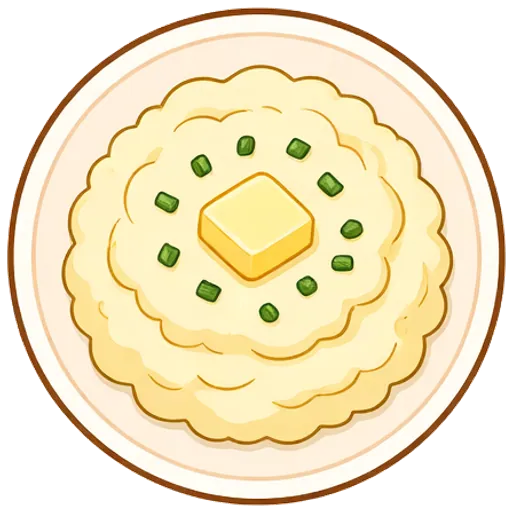
Creamy mashed potatoes
Buttery, fluffy mashed potatoes with no lumps and no glue, made with golden potatoes that taste rich all on their own.
- 40 min total
- 15 min hands-on
- Anyone can make this
- Serves 4
- About $1.31 a serving
- 300 calories
- Good the next day
- Vegetarian
- Gluten-free

Dolly says: Make the full amount. Whatever’s left keeps for tomorrow.
Ingredients
For 4 servings.
- 2 lb Yukon Gold potatoes
- ¼ cup butter
- ¾ cup milk
- 1 tbsp chives, chopped (optional)
From your pantry
- 1½ tsp salt, divided
- ¼ tsp black pepper
Each serving has about 300 calories, 6 g protein, 42 g carbs and 13 g fat, and costs about $1.31 at typical US grocery prices. Both are estimates from what the recipe uses.
Missing something?
- No Yukon Gold potatoes? Russet potatoes or red potatoes work.
- No butter? Ghee works.
- No milk? Half-and-half works.
- No chives? Green onions work.
Steps
Tap an underlined word for a quick explanation.
the potatoes and cut them into 2-inch chunks so they all cook at the same speed.
Peel. Peeling means removing the skin with a vegetable peeler or a small knife. It takes off tough or bitter skins, though potato and carrot skins are fine to leave on unless the recipe insists.
How you’ll know: The color underneath is even all over, with no patches of skin left behind.
Put them in a large pot, cover with cold water by 1 inch, add 1 teaspoon salt, and over high heat.
Bring to a boil. It means heating a liquid on high until it’s fully boiling before you move on. A lid on the pot gets it there faster, which makes it a good moment to chop something.
How you’ll know: Big bubbles break all over the surface, and they keep coming when you lift the lid.
High heat
 Dolly’s tip: Starting in cold water cooks them evenly, so the outsides don’t fall apart before the middles are soft.
Turn the heat to medium and 15 to 18 minutes, until a fork slides into a chunk with no push.
Simmer. Simmering means keeping a liquid just below a boil, with small bubbles rising gently. It cooks food evenly and lets a sauce thicken without scorching on the bottom.
How you’ll know: Small, lazy bubbles break the surface every second or so, and nothing is churning.
Medium heatTimer: 16 min
Meanwhile, warm the milk and butter in a small over low heat until the butter .
Saucepan. A saucepan is a pot with tall, straight sides and one long handle. It’s for things that need depth, like rice, sauces or a few boiled eggs.
How you’ll know: The food fills it about halfway, leaving room to bubble without spilling over.
Melt. Melting means gently heating something solid, like butter or cheese, until it turns liquid. Low or medium heat keeps it from browning or burning.
How you’ll know: It’s smooth and liquid, and butter may foam a little but hasn’t turned brown.
Low heat
Dolly’s tip: Warm milk keeps the potatoes hot and fluffy. Cold milk makes them stiff.the potatoes, return them to the hot pot off the heat, and let them sit 1 minute to dry.
Drain. Draining means pouring off liquid, like tipping pasta into a colander or spooning extra fat out of the pan. Pour hot grease into a can or jar, not the sink, where it hardens and clogs the pipes.
How you’ll know: Only a few drips are left, and the food isn’t sitting in a puddle.
Steam. Steaming means cooking food over or in a little simmering water with a lid on to trap the steam. It cooks gently and keeps vegetables bright and tender.
How you’ll know: The color turns vivid, and a fork goes in with just a little resistance.
Timer: 1 min
Mash with a potato masher or a sturdy fork until smooth, then in the warm milk and butter a little at a time.
Stir. Stirring means moving food around with a spoon or spatula so it cooks evenly and doesn’t stick. Unless the recipe says constantly, every so often is plenty, and it gives food time to brown.
How you’ll know: When you drag the spoon across the bottom, nothing is sticking or scorching.
Dolly’s tip: Mash by hand. A blender or mixer overworks the starch and turns potatoes gluey.with the pepper and up to ½ teaspoon more salt, tasting as you go, then top with chives.
Season. Seasoning means adding salt, pepper or spices to bring out a food’s flavor. A little at a few stages tastes better than a lot all at the end.
How you’ll know: When you taste it, it tastes bright and like itself, not flat and not salty.

Plan this in Dollop, and get the grocery list
When you host a dinner, Dollop builds the menu around your guests’ allergies, works out a cooking timeline back from when everyone sits down, and puts it all on one grocery list.