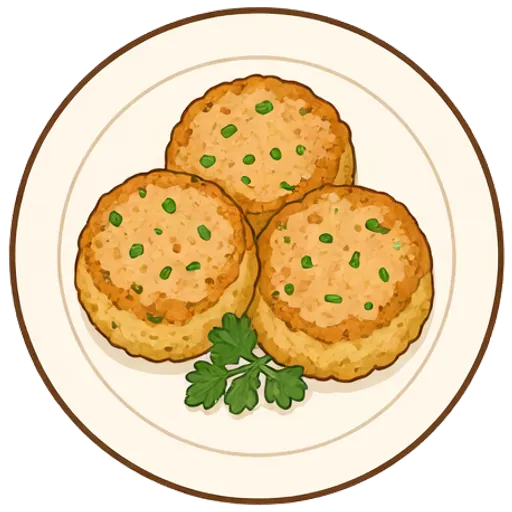
Fish cakes
Crisp golden fish cakes made the British way, with flaky white fish, fluffy mashed potato and herbs, and they freeze beautifully.
- 75 min total
- 40 min hands-on
- A little more hands-on
- Serves 4
- About $2.28 a serving
- 450 calories
- Good the next day

Dolly says: Make the full amount. It’s just as good for lunch the next day.
Ingredients
For 4 servings.
- 2 russet potatoes, peeled and cut into chunks
- 1 lb frozen white fish fillets, thawed
- 1 cup milk
- 1 tbsp butter
- 3 tbsp fresh parsley, chopped
- 1 lemon, zested, then cut into wedges
- 3 green onions, thinly sliced
- 1 tsp Dijon mustard
- 1 large egg, beaten
- 1 cup panko breadcrumbs
From your pantry
- 1½ tsp salt, divided
- ¼ tsp black pepper
- ¼ cup all-purpose flour
- ¼ cup vegetable oil, divided
Each serving has about 450 calories, 26 g protein, 41 g carbs and 21 g fat, and costs about $2.28 at typical US grocery prices. Both are estimates from what the recipe uses.
Missing something?
- No russet potatoes? Yukon Gold potatoes work.
- No milk? Half-and-half works.
- No butter? Ghee works.
- No fresh parsley? Cilantro works.
- No lemons? Limes work.
- No green onions? Chives work.
Steps
Tap an underlined word for a quick explanation.
Put the potatoes in a pot, cover with cold water, add 1 teaspoon of the salt and over high heat.
Bring to a boil. It means heating a liquid on high until it’s fully boiling before you move on. A lid on the pot gets it there faster, which makes it a good moment to chop something.
How you’ll know: Big bubbles break all over the surface, and they keep coming when you lift the lid.
High heat
15 minutes, until very tender.
Simmer. Simmering means keeping a liquid just below a boil, with small bubbles rising gently. It cooks food evenly and lets a sauce thicken without scorching on the bottom.
How you’ll know: Small, lazy bubbles break the surface every second or so, and nothing is churning.
Low heatTimer: 15 min
Meanwhile, put the fish and milk in a and bring to a gentle over medium heat. Cook 5 minutes, until the fish flakes, then lift it out to cool.
Skillet. A skillet is a frying pan: wide and flat with low, sloped sides. The shape lets steam escape, so food browns instead of stewing.
How you’ll know: It’s the pan you’d fry an egg in, and a 10 or 12 inch one handles most recipes.
Simmer. Simmering means keeping a liquid just below a boil, with small bubbles rising gently. It cooks food evenly and lets a sauce thicken without scorching on the bottom.
How you’ll know: Small, lazy bubbles break the surface every second or so, and nothing is churning.
Medium heatTimer: 5 min
Food safety: Fish is done at 145°F, when the middle looks opaque and flakes apart easily with a fork.
the potatoes, return them to the pot off the heat and let them dry for 2 minutes, then mash with the butter until smooth.
Drain. Draining means pouring off liquid, like tipping pasta into a colander or spooning extra fat out of the pan. Pour hot grease into a can or jar, not the sink, where it hardens and clogs the pipes.
How you’ll know: Only a few drips are left, and the food isn’t sitting in a puddle.
Steam. Steaming means cooking food over or in a little simmering water with a lid on to trap the steam. It cooks gently and keeps vegetables bright and tender.
How you’ll know: The color turns vivid, and a fork goes in with just a little resistance.
Timer: 2 min
 Dolly’s tip: Dry mash makes firm cakes. Wet mash makes cakes that fall apart in the pan.
Flake the fish into the mash and add the parsley, lemon , green onions, mustard, pepper and the rest of the salt. Mix gently.
Zest. Zest is the thin, colored outer layer of citrus peel, rubbed off on the smallest holes of a grater. It holds the fruit’s fragrant oils, so it adds bright flavor without the sourness of juice.
How you’ll know: You see bright flecks and smell citrus right away; stop when you reach the white layer, which is bitter.
Shape into 8 cakes about ¾ inch thick and chill for 15 minutes to firm up.
Timer: 15 min
Set out the flour, beaten egg and panko in three shallow bowls. Coat each cake in flour, then egg, then panko.
Heat half the oil in a large nonstick over medium heat. Cook 4 cakes for 3 to 4 minutes per side, until deep and hot through.
Skillet. A skillet is a frying pan: wide and flat with low, sloped sides. The shape lets steam escape, so food browns instead of stewing.
How you’ll know: It’s the pan you’d fry an egg in, and a 10 or 12 inch one handles most recipes.
Golden brown. Golden brown is the color of good toast, somewhere between yellow and light brown. It means the outside is cooked and crisp but not burnt.
How you’ll know: It looks like toast and smells toasty; dark brown with a bitter smell means it went too far.
Medium heatTimer: 7 min
Food safety: For the safest eggs, cook until the whites are fully set and the yolks begin to thicken. Dishes made with eggs are done at 160°F.
Wipe out the pan, add the rest of the oil and cook the rest of the cakes the same way.
Medium heatTimer: 7 min
Serve hot with the lemon wedges.
Dolly’s tip: To freeze, lay coated, uncooked cakes on a tray, freeze, then bag them. Cook from frozen over medium-low heat, about 6 minutes per side.

Plan this in Dollop, and get the grocery list
Dollop puts this dinner on a night that suits your week, lists only what you still need to buy, and walks you through each step while you cook.
More dinners like this
Cozy comfort food ›Make-ahead and freezer-friendly ›What to make with eggs and potatoes ›