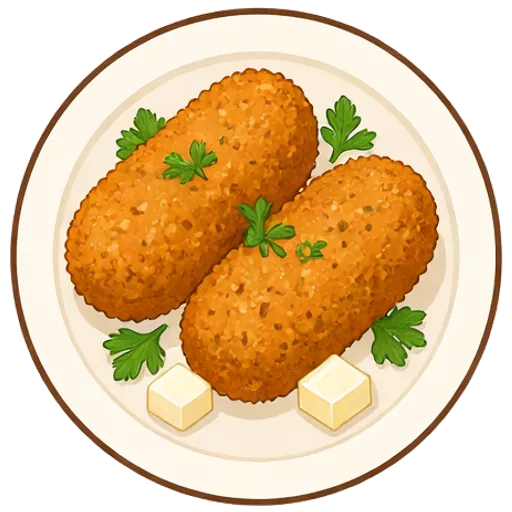
Glamorgan sausages (Welsh cheese and leek)
Crisp, golden Welsh ‘sausages’ made from cheddar, soft leeks and breadcrumbs, served with buttery peas and mustard, a meatless British classic worth knowing.
- 55 min total
- 40 min hands-on
- A little more hands-on
- Serves 4
- About $1.80 a serving
- 490 calories
- Vegetarian

Dolly says: Read the steps once before you start. Everything goes smoother after that.
Ingredients
For 4 servings.
- 1 leek
- 3 tbsp butter, divided
- 2 cups panko breadcrumbs, divided
- 4 oz cheddar cheese, grated
- 2 tbsp fresh parsley, chopped
- 1 tsp ground mustard
- 2 large eggs
- 2 cups frozen peas
- 2 tbsp Dijon mustard, for serving
From your pantry
- ½ tsp salt, divided
- ½ tsp dried thyme
- ¼ tsp black pepper
- 3 tbsp vegetable oil
Each serving has about 490 calories, 17 g protein, 33 g carbs and 33 g fat, and costs about $1.80 at typical US grocery prices. Both are estimates from what the recipe uses.
Missing something?
- No butter? Ghee works.
- No cheddar cheese? Shredded cheddar or Monterey Jack cheese or Mexican blend cheese works.
- No fresh parsley? Cilantro works.
- No frozen peas? Frozen mixed vegetables work.
Steps
Tap an underlined word for a quick explanation.
the dark green top and the root off the leek, it and out any grit. it.
Trim. Trimming means cutting off the parts you don’t eat, like stem ends, tough bits or thick fat. It keeps chewy or bitter bits out of the finished dish.
How you’ll know: What’s left is the good part, with no dry ends, woody stems or thick white fat.
Halve. Halving means cutting something into two equal pieces. Even halves cook at the same speed, so one doesn’t dry out while the other finishes.
How you’ll know: The two pieces look like mirror images of each other.
Lengthwise. Lengthwise means cutting along the long side, from stem to tip, which gives long pieces. Crosswise is the other way, straight across the middle, which gives short, round ones.
How you’ll know: Lengthwise halves of a zucchini look like two little canoes; crosswise pieces look like coins.
Rinse. Rinsing means running cold water over rice or canned beans in a strainer while you swish them around. It washes off loose starch and can liquid, so rice cooks up fluffy and beans taste clean.
How you’ll know: The water running out goes from cloudy to mostly clear; it doesn’t have to be perfect.
Finely chop. Finely chopping means cutting food into small pieces, a little bigger than minced, about the size of a lentil. Small pieces spread their flavor through the dish and cook quickly.
How you’ll know: Nothing is bigger than a lentil, and the pile looks like confetti rather than paste.
 Dolly’s tip: Leeks hide dirt between their layers. Fan them open under the tap and it rinses right out.
2 tablespoons butter in a large nonstick over medium heat and cook the leek with of salt until very soft, about 6 minutes. Let it cool 5 minutes.
Melt. Melting means gently heating something solid, like butter or cheese, until it turns liquid. Low or medium heat keeps it from browning or burning.
How you’ll know: It’s smooth and liquid, and butter may foam a little but hasn’t turned brown.
Skillet. A skillet is a frying pan: wide and flat with low, sloped sides. The shape lets steam escape, so food browns instead of stewing.
How you’ll know: It’s the pan you’d fry an egg in, and a 10 or 12 inch one handles most recipes.
Pinch. A pinch is what you can hold between your thumb and two fingers, less than an eighth of a teaspoon. It’s a small, forgiving amount, so there’s no need to measure.
How you’ll know: It’s a light sprinkle you can barely see on the food, not a little pile.
Medium heatTimer: 6 min
Mix 1½ cups panko, the cheddar, cooled leek, parsley, ground mustard, thyme, the rest of the salt and the pepper. Add the eggs and stir until it holds together when squeezed.
Dolly’s tip: Too crumbly? Add a tablespoon of water. Too sticky? A few more crumbs.Shape into 8 sausages about 4 inches long and roll them in the rest of the panko. Chill 20 minutes to firm up.
Timer: 20 min
Wipe out the , heat the oil over medium heat and fry the sausages, turning every couple of minutes, until and all over and hot in the middle, 8 to 10 minutes.
Skillet. A skillet is a frying pan: wide and flat with low, sloped sides. The shape lets steam escape, so food browns instead of stewing.
How you’ll know: It’s the pan you’d fry an egg in, and a 10 or 12 inch one handles most recipes.
Golden brown. Golden brown is the color of good toast, somewhere between yellow and light brown. It means the outside is cooked and crisp but not burnt.
How you’ll know: It looks like toast and smells toasty; dark brown with a bitter smell means it went too far.
Crispy. Crispy means the outside is dry, firm and crunchy. It comes from high heat, a little oil and room in the pan, because crowded food steams and goes soft.
How you’ll know: It sounds crunchy when you tap or bite it, and it doesn’t flop when you lift it.
Medium heatTimer: 9 min
Dolly’s tip: Turn them gently with tongs. They firm up as they brown.Food safety: For the safest eggs, cook until the whites are fully set and the yolks begin to thicken. Dishes made with eggs are done at 160°F.
Meanwhile, microwave the peas with of water for 3 minutes, then stir in the rest of the butter.
Splash. A splash is a small, quick pour, about a teaspoon to a tablespoon. It’s there to loosen or brighten a dish, so the exact amount doesn’t matter.
How you’ll know: The dish looks a little looser or tastes a little brighter, not soupy.
Timer: 3 min
Serve 2 sausages each with the peas and a spoonful of mustard.

Plan this in Dollop, and get the grocery list
Dollop puts this dinner on a night that suits your week, lists only what you still need to buy, and walks you through each step while you cook.
More dinners like this
Colcannon with fried eggs
45 min
Lentil shepherd’s pie
85 min
Air fryer lentil meatballs
55 min
Cheesy rice and bean casserole
55 min
Vegetarian dinners ›Cozy comfort food ›What to make with eggs and cheddar ›What to make with eggs and frozen peas ›