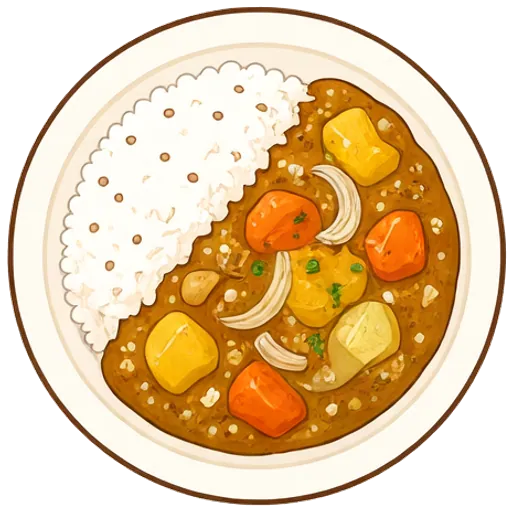
Japanese vegetable curry (yasai kare)
Thick, mellow, slightly sweet Japanese curry with potatoes, carrots and squash over rice, made from scratch with a simple roux and topped with a jammy egg.
- 55 min total
- 30 min hands-on
- Follow-a-recipe easy
- Serves 4
- About $3.34 a serving
- 670 calories
- Good the next day
- Vegetarian

Dolly says: Make the full amount. It’s just as good for lunch the next day.
Ingredients
For 4 servings.
- 1½ cups jasmine rice
- 2 yellow onions, thinly sliced
- 2 cloves garlic, minced
- 1 tsp fresh ginger, grated
- 2 carrots, cut into chunks
- 1 lb Yukon Gold potatoes, cut into chunks
- 2 cups cubed butternut squash
- 3 cups vegetable broth
- ½ apple, peeled and grated
- 4 large eggs
- 3 tbsp butter
- 2 tbsp curry powder
- 1 tsp garam masala
- 1 tbsp ketchup
- 1 tbsp honey
From your pantry
- 2¼ cups water
- 1 tsp salt, divided
- 1 tbsp vegetable oil
- 3 tbsp all-purpose flour
- 1 tbsp soy sauce
Each serving has about 670 calories, 18 g protein, 112 g carbs and 18 g fat, and costs about $3.34 at typical US grocery prices. Both are estimates from what the recipe uses.
Missing something?
- No jasmine rice? Long-grain white rice or basmati rice works.
- No yellow onions? White onions or red onions work.
- No Yukon Gold potatoes? Russet potatoes or red potatoes work.
- No cubed butternut squash? Butternut squash works.
- No butter? Ghee works.
- No honey? Maple syrup works.
Steps
Tap an underlined word for a quick explanation.
the rice and bring it with the water and ¼ teaspoon salt in a .
Rinse. Rinsing means running cold water over rice or canned beans in a strainer while you swish them around. It washes off loose starch and can liquid, so rice cooks up fluffy and beans taste clean.
How you’ll know: The water running out goes from cloudy to mostly clear; it doesn’t have to be perfect.
Bring to a boil. It means heating a liquid on high until it’s fully boiling before you move on. A lid on the pot gets it there faster, which makes it a good moment to chop something.
How you’ll know: Big bubbles break all over the surface, and they keep coming when you lift the lid.
Saucepan. A saucepan is a pot with tall, straight sides and one long handle. It’s for things that need depth, like rice, sauces or a few boiled eggs.
How you’ll know: The food fills it about halfway, leaving room to bubble without spilling over.
High heat
Stir once, cover, turn to low and cook 15 minutes.
Low heatTimer: 15 min
Heat the oil in a large pot over medium heat and cook the onions, stirring now and then, until soft and , 10 minutes. Add the garlic and ginger for 1 minute.
Golden brown. Golden brown is the color of good toast, somewhere between yellow and light brown. It means the outside is cooked and crisp but not burnt.
How you’ll know: It looks like toast and smells toasty; dark brown with a bitter smell means it went too far.
Medium heatTimer: 10 min
 Dolly’s tip: Take the onions nice and golden. Their sweetness is what gives Japanese curry its mellow flavor.
Add the carrots, potatoes, squash, broth, apple and ¾ teaspoon salt. .
Grate. Grating means rubbing food across the holes of a grater to make fine shreds or flakes. It spreads cheese, garlic or ginger evenly through a dish so it melts right in.
How you’ll know: Even shreds fall off the back of the grater, and you stop while the piece is still big enough to hold.
Bring to a boil. It means heating a liquid on high until it’s fully boiling before you move on. A lid on the pot gets it there faster, which makes it a good moment to chop something.
How you’ll know: Big bubbles break all over the surface, and they keep coming when you lift the lid.
High heat
Cover and over medium-low until the potatoes are tender, 15 minutes.
Simmer. Simmering means keeping a liquid just below a boil, with small bubbles rising gently. It cooks food evenly and lets a sauce thicken without scorching on the bottom.
How you’ll know: Small, lazy bubbles break the surface every second or so, and nothing is churning.
Low heatTimer: 15 min
Meanwhile, lower the eggs into a small pot of water and boil 7 minutes. Cool them in cold water and .
Boil. Boiling means heating a liquid until big bubbles rise and break all over the surface. It’s the fastest way to cook pasta, potatoes and eggs, because it’s as hot as water gets.
How you’ll know: Bubbles are breaking across the whole surface, not just at the edges, and steam is rising.
Peel. Peeling means removing the skin with a vegetable peeler or a small knife. It takes off tough or bitter skins, though potato and carrot skins are fine to leave on unless the recipe insists.
How you’ll know: The color underneath is even all over, with no patches of skin left behind.
High heatTimer: 7 min
Food safety: Soft yolks are a small risk. If you’re pregnant, or cooking for small children or older people, cook the eggs until the yolks are firm, or use pasteurized eggs.
For the roux, the butter in a small over medium-low heat, whisk in the flour and cook, , until light tan, 3 to 4 minutes. Whisk in the curry powder and garam masala off the heat.
Melt. Melting means gently heating something solid, like butter or cheese, until it turns liquid. Low or medium heat keeps it from browning or burning.
How you’ll know: It’s smooth and liquid, and butter may foam a little but hasn’t turned brown.
Saucepan. A saucepan is a pot with tall, straight sides and one long handle. It’s for things that need depth, like rice, sauces or a few boiled eggs.
How you’ll know: The food fills it about halfway, leaving room to bubble without spilling over.
Whisk. Whisking means beating quickly with a whisk or a fork to blend things together. It smooths out lumps and mixes eggs, oil or sauces evenly.
How you’ll know: It all looks one even color and texture, with no streaks or lumps.
Low heatTimer: 4 min
Ladle about 1 cup of broth from the pot into the roux and until smooth, then stir it back into the pot with the ketchup, soy sauce and honey.
Whisk. Whisking means beating quickly with a whisk or a fork to blend things together. It smooths out lumps and mixes eggs, oil or sauces evenly.
How you’ll know: It all looks one even color and texture, with no streaks or lumps.
Medium heat
Dolly’s tip: Loosening the roux with a little broth first stops it from clumping in the big pot., stirring, until the curry is thick and glossy, 5 to 8 minutes.
Simmer. Simmering means keeping a liquid just below a boil, with small bubbles rising gently. It cooks food evenly and lets a sauce thicken without scorching on the bottom.
How you’ll know: Small, lazy bubbles break the surface every second or so, and nothing is churning.
Medium heatTimer: 6 min
Serve the curry beside the rice with a egg on top.
Halve. Halving means cutting something into two equal pieces. Even halves cook at the same speed, so one doesn’t dry out while the other finishes.
How you’ll know: The two pieces look like mirror images of each other.

Plan this in Dollop, and get the grocery list
Dollop puts this dinner on a night that suits your week, lists only what you still need to buy, and walks you through each step while you cook.
More dinners like this
Japanese-style chickpea curry
55 min
Korean braised potatoes with eggs (gamja jorim)
45 min
Instant Pot vegetable korma
45 min
Sheet pan teriyaki vegetable rice bowls
45 min
Vegetarian dinners ›Cozy comfort food ›What to make with eggs and rice ›What to make with carrots and potatoes ›What to make with eggs and potatoes ›