 Dollop
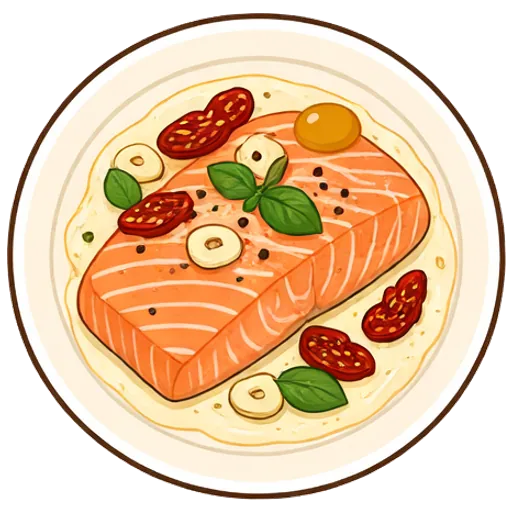
Marry me salmon
Seared salmon simmered in a creamy sun-dried tomato and parmesan sauce, the viral dinner that lives up to its name.
- 30 min total
- 25 min hands-on
- Follow-a-recipe easy
- Serves 4
- About $5.63 a serving
- 610 calories
- Gluten-free

Dolly says: Read the steps once before you start. Everything goes smoother after that.
Ingredients
For 4 servings.
- 4 salmon fillets, about 6 oz each, skinless
- 4 cloves garlic, minced
- ⅓ cup sun-dried tomatoes, chopped
- ½ cup vegetable broth
- ¾ cup heavy cream
- ⅓ cup grated parmesan
- 2 cups baby spinach
- 2 tbsp fresh basil, torn (optional)
From your pantry
- ¾ tsp salt
- ¼ tsp black pepper
- 1 tbsp olive oil
- 1 tsp Italian seasoning
- ¼ tsp red pepper flakes
Each serving has about 610 calories, 40 g protein, 8 g carbs and 47 g fat, and costs about $5.63 at typical US grocery prices. Both are estimates from what the recipe uses.
Missing something?
- No grated parmesan? Parmesan wedge works.
- No baby spinach? Kale or arugula works.
Steps
Tap an underlined word for a quick explanation.
the salmon dry and with the salt and pepper.
Pat dry. Patting dry means pressing paper towels onto food to soak up the moisture on its surface. Wet food steams instead of browning, so this is how you get a good sear and crisp skin.
How you’ll know: The surface feels tacky, not wet, and the last paper towel comes away barely damp.
Season. Seasoning means adding salt, pepper or spices to bring out a food’s flavor. A little at a few stages tastes better than a lot all at the end.
How you’ll know: When you taste it, it tastes bright and like itself, not flat and not salty.
Heat the oil in a large over medium-high heat.
Skillet. A skillet is a frying pan: wide and flat with low, sloped sides. The shape lets steam escape, so food browns instead of stewing.
How you’ll know: It’s the pan you’d fry an egg in, and a 10 or 12 inch one handles most recipes.
Medium-high heat
the salmon 3 minutes per side, until , then move it to a plate. It finishes cooking in the sauce.
Sear. Searing means cooking the outside of meat or fish in a hot pan, without moving it, until a deep brown crust forms. The crust is packed with flavor, and it only forms on a dry surface.
How you’ll know: It sizzles loudly the moment it goes in, and it lets go of the pan on its own when the crust is ready.
Golden brown. Golden brown is the color of good toast, somewhere between yellow and light brown. It means the outside is cooked and crisp but not burnt.
How you’ll know: It looks like toast and smells toasty; dark brown with a bitter smell means it went too far.
Medium-high heatTimer: 6 min
Turn the heat to medium. Add the garlic, sun-dried tomatoes, Italian seasoning and red pepper flakes and for 1 minute.
Stir. Stirring means moving food around with a spoon or spatula so it cooks evenly and doesn’t stick. Unless the recipe says constantly, every so often is plenty, and it gives food time to brown.
How you’ll know: When you drag the spoon across the bottom, nothing is sticking or scorching.
Medium heatTimer: 1 min
Pour in the broth and , then in the cream and parmesan.
Scrape up the browned bits. It means loosening the brown bits stuck to the pan with a wooden spoon, usually right after adding liquid. Those bits are concentrated flavor, and they melt into the sauce.
How you’ll know: The bottom of the pan looks clean again, and the liquid turns darker and richer.
Stir. Stirring means moving food around with a spoon or spatula so it cooks evenly and doesn’t stick. Unless the recipe says constantly, every so often is plenty, and it gives food time to brown.
How you’ll know: When you drag the spoon across the bottom, nothing is sticking or scorching.
Medium heat
for 3 to 4 minutes, until the sauce enough to coat a spoon.
Simmer. Simmering means keeping a liquid just below a boil, with small bubbles rising gently. It cooks food evenly and lets a sauce thicken without scorching on the bottom.
How you’ll know: Small, lazy bubbles break the surface every second or so, and nothing is churning.
Thicken. Thickening means cooking a sauce or soup until it’s less runny, by simmering it down or adding something like cornstarch. A thicker sauce clings to food instead of pooling on the plate.
How you’ll know: It coats the back of a spoon, and a line drawn through it with your finger holds its shape.
Medium heatTimer: 3 min 30 sec
in the spinach until it .
Stir. Stirring means moving food around with a spoon or spatula so it cooks evenly and doesn’t stick. Unless the recipe says constantly, every so often is plenty, and it gives food time to brown.
How you’ll know: When you drag the spoon across the bottom, nothing is sticking or scorching.
Wilt. Wilting means cooking leafy greens just until they go soft and collapse. Greens shrink a lot, so a big pile of spinach becomes a small handful, and that’s normal.
How you’ll know: The leaves turn soft and deep green and slump into the pan, usually within a minute or two.
Medium heat
Nestle the salmon back into the sauce and 2 to 3 minutes, spooning sauce over it, until it flakes easily in the thickest part.
Simmer. Simmering means keeping a liquid just below a boil, with small bubbles rising gently. It cooks food evenly and lets a sauce thicken without scorching on the bottom.
How you’ll know: Small, lazy bubbles break the surface every second or so, and nothing is churning.
Low heatTimer: 2 min 30 sec
Food safety: Fish is done at 145°F, when the middle looks opaque and flakes apart easily with a fork.
Scatter the basil over and serve, with rice for the sauce if you have some.

Plan this in Dollop, and get the grocery list
Dollop puts this dinner on a night that suits your week, lists only what you still need to buy, and walks you through each step while you cook.
More dinners like this
30-minute dinners ›High-protein dinners ›What to make with spinach and parmesan ›