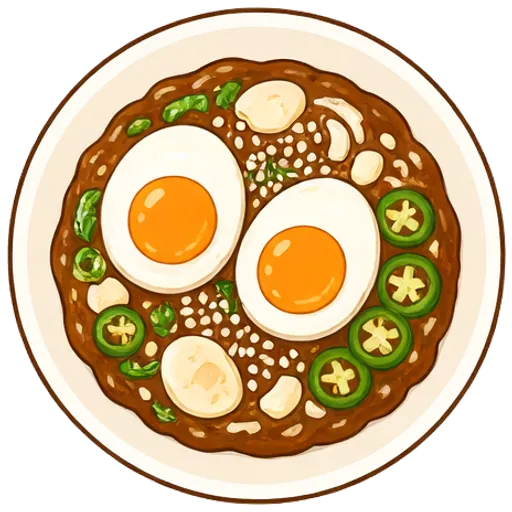
Mayak egg rice bowls
Jammy eggs soaked in a sweet, garlicky soy marinade with chiles and green onion, split over hot rice with cool cucumber, and they keep 4 days in the fridge.
- 160 min total
- 30 min hands-on
- Follow-a-recipe easy
- Serves 4
- About $1.66 a serving
- 560 calories
- Good the next day
- Vegetarian
- Dairy-free

Dolly says: Make the full amount. It’s just as good for lunch the next day.
Ingredients
For 4 servings.
- 8 large eggs
- 4 cloves garlic, minced
- 4 green onions, thinly sliced
- 1 jalapeño, finely chopped
- 1 tbsp sesame seeds
- 2 cups long-grain white rice
- 1 cucumber, thinly sliced
From your pantry
- ½ cup soy sauce
- 3 cups water, divided
- 2 tbsp sugar
Each serving has about 560 calories, 23 g protein, 88 g carbs and 12 g fat, and costs about $1.66 at typical US grocery prices. Both are estimates from what the recipe uses.
Missing something?
- No green onions? Chives work.
- No long-grain white rice? Jasmine rice or basmati rice works.
- No cucumbers? English cucumbers or mini cucumbers work.
Steps
Tap an underlined word for a quick explanation.
Bring a medium of water over high heat. Fill a large bowl with cold water and a handful of ice.
Saucepan. A saucepan is a pot with tall, straight sides and one long handle. It’s for things that need depth, like rice, sauces or a few boiled eggs.
How you’ll know: The food fills it about halfway, leaving room to bubble without spilling over.
Bring to a boil. It means heating a liquid on high until it’s fully boiling before you move on. A lid on the pot gets it there faster, which makes it a good moment to chop something.
How you’ll know: Big bubbles break all over the surface, and they keep coming when you lift the lid.
High heat
Lower the eggs in gently with a spoon, turn the heat to medium-high so it keeps a steady , and cook 7 minutes.
Boil. Boiling means heating a liquid until big bubbles rise and break all over the surface. It’s the fastest way to cook pasta, potatoes and eggs, because it’s as hot as water gets.
How you’ll know: Bubbles are breaking across the whole surface, not just at the edges, and steam is rising.
Medium-high heatTimer: 7 min
 Dolly’s tip: This timing is for eggs straight from the fridge. The whites set firm and the yolks turn thick and jammy.
Food safety: Soft yolks are a small risk. If you’re pregnant, or cooking for small children or older people, cook the eggs until the yolks are firm, or use pasteurized eggs.
Move the eggs into the ice water for 5 minutes, then them.
Peel. Peeling means removing the skin with a vegetable peeler or a small knife. It takes off tough or bitter skins, though potato and carrot skins are fine to leave on unless the recipe insists.
How you’ll know: The color underneath is even all over, with no patches of skin left behind.
Timer: 5 min
Dolly’s tip: Crack the wide end first, where the air pocket is, and peel under a thin stream of cold water.While the eggs cool, the garlic, the green onions and the jalapeño.
Mince. Mincing means chopping something into the tiniest pieces you can, smaller than a grain of rice. Tiny pieces melt into the dish, so you get the flavor without biting into a chunk of garlic.
How you’ll know: Every piece is tiny and about the same size, and the pile starts to look almost like a paste.
Thinly slice. Thinly slicing means cutting slices about an eighth of an inch thick, roughly two coins stacked. Thin slices cook in seconds and soften fast, which quick dishes need.
How you’ll know: A slice bends a little when you hold it by one edge, and slow, steady cuts beat fast ones.
Finely chop. Finely chopping means cutting food into small pieces, a little bigger than minced, about the size of a lentil. Small pieces spread their flavor through the dish and cook quickly.
How you’ll know: Nothing is bigger than a lentil, and the pile looks like confetti rather than paste.
Dolly’s tip: Scrape out the jalapeño seeds with a spoon if you want it milder.Stir the soy sauce, ½ cup water and the sugar in a container that holds the eggs snugly until the sugar dissolves. Stir in the garlic, green onions, jalapeño and sesame seeds.
Add the eggs, cover, and let them in the fridge for at least 2 hours or overnight, turning them once or twice so they color evenly.
Peel. Peeling means removing the skin with a vegetable peeler or a small knife. It takes off tough or bitter skins, though potato and carrot skins are fine to leave on unless the recipe insists.
How you’ll know: The color underneath is even all over, with no patches of skin left behind.
Marinate. Marinating means letting food sit in a flavorful liquid, called a marinade, before you cook it. Always marinate in the fridge, and never reuse marinade from raw meat unless you boil it first.
How you’ll know: The food is coated all over, sealed in a bag or covered dish, and chilling in the fridge.
Timer: 120 min
Dolly’s tip: They keep up to 4 days in the fridge and only get better.About 30 minutes before you eat, the rice and put it in a medium with 2½ cups water. over high heat.
Rinse. Rinsing means running cold water over rice or canned beans in a strainer while you swish them around. It washes off loose starch and can liquid, so rice cooks up fluffy and beans taste clean.
How you’ll know: The water running out goes from cloudy to mostly clear; it doesn’t have to be perfect.
Saucepan. A saucepan is a pot with tall, straight sides and one long handle. It’s for things that need depth, like rice, sauces or a few boiled eggs.
How you’ll know: The food fills it about halfway, leaving room to bubble without spilling over.
Bring to a boil. It means heating a liquid on high until it’s fully boiling before you move on. A lid on the pot gets it there faster, which makes it a good moment to chop something.
How you’ll know: Big bubbles break all over the surface, and they keep coming when you lift the lid.
High heat
Cover, turn the heat to low and cook 15 minutes, then let it sit off the heat with the lid on for 5 minutes.
Low heatTimer: 15 min
Scoop the rice into bowls. 2 eggs over each, add the cucumber and spoon over some of the with its onions and chiles.
Halve. Halving means cutting something into two equal pieces. Even halves cook at the same speed, so one doesn’t dry out while the other finishes.
How you’ll know: The two pieces look like mirror images of each other.
Marinate. Marinating means letting food sit in a flavorful liquid, called a marinade, before you cook it. Always marinate in the fridge, and never reuse marinade from raw meat unless you boil it first.
How you’ll know: The food is coated all over, sealed in a bag or covered dish, and chilling in the fridge.

Plan this in Dollop, and get the grocery list
Dollop puts this dinner on a night that suits your week, lists only what you still need to buy, and walks you through each step while you cook.
More dinners like this
Thai braised eggs (kai palo)
60 min
Tofu fried rice
65 min
Chickpea adobo
35 min
Microwave Korean braised tofu (dubu jorim)
15 min
Vegetarian dinners ›Make-ahead and freezer-friendly ›What to make with eggs and rice ›What to make with rice and cucumber ›What to make with eggs and cucumber ›