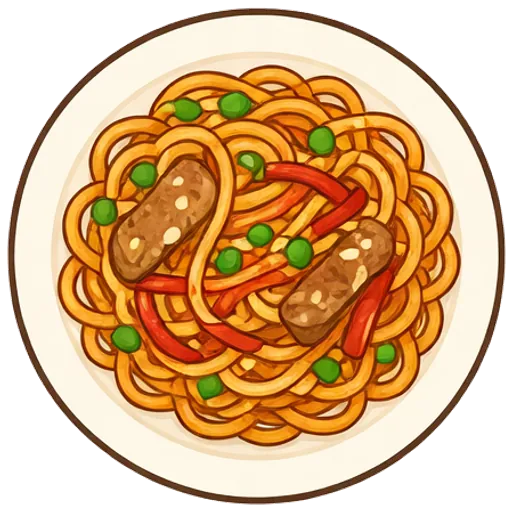
Mee goreng
Sweet, smoky, chile-spiked fried noodles with chicken, cabbage, egg and crunchy bean sprouts, finished with a squeeze of lime.
- 35 min total
- 30 min hands-on
- Follow-a-recipe easy
- Serves 4
- About $3.35 a serving
- 710 calories
- Good the next day
- Dairy-free

Dolly says: Make the full amount. It’s just as good for lunch the next day.
Ingredients
For 4 servings.
- 12 oz lo mein noodles
- ¼ cup kecap manis
- 2 tbsp ketchup
- 1 tbsp chili garlic sauce
- 1 lb boneless chicken thighs, boneless and skinless, cut into bite-size pieces
- 2 shallots, thinly sliced
- 4 cloves garlic, minced
- 3 cups green cabbage, shredded
- 2 Roma tomatoes, cut into wedges
- 2 large eggs
- 2 cups bean sprouts
- 1 lime, cut into wedges
- 2 stalks green onions, sliced (optional)
From your pantry
- 3 tbsp vegetable oil, divided
- 1 tbsp soy sauce
Each serving has about 710 calories, 42 g protein, 89 g carbs and 21 g fat, and costs about $3.35 at typical US grocery prices. Both are estimates from what the recipe uses.
Missing something?
- No boneless chicken thighs? Chicken breasts or chicken tenderloins work.
- No green cabbage? Red cabbage or coleslaw mix works.
- No limes? Lemons work.
- No green onions? Chives work.
Steps
Tap an underlined word for a quick explanation.
Cook the noodles in a large pot of boiling water for 1 minute less than the package says. , under cold water, and with 1 teaspoon of the oil.
Drain. Draining means pouring off liquid, like tipping pasta into a colander or spooning extra fat out of the pan. Pour hot grease into a can or jar, not the sink, where it hardens and clogs the pipes.
How you’ll know: Only a few drips are left, and the food isn’t sitting in a puddle.
Rinse. Rinsing means running cold water over rice or canned beans in a strainer while you swish them around. It washes off loose starch and can liquid, so rice cooks up fluffy and beans taste clean.
How you’ll know: The water running out goes from cloudy to mostly clear; it doesn’t have to be perfect.
Toss. Tossing means gently lifting and turning food so everything gets coated, like pasta in sauce or vegetables in oil. It coats every piece evenly without mashing anything.
How you’ll know: Every piece looks glossy or evenly coated, with no dry spots hiding underneath.
High heatTimer: 3 min
 Dolly’s tip: Pull them while they still have some bite. They finish cooking in the pan.
Stir the kecap manis, soy sauce, ketchup and chili garlic sauce together in a small bowl.
Heat 1 tablespoon of the oil in a large over medium-high. Cook the chicken 5 to 6 minutes, until and cooked through, then move it to a plate.
Skillet. A skillet is a frying pan: wide and flat with low, sloped sides. The shape lets steam escape, so food browns instead of stewing.
How you’ll know: It’s the pan you’d fry an egg in, and a 10 or 12 inch one handles most recipes.
Brown. Browning means cooking until the outside turns brown, which is where a lot of savory flavor comes from. Give food room and time without stirring, or it steams and stays gray.
How you’ll know: The food looks brown rather than gray, and the kitchen smells toasty and savory.
Medium-high heatTimer: 5 min 30 sec
Food safety: Chicken and turkey are done at 165°F in the thickest part. A thermometer is the only sure check. Without one, cut into the thickest piece: it should be white all the way through, with no pink.
Add another tablespoon of oil with the shallots and garlic and 1 minute. Add the cabbage and tomatoes and stir-fry 2 minutes, until the cabbage just .
Stir-fry. Stir-frying means cooking small pieces fast over high heat in a little oil, stirring almost constantly. It moves quickly, so have everything chopped and ready before the pan gets hot.
How you’ll know: It sizzles loudly the whole time, and the vegetables turn bright and tender-crisp in minutes.
Wilt. Wilting means cooking leafy greens just until they go soft and collapse. Greens shrink a lot, so a big pile of spinach becomes a small handful, and that’s normal.
How you’ll know: The leaves turn soft and deep green and slump into the pan, usually within a minute or two.
Medium-high heatTimer: 3 min
Push everything to one side, crack the eggs into the empty space, and scramble them 1 minute, until just set.
Medium-high heatTimer: 1 min
Food safety: For the safest eggs, cook until the whites are fully set and the yolks begin to thicken. Dishes made with eggs are done at 160°F.
Add the noodles, chicken and sauce and with tongs 2 to 3 minutes, until the noodles are evenly coated and catching a little color.
Toss. Tossing means gently lifting and turning food so everything gets coated, like pasta in sauce or vegetables in oil. It coats every piece evenly without mashing anything.
How you’ll know: Every piece looks glossy or evenly coated, with no dry spots hiding underneath.
Medium-high heatTimer: 2 min 30 sec
Dolly’s tip: Lift and drop the noodles with tongs instead of stirring. They coat evenly without breaking.in the bean sprouts for 30 seconds and serve with lime wedges and green onions.
Toss. Tossing means gently lifting and turning food so everything gets coated, like pasta in sauce or vegetables in oil. It coats every piece evenly without mashing anything.
How you’ll know: Every piece looks glossy or evenly coated, with no dry spots hiding underneath.
Food safety: If you’re pregnant, or cooking for small children or older people, cook the bean sprouts until steaming hot or leave them out. Raw and lightly cooked sprouts carry a small risk that rinsing doesn’t remove.

Plan this in Dollop, and get the grocery list
Dollop puts this dinner on a night that suits your week, lists only what you still need to buy, and walks you through each step while you cook.
More dinners like this
Chicken lo mein
35 min
String bean chicken
35 min
Cashew chicken stir-fry
40 min
Chicken and broccoli
40 min
High-protein dinners ›Easy Asian dinner recipes ›What to make with eggs and tomatoes ›What to make with chicken and tomatoes ›What to make with chicken and eggs ›