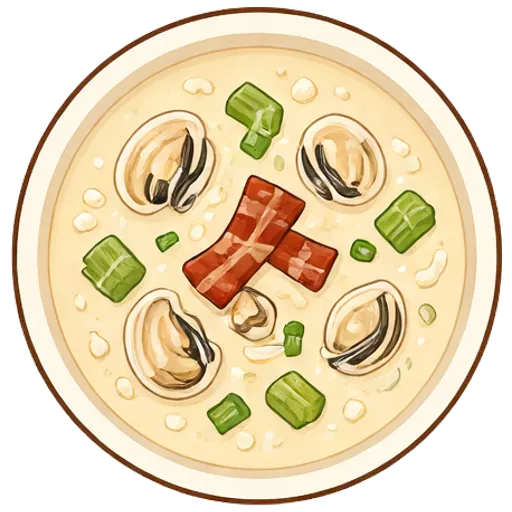
New England clam chowder
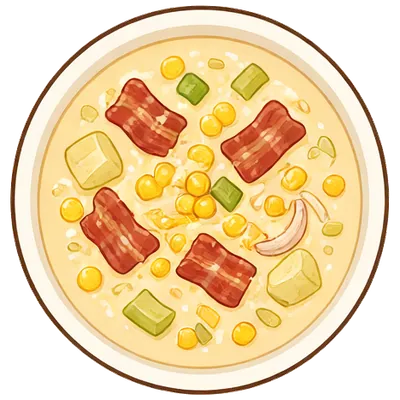
Thick, creamy and briny, with tender clams, soft potatoes and crispy bacon on top, the chowder you’d order by the water, made from pantry cans.
- 50 min total
- 35 min hands-on
- A little more hands-on
- Serves 4
- About $4.19 a serving
- 550 calories
- Good the next day

Dolly says: Make the full amount. It’s just as good for lunch the next day.
Ingredients
For 4 servings.
- 3 cans canned chopped clams, 6.5 oz each
- 4 slices bacon, chopped
- 1 yellow onion, diced
- 2 stalks celery, diced
- 2 cloves garlic, minced
- 1½ lb Yukon Gold potatoes, diced
- 2 tbsp butter
- 2 cups chicken broth
- 1½ cups half-and-half
- 2 tbsp fresh parsley, chopped (optional)
- 1 cup saltine crackers (optional)
From your pantry
- ¼ cup all-purpose flour
- ½ tsp dried thyme
- 1 bay leave
- ½ tsp salt
- ½ tsp black pepper
Each serving has about 550 calories, 22 g protein, 48 g carbs and 30 g fat, and costs about $4.19 at typical US grocery prices. Both are estimates from what the recipe uses.
Missing something?
- No yellow onions? White onions or red onions work.
- No Yukon Gold potatoes? Russet potatoes or red potatoes work.
- No butter? Ghee works.
- No chicken broth? Vegetable broth or bone broth works.
- No fresh parsley? Cilantro works.
Steps
Tap an underlined word for a quick explanation.
the clams in a strainer set over a bowl, saving all the juice. the bacon, the onion, celery and potatoes, and the garlic.
Drain. Draining means pouring off liquid, like tipping pasta into a colander or spooning extra fat out of the pan. Pour hot grease into a can or jar, not the sink, where it hardens and clogs the pipes.
How you’ll know: Only a few drips are left, and the food isn’t sitting in a puddle.
Chop. Chopping means cutting food into bite-size pieces that don’t need to be neat. Keep them roughly the same size so everything cooks evenly.
How you’ll know: Your pieces are about half an inch and roughly alike, even if none of them are pretty.
Dice. Dicing means cutting food into small, even cubes, usually a quarter to half an inch across. Pieces the same size cook at the same speed, so nothing burns while the rest catches up.
How you’ll know: Your pieces are little cubes about the size of a chickpea, and they all look close to the same.
Mince. Mincing means chopping something into the tiniest pieces you can, smaller than a grain of rice. Tiny pieces melt into the dish, so you get the flavor without biting into a chunk of garlic.
How you’ll know: Every piece is tiny and about the same size, and the pile starts to look almost like a paste.
Cook the bacon in a large pot over medium heat, stirring, until , about 6 minutes. Lift it out onto a paper towel, leaving the fat in the pot.
Crispy. Crispy means the outside is dry, firm and crunchy. It comes from high heat, a little oil and room in the pan, because crowded food steams and goes soft.
How you’ll know: It sounds crunchy when you tap or bite it, and it doesn’t flop when you lift it.
Medium heatTimer: 6 min
Food safety: Cook bacon until it’s crisp and no longer translucent.
Add the butter, onion and celery to the pot and cook, stirring, until soft, about 5 minutes.
Medium heatTimer: 5 min
Stir in the garlic, flour and thyme and cook, stirring constantly, for 1 minute.
Medium heatTimer: 1 min
Slowly in the saved clam juice and the broth, then add the potatoes and bay leaf and over high heat.
Whisk. Whisking means beating quickly with a whisk or a fork to blend things together. It smooths out lumps and mixes eggs, oil or sauces evenly.
How you’ll know: It all looks one even color and texture, with no streaks or lumps.
Bring to a boil. It means heating a liquid on high until it’s fully boiling before you move on. A lid on the pot gets it there faster, which makes it a good moment to chop something.
How you’ll know: Big bubbles break all over the surface, and they keep coming when you lift the lid.
High heat
Turn the heat to low, cover and for 12 to 15 minutes, until the potatoes are tender.
Simmer. Simmering means keeping a liquid just below a boil, with small bubbles rising gently. It cooks food evenly and lets a sauce thicken without scorching on the bottom.
How you’ll know: Small, lazy bubbles break the surface every second or so, and nothing is churning.
Low heatTimer: 13 min 30 sec
Stir in the half-and-half and the clams and heat gently for 3 to 5 minutes, until steaming. Don’t let it .
Boil. Boiling means heating a liquid until big bubbles rise and break all over the surface. It’s the fastest way to cook pasta, potatoes and eggs, because it’s as hot as water gets.
How you’ll know: Bubbles are breaking across the whole surface, not just at the edges, and steam is rising.
Low heatTimer: 4 min
 Dolly’s tip: Canned clams are already cooked. Boiling makes them rubbery and can split the cream, so just warm them through.
Food safety: Rotisserie chicken, deli meat, canned tuna and cooked shrimp are already cooked. Keep them cold until you use them, and heat them until steaming hot if the recipe warms them.
Pull out the bay leaf, with the salt and pepper, and serve topped with the bacon, parsley and crackers.
Season. Seasoning means adding salt, pepper or spices to bring out a food’s flavor. A little at a few stages tastes better than a lot all at the end.
How you’ll know: When you taste it, it tastes bright and like itself, not flat and not salty.

Plan this in Dollop, and get the grocery list
Dollop puts this dinner on a night that suits your week, lists only what you still need to buy, and walks you through each step while you cook.