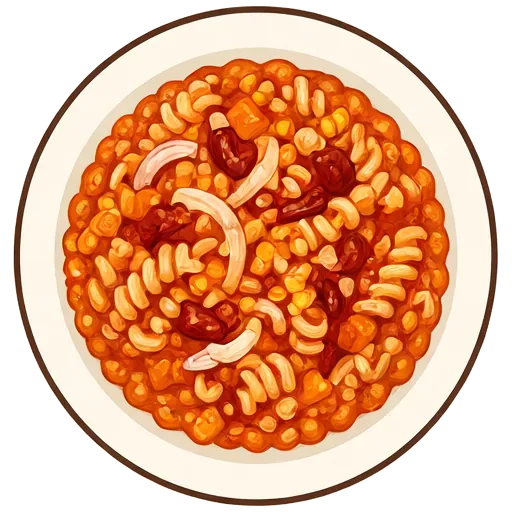
Red lentil tomato pasta
Red lentils melt into a thick, velvety tomato sauce with a hidden carrot, served over chickpea pasta for a cheap, freezer-friendly bowl with over 30 grams of protein.
- 45 min total
- 20 min hands-on
- Follow-a-recipe easy
- Serves 4
- About $2.70 a serving
- 630 calories
- Good the next day
- Vegetarian
- Gluten-free

Dolly says: Make the full amount. It’s just as good for lunch the next day.
Ingredients
For 4 servings.
- 1 yellow onion, finely chopped
- 1 carrot, grated
- 3 cloves garlic, minced
- ½ cup split red lentils, rinsed
- 1 can crushed tomatoes, 28 oz
- 1 cup vegetable broth
- 1 lb chickpea pasta, two 8-oz boxes
- ¼ cup grated parmesan, to serve (optional)
From your pantry
- 2 tbsp olive oil
- 1 tsp Italian seasoning
- 1 tbsp salt, plus ¾ tsp
Each serving has about 630 calories, 33 g protein, 99 g carbs and 15 g fat, and costs about $2.70 at typical US grocery prices. Both are estimates from what the recipe uses.
Missing something?
- No yellow onions? White onions or red onions work.
- No crushed tomatoes? Diced tomatoes work.
- No grated parmesan? Parmesan wedge works.
Steps
Tap an underlined word for a quick explanation.
the onion, the carrot on the big holes of a box grater, and the garlic.
Finely chop. Finely chopping means cutting food into small pieces, a little bigger than minced, about the size of a lentil. Small pieces spread their flavor through the dish and cook quickly.
How you’ll know: Nothing is bigger than a lentil, and the pile looks like confetti rather than paste.
Grate. Grating means rubbing food across the holes of a grater to make fine shreds or flakes. It spreads cheese, garlic or ginger evenly through a dish so it melts right in.
How you’ll know: Even shreds fall off the back of the grater, and you stop while the piece is still big enough to hold.
Mince. Mincing means chopping something into the tiniest pieces you can, smaller than a grain of rice. Tiny pieces melt into the dish, so you get the flavor without biting into a chunk of garlic.
How you’ll know: Every piece is tiny and about the same size, and the pile starts to look almost like a paste.
Heat the oil in a large over medium heat. Cook the onion and carrot 5 minutes, until soft, then add the garlic and Italian seasoning for 1 minute.
Saucepan. A saucepan is a pot with tall, straight sides and one long handle. It’s for things that need depth, like rice, sauces or a few boiled eggs.
How you’ll know: The food fills it about halfway, leaving room to bubble without spilling over.
Medium heatTimer: 6 min
the lentils in a strainer, then stir them into the pan with the tomatoes, broth and ¾ teaspoon salt.
Rinse. Rinsing means running cold water over rice or canned beans in a strainer while you swish them around. It washes off loose starch and can liquid, so rice cooks up fluffy and beans taste clean.
How you’ll know: The water running out goes from cloudy to mostly clear; it doesn’t have to be perfect.
 Dolly’s tip: Rinse until the water runs mostly clear. It washes off dust and stops foaming.
, then cover with the and cook on low for 20 minutes, stirring now and then, until the lentils have into the sauce.
Simmer. Simmering means keeping a liquid just below a boil, with small bubbles rising gently. It cooks food evenly and lets a sauce thicken without scorching on the bottom.
How you’ll know: Small, lazy bubbles break the surface every second or so, and nothing is churning.
Lid ajar. Lid ajar means resting the lid on the pot slightly off-center, leaving a small gap. Some steam escapes, so the sauce thickens and doesn’t boil over, while most of the heat stays in.
How you’ll know: A thin wisp of steam drifts out of the gap, and the pot bubbles gently without spilling.
Melt. Melting means gently heating something solid, like butter or cheese, until it turns liquid. Low or medium heat keeps it from browning or burning.
How you’ll know: It’s smooth and liquid, and butter may foam a little but hasn’t turned brown.
Low heatTimer: 20 min
Dolly’s tip: If it gets too thick or starts to stick, stir in a splash of water.When the sauce has 10 minutes left, fill a large pot with water, add 1 tablespoon salt, and over high heat.
Bring to a boil. It means heating a liquid on high until it’s fully boiling before you move on. A lid on the pot gets it there faster, which makes it a good moment to chop something.
How you’ll know: Big bubbles break all over the surface, and they keep coming when you lift the lid.
High heat
Cook the chickpea pasta 1 minute less than the package says, then .
Drain. Draining means pouring off liquid, like tipping pasta into a colander or spooning extra fat out of the pan. Pour hot grease into a can or jar, not the sink, where it hardens and clogs the pipes.
How you’ll know: Only a few drips are left, and the food isn’t sitting in a puddle.
High heatTimer: 7 min
Dolly’s tip: Chickpea pasta foams up, so leave the lid off, and it turns mushy if overcooked. Taste a minute early.the pasta with the sauce and serve with parmesan.
Toss. Tossing means gently lifting and turning food so everything gets coated, like pasta in sauce or vegetables in oil. It coats every piece evenly without mashing anything.
How you’ll know: Every piece looks glossy or evenly coated, with no dry spots hiding underneath.
Dolly’s tip: The sauce freezes well for up to 3 months. Freeze it without the pasta.

Plan this in Dollop, and get the grocery list
Dollop puts this dinner on a night that suits your week, lists only what you still need to buy, and walks you through each step while you cook.
More dinners like this
Spaghetti frittata (frittata di pasta)
40 min
Black bean enchilada pasta bake
45 min
Baked ziti
65 min
Lentil bolognese with spaghetti
60 min
High-protein dinners ›Vegetarian dinners ›What to make with canned tomatoes and parmesan ›What to make with canned tomatoes and carrots ›What to make with carrots and parmesan ›