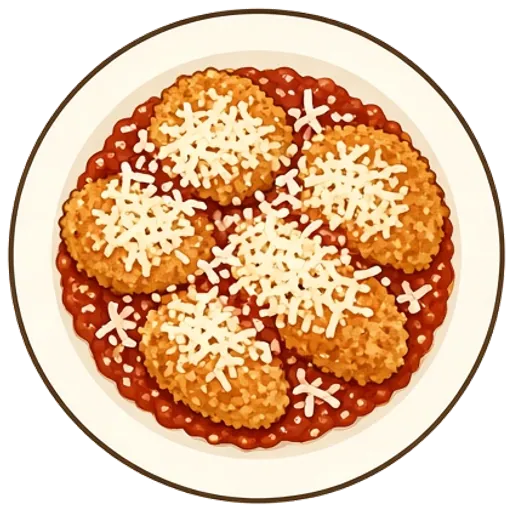
Sheet-pan chicken parmesan
Crunchy parmesan chicken under bubbling mozzarella and marinara, baked instead of fried.
- 45 min total
- 20 min hands-on
- Follow-a-recipe easy
- Serves 2
- About $4.10 a serving
- 1040 calories
- Good the next day

Dolly says: Make the full amount. It’s just as good for lunch the next day.
Ingredients
For 2 servings.
- 2 chicken breasts
- ½ cup panko breadcrumbs
- ¼ cup grated parmesan
- 1½ cups marinara sauce, divided
- ¾ cup shredded mozzarella
- 6 oz spaghetti
- ¼ cup fresh basil, torn (optional)
From your pantry
- 1½ tbsp salt, divided
- ¼ tsp black pepper
- 1 tsp italian seasoning
- ½ tsp garlic powder
- 2 tbsp olive oil
Each serving has about 1040 calories, 80 g protein, 93 g carbs and 36 g fat, and costs about $4.10 at typical US grocery prices. Both are estimates from what the recipe uses.
Missing something?
- No chicken breasts? Boneless chicken thighs or chicken tenderloins work.
- No panko breadcrumbs? Plain breadcrumbs work.
- No grated parmesan? Parmesan wedge works.
- No shredded mozzarella? Provolone slices work.
- No spaghetti? Fettuccine works.
Steps
Tap an underlined word for a quick explanation.
the oven to 425°F and line a with . Set a large pot of water with 1 tablespoon salt on high to .
Preheat. Preheating means turning the oven on before you start, so it’s fully hot when the food goes in. Food that starts in a cold oven cooks unevenly and doesn’t brown the same.
How you’ll know: The oven beeps or its light clicks off, usually 10 to 15 minutes after you turn it on.
Sheet pan. A sheet pan is a flat metal baking tray with a low rim all the way around. The rim catches juices, and the wide surface lets food spread out and brown.
How you’ll know: Everything fits in one layer with a little space between the pieces.
Parchment paper. Parchment paper is a nonstick, oven-safe paper for lining pans. Food lifts right off and cleanup is easy, but don’t swap in wax paper or put parchment under the broiler.
How you’ll know: It lies flat in the pan, and the food slides off when you lift it.
Boil. Boiling means heating a liquid until big bubbles rise and break all over the surface. It’s the fastest way to cook pasta, potatoes and eggs, because it’s as hot as water gets.
How you’ll know: Bubbles are breaking across the whole surface, not just at the edges, and steam is rising.
High heat
Lay each chicken breast flat and through the middle, parallel to the board, to make 4 thin cutlets.
Slice. Slicing means cutting food into flat pieces of about the same thickness. Even slices cook evenly, so none are raw while others burn.
How you’ll know: Lay a few side by side: they’re close to the same thickness from one end to the other.
 Dolly’s tip: Press the top flat with your palm and use long, slow strokes. Even thickness is what keeps them juicy.
the cutlets dry, set them on the , and with ½ teaspoon salt and the pepper.
Pat dry. Patting dry means pressing paper towels onto food to soak up the moisture on its surface. Wet food steams instead of browning, so this is how you get a good sear and crisp skin.
How you’ll know: The surface feels tacky, not wet, and the last paper towel comes away barely damp.
Sheet pan. A sheet pan is a flat metal baking tray with a low rim all the way around. The rim catches juices, and the wide surface lets food spread out and brown.
How you’ll know: Everything fits in one layer with a little space between the pieces.
Season. Seasoning means adding salt, pepper or spices to bring out a food’s flavor. A little at a few stages tastes better than a lot all at the end.
How you’ll know: When you taste it, it tastes bright and like itself, not flat and not salty.
In a bowl, mix the panko, parmesan, Italian seasoning, garlic powder and oil with a fork until it looks like wet sand.
Dolly’s tip: The oil is what turns the crumbs golden in the oven, with no frying.Press the crumbs firmly onto the tops of the cutlets and 15 minutes, until .
Bake. Baking means cooking in the oven with dry heat all around the food. It cooks evenly from every side, so you can mostly leave it alone.
How you’ll know: It’s golden on top and passes the recipe’s check, like a clean toothpick or the right temperature.
Golden brown. Golden brown is the color of good toast, somewhere between yellow and light brown. It means the outside is cooked and crisp but not burnt.
How you’ll know: It looks like toast and smells toasty; dark brown with a bitter smell means it went too far.
Timer: 15 min
While it bakes, add the spaghetti to the boiling water and cook until , stirring now and then.
Al dente. Al dente is Italian for “to the tooth”: pasta cooked until tender but with a slight firm bite in the center. It holds up in sauce and keeps softening a little after you drain it.
How you’ll know: Bite a piece a minute before the package time: tender, with a slight firm bite in the middle and no crunch.
High heatTimer: 10 min
Spoon 2 tablespoons of marinara onto each cutlet, leaving the edges crunchy, and top with the mozzarella.
5 to 7 minutes more, until the cheese and bubbles and the thickest cutlet reads 165°F.
Bake. Baking means cooking in the oven with dry heat all around the food. It cooks evenly from every side, so you can mostly leave it alone.
How you’ll know: It’s golden on top and passes the recipe’s check, like a clean toothpick or the right temperature.
Melt. Melting means gently heating something solid, like butter or cheese, until it turns liquid. Low or medium heat keeps it from browning or burning.
How you’ll know: It’s smooth and liquid, and butter may foam a little but hasn’t turned brown.
Timer: 6 min
Food safety: Chicken is done at 165°F in the thickest part. A thermometer is the only sure check. Without one, cut into the thickest piece: it should be white all the way through, with no pink.
the spaghetti, return it to the pot with the rest of the marinara, and stir over low until .
Drain. Draining means pouring off liquid, like tipping pasta into a colander or spooning extra fat out of the pan. Pour hot grease into a can or jar, not the sink, where it hardens and clogs the pipes.
How you’ll know: Only a few drips are left, and the food isn’t sitting in a puddle.
Heat through. Heating through means warming food that’s already cooked until it’s hot all the way to the center. You’re not cooking it more, just making sure no part is still cold.
How you’ll know: It’s steaming, and a piece from the middle is hot, not lukewarm.
Low heat
Serve the chicken on the spaghetti with torn basil on top.

Plan this in Dollop, and get the grocery list
Dollop puts this dinner on a night that suits your week, lists only what you still need to buy, and walks you through each step while you cook.
More dinners like this
Marry me chicken
35 min
Chicken alfredo
40 min
Creamy coconut chicken curry
45 min
Juicy baked chicken with green beans
40 min
High-protein dinners ›Cozy comfort food ›What to make with pasta and parmesan ›