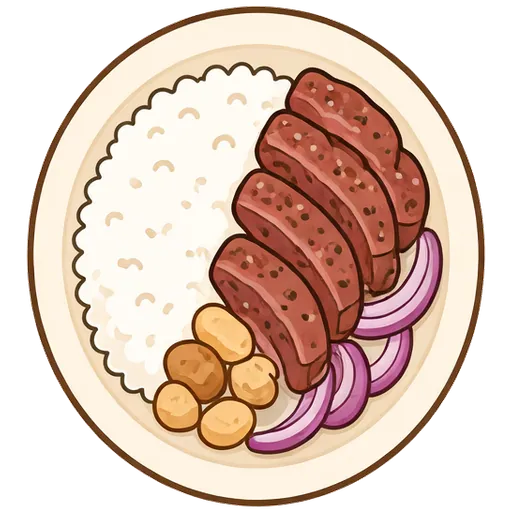
Beef suya (Nigerian spiced beef)
Thin strips of beef coated in a smoky, peanutty chili spice and broiled until charred, served with fresh onion, tomato and cucumber.
- 60 min total
- 35 min hands-on
- A little more hands-on
- Serves 4
- About $4.87 a serving
- 700 calories
- Dairy-free

Dolly says: Read the steps once before you start. Everything goes smoother after that.
Ingredients
For 4 servings.
- ½ cup peanuts, roasted, unsalted
- 1 beef bouillon cube, crumbled
- 1¼ lb sirloin steak
- 1½ cups long-grain white rice
- 1 red onion, thinly sliced
- 2 tomatoes, sliced
- 1 cucumber, sliced
From your pantry
- 1 tbsp paprika
- 1 tsp cayenne pepper
- 1 tsp garlic powder
- 1 tsp onion powder
- 1 tsp ground ginger
- ½ tsp salt
- 2 tbsp vegetable oil
- 3 cups water
Each serving has about 700 calories, 42 g protein, 72 g carbs and 28 g fat, and costs about $4.87 at typical US grocery prices. Both are estimates from what the recipe uses.
Missing something?
- No sirloin steak? New York strip steak or ribeye steak works.
- No long-grain white rice? Jasmine rice or basmati rice works.
- No red onions? White onions or yellow onions work.
- No tomatoes? Roma tomatoes work.
- No cucumbers? English cucumbers or mini cucumbers work.
Steps
Tap an underlined word for a quick explanation.
Seal the peanuts in a zip-top bag and crush them with a rolling pin or the bottom of a heavy pan until they’re a fine, sandy powder.
 Dolly’s tip: Crush in short bursts. Keep going too long and they turn into peanut butter.
Stir the crushed peanuts with the paprika, cayenne, garlic powder, onion powder, ground ginger, bouillon and salt. This is the suya spice.
Cut the steak across the grain into , about ¼ inch thick. them with the oil and two-thirds of the spice, and marinate them in the fridge, covered, for 30 minutes.
Thinly slice. Thinly slicing means cutting slices about an eighth of an inch thick, roughly two coins stacked. Thin slices cook in seconds and soften fast, which quick dishes need.
How you’ll know: A slice bends a little when you hold it by one edge, and slow, steady cuts beat fast ones.
Toss. Tossing means gently lifting and turning food so everything gets coated, like pasta in sauce or vegetables in oil. It coats every piece evenly without mashing anything.
How you’ll know: Every piece looks glossy or evenly coated, with no dry spots hiding underneath.
Timer: 30 min
Meanwhile, put the rice, water and of salt in a and .
Pinch. A pinch is what you can hold between your thumb and two fingers, less than an eighth of a teaspoon. It’s a small, forgiving amount, so there’s no need to measure.
How you’ll know: It’s a light sprinkle you can barely see on the food, not a little pile.
Saucepan. A saucepan is a pot with tall, straight sides and one long handle. It’s for things that need depth, like rice, sauces or a few boiled eggs.
How you’ll know: The food fills it about halfway, leaving room to bubble without spilling over.
Bring to a boil. It means heating a liquid on high until it’s fully boiling before you move on. A lid on the pot gets it there faster, which makes it a good moment to chop something.
How you’ll know: Big bubbles break all over the surface, and they keep coming when you lift the lid.
High heat
Cover, turn the heat to low, and cook 18 minutes.
Low heatTimer: 18 min
Turn on the with a rack about 4 inches below it. Lay the beef flat on a foil-lined , or thread it onto skewers if you like.
Broil. Broiling means cooking under the oven’s top heating element, with strong heat from above. It browns and crisps the top in minutes, and it can burn fast, so stay close.
How you’ll know: The top bubbles and spots golden brown; check every minute and pull it before it blackens.
Sheet pan. A sheet pan is a flat metal baking tray with a low rim all the way around. The rim catches juices, and the wide surface lets food spread out and brown.
How you’ll know: Everything fits in one layer with a little space between the pieces.
3 to 4 minutes a side, until at the edges and the middle reads 145°F.
Broil. Broiling means cooking under the oven’s top heating element, with strong heat from above. It browns and crisps the top in minutes, and it can burn fast, so stay close.
How you’ll know: The top bubbles and spots golden brown; check every minute and pull it before it blackens.
Char. Charring means cooking over very high heat until some spots turn black. Those dark spots add a smoky, slightly bitter flavor that balances sweet or rich food.
How you’ll know: You see black spots and blisters in places, while most of the surface keeps its own color.
Timer: 3 min 30 sec
Dolly’s tip: The peanut coating darkens fast. Check at 2 minutes the first time.Food safety: Steak, pork chops and other whole cuts are safe at 145°F in the middle, then let them rest for 3 minutes before cutting.
Pile the suya on a platter, sprinkle the rest of the spice over, and serve with the onion, tomato, cucumber and rice.

Plan this in Dollop, and get the grocery list
Dollop puts this dinner on a night that suits your week, lists only what you still need to buy, and walks you through each step while you cook.
More dinners like this
Bistek tagalog (Filipino beef steak)
60 min
Beef bibimbap
50 min
Giniling (Filipino ground beef with potatoes)
50 min
Ground beef fried rice
70 min
High-protein dinners ›Easy African dinner recipes ›What to make with rice and cucumber ›What to make with rice and tomatoes ›What to make with cucumber and tomatoes ›