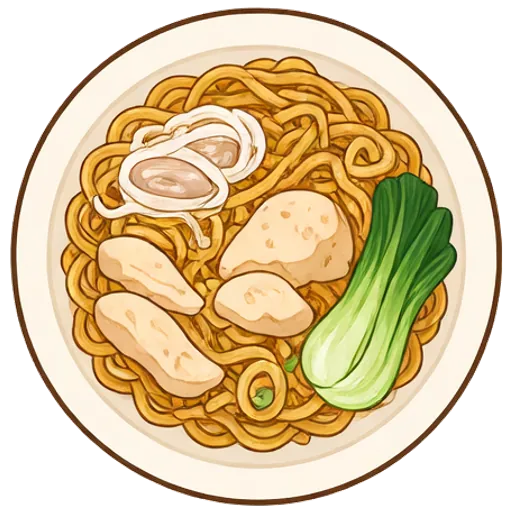
Chicken pad see ew
Chewy wide rice noodles charred in a hot pan with chicken, egg and greens in a sweet, savory soy sauce, the Thai street noodle to know.
- 35 min total
- 25 min hands-on
- A little more hands-on
- Serves 2
- About $3.46 a serving
- 690 calories
- Dairy-free

Dolly says: Read the steps once before you start. Everything goes smoother after that.
Ingredients
For 2 servings.
- 6 oz rice noodles
- 1 tbsp oyster sauce
- ½ lb chicken breasts, thinly sliced
- 2 cloves garlic, minced
- 3 baby bok choy, cut into 2-inch pieces
- 2 large eggs
From your pantry
- 2 tbsp soy sauce
- 2 tsp brown sugar
- 1 tsp rice vinegar
- 2 tbsp vegetable oil, divided
- ¼ tsp black pepper
Each serving has about 690 calories, 41 g protein, 79 g carbs and 22 g fat, and costs about $3.46 at typical US grocery prices. Both are estimates from what the recipe uses.
Missing something?
- No chicken breasts? Boneless chicken thighs or chicken tenderloins work.
Steps
Tap an underlined word for a quick explanation.
Soak the noodles in a bowl of very hot tap water for 8 to 10 minutes, until bendy but still firm, then .
Drain. Draining means pouring off liquid, like tipping pasta into a colander or spooning extra fat out of the pan. Pour hot grease into a can or jar, not the sink, where it hardens and clogs the pipes.
How you’ll know: Only a few drips are left, and the food isn’t sitting in a puddle.
Timer: 9 min
the soy sauce, oyster sauce, brown sugar and vinegar together in a cup.
Stir. Stirring means moving food around with a spoon or spatula so it cooks evenly and doesn’t stick. Unless the recipe says constantly, every so often is plenty, and it gives food time to brown.
How you’ll know: When you drag the spoon across the bottom, nothing is sticking or scorching.
the chicken into thin strips and wash your hands and board.
Slice. Slicing means cutting food into flat pieces of about the same thickness. Even slices cook evenly, so none are raw while others burn.
How you’ll know: Lay a few side by side: they’re close to the same thickness from one end to the other.
Food safety: Wash your hands, the board and the knife with hot soapy water after touching raw meat, and don’t rinse raw chicken in the sink.
Heat 1 tablespoon of oil in a large over high heat and the chicken and garlic 3 to 4 minutes, until the thickest strip reads 165°F.
Skillet. A skillet is a frying pan: wide and flat with low, sloped sides. The shape lets steam escape, so food browns instead of stewing.
How you’ll know: It’s the pan you’d fry an egg in, and a 10 or 12 inch one handles most recipes.
Stir-fry. Stir-frying means cooking small pieces fast over high heat in a little oil, stirring almost constantly. It moves quickly, so have everything chopped and ready before the pan gets hot.
How you’ll know: It sizzles loudly the whole time, and the vegetables turn bright and tender-crisp in minutes.
High heatTimer: 3 min 30 sec
Food safety: Chicken and turkey are done at 165°F in the thickest part. A thermometer is the only sure check. Without one, cut into the thickest piece: it should be white all the way through, with no pink.
Add the bok choy and 1 minute, until the leaves , then push everything to one side.
Stir-fry. Stir-frying means cooking small pieces fast over high heat in a little oil, stirring almost constantly. It moves quickly, so have everything chopped and ready before the pan gets hot.
How you’ll know: It sizzles loudly the whole time, and the vegetables turn bright and tender-crisp in minutes.
Wilt. Wilting means cooking leafy greens just until they go soft and collapse. Greens shrink a lot, so a big pile of spinach becomes a small handful, and that’s normal.
How you’ll know: The leaves turn soft and deep green and slump into the pan, usually within a minute or two.
High heatTimer: 1 min
Crack the eggs into the empty side and scramble them for about 1 minute, until just set.
High heatTimer: 1 min
Food safety: For the safest eggs, cook until the whites are fully set and the yolks begin to thicken. Dishes made with eggs are done at 160°F.
Add the rest of the oil, the noodles and the sauce and well.
Toss. Tossing means gently lifting and turning food so everything gets coated, like pasta in sauce or vegetables in oil. It coats every piece evenly without mashing anything.
How you’ll know: Every piece looks glossy or evenly coated, with no dry spots hiding underneath.
High heat
Leave the noodles alone 1 minute to a little, then and repeat once more. Sprinkle with the pepper and serve.
Char. Charring means cooking over very high heat until some spots turn black. Those dark spots add a smoky, slightly bitter flavor that balances sweet or rich food.
How you’ll know: You see black spots and blisters in places, while most of the surface keeps its own color.
Toss. Tossing means gently lifting and turning food so everything gets coated, like pasta in sauce or vegetables in oil. It coats every piece evenly without mashing anything.
How you’ll know: Every piece looks glossy or evenly coated, with no dry spots hiding underneath.
High heatTimer: 2 min
 Dolly’s tip: The dark, smoky spots on the noodles are the whole point. Resist stirring for that minute.

Plan this in Dollop, and get the grocery list
Dollop puts this dinner on a night that suits your week, lists only what you still need to buy, and walks you through each step while you cook.
More dinners like this
Thai basil beef (pad kra pao)
35 min
Chicken pad thai
40 min
Sweet chili tilapia
30 min
Thai basil shrimp
30 min
High-protein dinners ›Easy Thai dinner recipes ›What to make with chicken and eggs ›