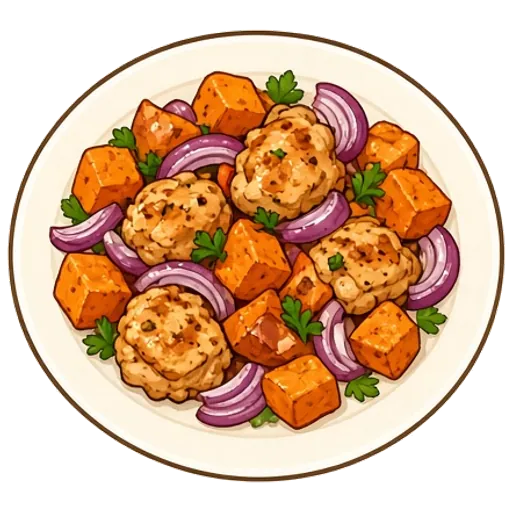
Smoky chicken and sweet potato sheet pan
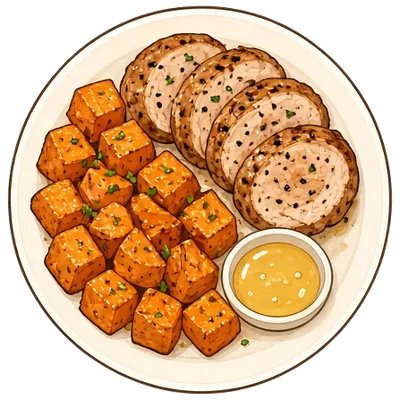
Smoky paprika chicken thighs and sweet potatoes roasted on one pan until their edges caramelize, with almost nothing to wash after.
- 50 min total
- 15 min hands-on
- Anyone can make this
- Serves 4
- About $2.31 a serving
- 420 calories
- Good the next day
- Gluten-free
- Dairy-free

Dolly says: Make the full amount. It’s just as good for lunch the next day.
Ingredients
For 4 servings.
- 1½ lb boneless chicken thighs
- 2 sweet potatoes
- 1 red onion
- 2 tbsp fresh parsley, chopped (optional)
From your pantry
- 3 tbsp olive oil, divided
- 2 tsp smoked paprika, divided
- 1 tsp garlic powder, divided
- 1½ tsp salt, divided
- ½ tsp black pepper, divided
Each serving has about 420 calories, 36 g protein, 28 g carbs and 17 g fat, and costs about $2.31 at typical US grocery prices. Both are estimates from what the recipe uses.
Missing something?
- No boneless chicken thighs? Chicken breasts or chicken tenderloins work.
- No red onions? White onions or yellow onions work.
- No fresh parsley? Cilantro works.
Steps
Tap an underlined word for a quick explanation.
the oven to 425°F and line a large with .
Preheat. Preheating means turning the oven on before you start, so it’s fully hot when the food goes in. Food that starts in a cold oven cooks unevenly and doesn’t brown the same.
How you’ll know: The oven beeps or its light clicks off, usually 10 to 15 minutes after you turn it on.
Sheet pan. A sheet pan is a flat metal baking tray with a low rim all the way around. The rim catches juices, and the wide surface lets food spread out and brown.
How you’ll know: Everything fits in one layer with a little space between the pieces.
Parchment paper. Parchment paper is a nonstick, oven-safe paper for lining pans. Food lifts right off and cleanup is easy, but don’t swap in wax paper or put parchment under the broiler.
How you’ll know: It lies flat in the pan, and the food slides off when you lift it.
the sweet potatoes if you like, cut them into ¾-inch , and cut the onion into thin wedges.
Peel. Peeling means removing the skin with a vegetable peeler or a small knife. It takes off tough or bitter skins, though potato and carrot skins are fine to leave on unless the recipe insists.
How you’ll know: The color underneath is even all over, with no patches of skin left behind.
Cube. Cubing means cutting food into chunky, even squares, usually three quarters of an inch to an inch. Same-size cubes cook at the same speed and brown on every side.
How you’ll know: Your pieces look like a handful of sugar cubes, a little bigger than diced, all close to the same size.
 Dolly’s tip: Cut a thin slice off one side of the potato first so it sits flat and can’t roll.
Rub the chicken thighs all over with 1 tablespoon of the oil and half the paprika, garlic powder, salt and pepper, then set them aside.
the potatoes and onion on the pan with the rest of the oil, spices, salt and pepper, and spread them out in one layer.
Toss. Tossing means gently lifting and turning food so everything gets coated, like pasta in sauce or vegetables in oil. It coats every piece evenly without mashing anything.
How you’ll know: Every piece looks glossy or evenly coated, with no dry spots hiding underneath.
for 10 minutes to give the potatoes a head start.
Roast. Roasting means cooking in a hot oven, around 400°F to 450°F, usually spread out on a sheet pan. The dry heat browns the outside and brings out sweetness, especially in vegetables.
How you’ll know: The edges are browned and a little crisp, and a fork slides easily into the thickest piece.
Timer: 10 min
the potatoes, tuck the chicken thighs in between them, and 20 to 25 minutes more, until the chicken reads 165°F and the potato edges are .
Stir. Stirring means moving food around with a spoon or spatula so it cooks evenly and doesn’t stick. Unless the recipe says constantly, every so often is plenty, and it gives food time to brown.
How you’ll know: When you drag the spoon across the bottom, nothing is sticking or scorching.
Roast. Roasting means cooking in a hot oven, around 400°F to 450°F, usually spread out on a sheet pan. The dry heat browns the outside and brings out sweetness, especially in vegetables.
How you’ll know: The edges are browned and a little crisp, and a fork slides easily into the thickest piece.
Brown. Browning means cooking until the outside turns brown, which is where a lot of savory flavor comes from. Give food room and time without stirring, or it steams and stays gray.
How you’ll know: The food looks brown rather than gray, and the kitchen smells toasty and savory.
Timer: 22 min
Dolly’s tip: Set the pan on the stovetop to do this rather than reaching into the hot oven.Food safety: Chicken is done at 165°F in the thickest part. A thermometer is the only sure check. Without one, cut into the thickest piece: it should be white all the way through, with no pink.
Scatter parsley over the top if you like and serve straight from the pan.

Plan this in Dollop, and get the grocery list
Dollop puts this dinner on a night that suits your week, lists only what you still need to buy, and walks you through each step while you cook.