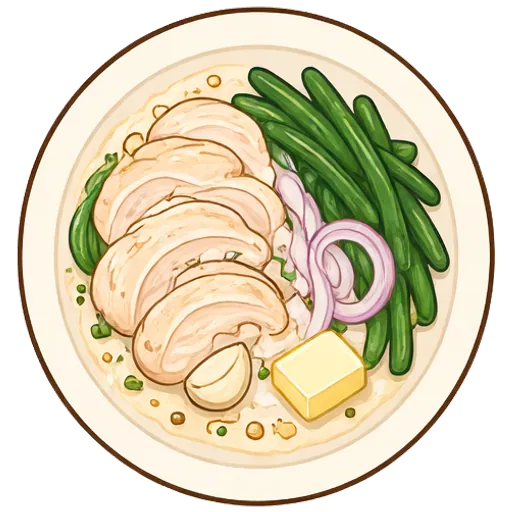
Creamy Dijon chicken
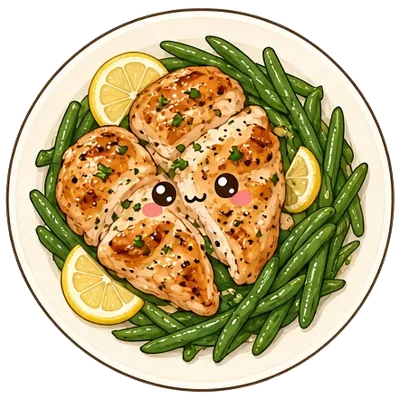
Golden chicken cutlets in a silky, tangy Dijon cream sauce with shallots and thyme, and crisp green beans cooked in the same pan.
- 35 min total
- 30 min hands-on
- Follow-a-recipe easy
- Serves 2
- About $3.58 a serving
- 520 calories
- Good the next day
- Gluten-free

Dolly says: Make the full amount. It’s just as good for lunch the next day.
Ingredients
For 2 servings.
- 8 oz green beans, trimmed
- ¾ lb chicken breasts
- 1 tbsp butter
- 1 shallot, minced
- 1 clove garlic, minced
- ⅔ cup chicken broth
- ⅓ cup heavy cream
- 1½ tbsp Dijon mustard
- 1 tbsp fresh parsley, chopped (optional)
From your pantry
- ¾ tsp salt, divided
- ¼ tsp black pepper
- 1 tbsp olive oil
- ½ tsp dried thyme
Each serving has about 520 calories, 43 g protein, 14 g carbs and 32 g fat, and costs about $3.58 at typical US grocery prices. Both are estimates from what the recipe uses.
Missing something?
- No green beans? Frozen green beans work.
- No chicken breasts? Boneless chicken thighs or chicken tenderloins work.
- No butter? Ghee works.
- No chicken broth? Vegetable broth or bone broth works.
- No fresh parsley? Cilantro works.
Steps
Tap an underlined word for a quick explanation.
Put the green beans in a large with 3 tablespoons of water and ¼ teaspoon of salt, cover, and cook over medium-high 4 minutes, until bright and . Tip them onto a plate.
Skillet. A skillet is a frying pan: wide and flat with low, sloped sides. The shape lets steam escape, so food browns instead of stewing.
How you’ll know: It’s the pan you’d fry an egg in, and a 10 or 12 inch one handles most recipes.
Tender-crisp. Tender-crisp means vegetables cooked until just tender but still with a little snap. They keep their bright color and crunch instead of going soft and dull.
How you’ll know: A fork goes in with slight resistance, and the color is bright, not olive or gray.
Medium-high heatTimer: 4 min
the chicken into 4 thin cutlets, with the rest of the salt and the pepper, and wash your hands and board.
Slice. Slicing means cutting food into flat pieces of about the same thickness. Even slices cook evenly, so none are raw while others burn.
How you’ll know: Lay a few side by side: they’re close to the same thickness from one end to the other.
Season. Seasoning means adding salt, pepper or spices to bring out a food’s flavor. A little at a few stages tastes better than a lot all at the end.
How you’ll know: When you taste it, it tastes bright and like itself, not flat and not salty.
Food safety: Wash your hands, the board and the knife with hot soapy water after touching raw meat, and don’t rinse raw chicken in the sink.
Wipe the dry, heat the oil over medium-high, and cook the cutlets 3 to 4 minutes per side, until and the thickest reads 165°F. Move them to a plate.
Skillet. A skillet is a frying pan: wide and flat with low, sloped sides. The shape lets steam escape, so food browns instead of stewing.
How you’ll know: It’s the pan you’d fry an egg in, and a 10 or 12 inch one handles most recipes.
Golden brown. Golden brown is the color of good toast, somewhere between yellow and light brown. It means the outside is cooked and crisp but not burnt.
How you’ll know: It looks like toast and smells toasty; dark brown with a bitter smell means it went too far.
Medium-high heatTimer: 7 min
Food safety: Chicken and turkey are done at 165°F in the thickest part. A thermometer is the only sure check. Without one, cut into the thickest piece: it should be white all the way through, with no pink.
Turn the heat to medium, add the butter, shallot and garlic, and 1 minute, until soft.
Stir. Stirring means moving food around with a spoon or spatula so it cooks evenly and doesn’t stick. Unless the recipe says constantly, every so often is plenty, and it gives food time to brown.
How you’ll know: When you drag the spoon across the bottom, nothing is sticking or scorching.
Medium heatTimer: 1 min
Pour in the broth, , and let it bubble 2 minutes, until by about half.
Scrape up the browned bits. It means loosening the brown bits stuck to the pan with a wooden spoon, usually right after adding liquid. Those bits are concentrated flavor, and they melt into the sauce.
How you’ll know: The bottom of the pan looks clean again, and the liquid turns darker and richer.
Reduce. Reducing means simmering a liquid with the lid off so some of the water steams away. The sauce gets thicker and its flavor gets stronger.
How you’ll know: The level drops in the pan, and the sauce coats the back of a spoon instead of running off.
Medium-high heatTimer: 2 min
in the cream, mustard and thyme and 2 to 3 minutes, until the sauce coats a spoon.
Stir. Stirring means moving food around with a spoon or spatula so it cooks evenly and doesn’t stick. Unless the recipe says constantly, every so often is plenty, and it gives food time to brown.
How you’ll know: When you drag the spoon across the bottom, nothing is sticking or scorching.
Simmer. Simmering means keeping a liquid just below a boil, with small bubbles rising gently. It cooks food evenly and lets a sauce thicken without scorching on the bottom.
How you’ll know: Small, lazy bubbles break the surface every second or so, and nothing is churning.
Medium heatTimer: 2 min 30 sec
 Dolly’s tip: If it gets too thick, a splash of water loosens it right back up.
Return the chicken and green beans, spoon the sauce over, and scatter the parsley.
Low heat

Plan this in Dollop, and get the grocery list
Dollop puts this dinner on a night that suits your week, lists only what you still need to buy, and walks you through each step while you cook.