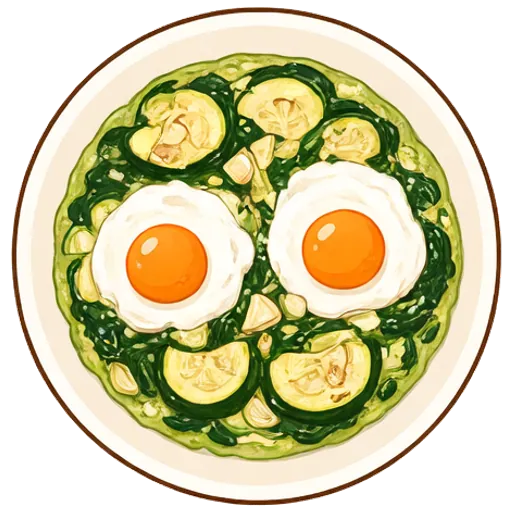
Green shakshuka
Eggs gently cooked in a skillet of soft, sweet leeks, zucchini and spinach, finished with feta, dill and lemon, for a fresh spin on the red classic.
- 35 min total
- 25 min hands-on
- Follow-a-recipe easy
- Serves 2
- About $5.21 a serving
- 560 calories
- Vegetarian

Dolly says: Read the steps once before you start. Everything goes smoother after that.
Ingredients
For 2 servings.
- 1 leek
- 1 zucchini, diced
- 2 cloves garlic, minced
- 1 package baby spinach, 5 oz
- 4 large eggs
- ¼ cup feta cheese, crumbled
- 2 tbsp fresh dill, chopped
- ½ lemon, zested
- 2 pita bread, warmed
From your pantry
- 2 tbsp olive oil
- ½ tsp salt, divided
- ½ tsp ground cumin
- 2 tbsp water
- 1 pinch black pepper
- 1 pinch red pepper flakes (optional)
Each serving has about 560 calories, 25 g protein, 52 g carbs and 29 g fat, and costs about $5.21 at typical US grocery prices. Both are estimates from what the recipe uses.
Missing something?
- No zucchini? Yellow squash works.
- No baby spinach? Kale or arugula works.
- No feta cheese? Goat cheese works.
- No lemons? Limes work.
- No pita bread? Flour tortillas work.
Steps
Tap an underlined word for a quick explanation.
the dark green top and the root off the leek, it and out any grit between the layers. it.
Trim. Trimming means cutting off the parts you don’t eat, like stem ends, tough bits or thick fat. It keeps chewy or bitter bits out of the finished dish.
How you’ll know: What’s left is the good part, with no dry ends, woody stems or thick white fat.
Halve. Halving means cutting something into two equal pieces. Even halves cook at the same speed, so one doesn’t dry out while the other finishes.
How you’ll know: The two pieces look like mirror images of each other.
Lengthwise. Lengthwise means cutting along the long side, from stem to tip, which gives long pieces. Crosswise is the other way, straight across the middle, which gives short, round ones.
How you’ll know: Lengthwise halves of a zucchini look like two little canoes; crosswise pieces look like coins.
Rinse. Rinsing means running cold water over rice or canned beans in a strainer while you swish them around. It washes off loose starch and can liquid, so rice cooks up fluffy and beans taste clean.
How you’ll know: The water running out goes from cloudy to mostly clear; it doesn’t have to be perfect.
Thinly slice. Thinly slicing means cutting slices about an eighth of an inch thick, roughly two coins stacked. Thin slices cook in seconds and soften fast, which quick dishes need.
How you’ll know: A slice bends a little when you hold it by one edge, and slow, steady cuts beat fast ones.
 Dolly’s tip: Leeks hide dirt between their layers. Fan them open under the tap and it rinses right out.
the zucchini and the garlic.
Dice. Dicing means cutting food into small, even cubes, usually a quarter to half an inch across. Pieces the same size cook at the same speed, so nothing burns while the rest catches up.
How you’ll know: Your pieces are little cubes about the size of a chickpea, and they all look close to the same.
Mince. Mincing means chopping something into the tiniest pieces you can, smaller than a grain of rice. Tiny pieces melt into the dish, so you get the flavor without biting into a chunk of garlic.
How you’ll know: Every piece is tiny and about the same size, and the pile starts to look almost like a paste.
Heat the oil in a 10-inch that has a lid over medium heat. Add the leek, zucchini and ¼ teaspoon salt and cook, stirring now and then, until soft, 6 to 7 minutes.
Skillet. A skillet is a frying pan: wide and flat with low, sloped sides. The shape lets steam escape, so food browns instead of stewing.
How you’ll know: It’s the pan you’d fry an egg in, and a 10 or 12 inch one handles most recipes.
Medium heatTimer: 6 min 30 sec
Stir in the garlic and cumin for 30 seconds, . Add the spinach a handful at a time with the water, stirring until it .
Fragrant. Fragrant means cooking until you can clearly smell it, usually garlic or spices, often in about 30 seconds. That’s the moment the flavor is ready, just before it can burn.
How you’ll know: You can smell it from a step back, and garlic is pale gold, not brown.
Wilt. Wilting means cooking leafy greens just until they go soft and collapse. Greens shrink a lot, so a big pile of spinach becomes a small handful, and that’s normal.
How you’ll know: The leaves turn soft and deep green and slump into the pan, usually within a minute or two.
Medium heat
Make 4 wells in the greens with a spoon and crack an egg into each. Sprinkle the eggs with the rest of the salt and of pepper.
Pinch. A pinch is what you can hold between your thumb and two fingers, less than an eighth of a teaspoon. It’s a small, forgiving amount, so there’s no need to measure.
How you’ll know: It’s a light sprinkle you can barely see on the food, not a little pile.
Dolly’s tip: Crack each egg into a small cup first, then slide it in, so a stray bit of shell is easy to fish out.to low, cover and cook until the whites are completely set and the yolks begin to , 5 to 7 minutes.
Reduce the heat. It means turning the burner down, usually to medium-low or low, so food cooks gently instead of hard. Electric burners cool slowly, so lift the pan off for a moment if it’s bubbling hard.
How you’ll know: Within a minute the bubbling calms to a gentle simmer, or the sizzle turns quiet.
Thicken. Thickening means cooking a sauce or soup until it’s less runny, by simmering it down or adding something like cornstarch. A thicker sauce clings to food instead of pooling on the plate.
How you’ll know: It coats the back of a spoon, and a line drawn through it with your finger holds its shape.
Low heatTimer: 6 min
Dolly’s tip: Peek at 5 minutes. Done whites are solid white right up to the yolk.Food safety: For the safest eggs, cook until the whites are fully set and the yolks begin to thicken. Dishes made with eggs are done at 160°F.
Scatter the feta, dill, lemon and pepper flakes on top and serve from the pan with warm pita.
Zest. Zest is the thin, colored outer layer of citrus peel, rubbed off on the smallest holes of a grater. It holds the fruit’s fragrant oils, so it adds bright flavor without the sourness of juice.
How you’ll know: You see bright flecks and smell citrus right away; stop when you reach the white layer, which is bitter.

Plan this in Dollop, and get the grocery list
Dollop puts this dinner on a night that suits your week, lists only what you still need to buy, and walks you through each step while you cook.
More dinners like this
Shakshuka with toast for dipping
40 min
Crispy Brussels sprouts and potato hash with eggs
35 min
Tofu shakshuka
35 min
Lemon garlic tofu with zucchini
40 min
One-pan dinners ›Vegetarian dinners ›What to make with eggs and spinach ›What to make with spinach and feta cheese ›What to make with eggs and zucchini ›