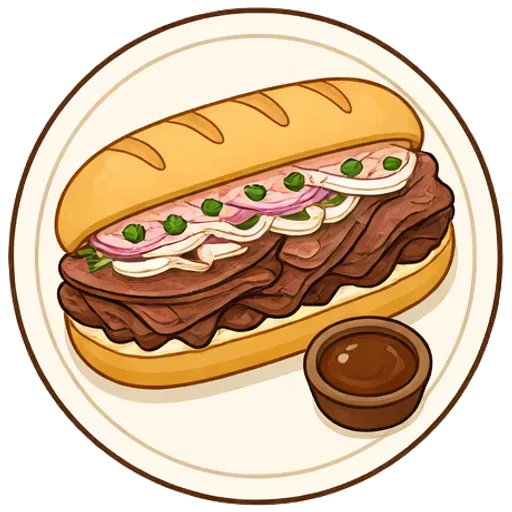
Instant Pot French dip sandwiches
Tender beef piled on toasted rolls with melted provolone and a cup of rich, savory jus for dunking, in about two hours instead of all day.
- 120 min total
- 30 min hands-on
- Follow-a-recipe easy
- Serves 6
- About $4.70 a serving
- 720 calories
- Good the next day

Dolly says: Make the full amount. It’s just as good for lunch the next day.
Ingredients
For 6 servings.
- 2½ lb chuck roast, cut into 4 chunks
- 1 yellow onion, sliced
- 2 cups beef broth
- 2 tbsp Worcestershire sauce
- 3 cloves garlic, smashed
- 6 hoagie rolls
- 6 slices provolone slices
From your pantry
- 1½ tsp salt
- 1 tsp black pepper
- 1 tbsp vegetable oil
- 1 tbsp soy sauce
- 1 tsp dried thyme
- 1 bay leave
Each serving has about 720 calories, 51 g protein, 48 g carbs and 36 g fat, and costs about $4.70 at typical US grocery prices. Both are estimates from what the recipe uses.
Missing something?
- No yellow onions? White onions or red onions work.
- No beef broth? Bone broth works.
- No hoagie rolls? French bread works.
- No provolone slices? Shredded mozzarella works.
Steps
Tap an underlined word for a quick explanation.
the beef dry and it all over with the salt and pepper.
Pat dry. Patting dry means pressing paper towels onto food to soak up the moisture on its surface. Wet food steams instead of browning, so this is how you get a good sear and crisp skin.
How you’ll know: The surface feels tacky, not wet, and the last paper towel comes away barely damp.
Season. Seasoning means adding salt, pepper or spices to bring out a food’s flavor. A little at a few stages tastes better than a lot all at the end.
How you’ll know: When you taste it, it tastes bright and like itself, not flat and not salty.
Food safety: Wash your hands, the board and the knife with hot soapy water after touching raw meat, and don’t rinse raw chicken in the sink.
Set the Instant Pot to and heat the oil. the beef 3 to 4 minutes a side, in two batches, and move it to a plate.
Sauté. Sautéing means cooking cut-up food in a little oil or butter over medium to medium-high heat, stirring now and then. It cooks things quickly and browns them lightly without burning.
How you’ll know: You hear a steady, lively sizzle, not a hiss and spit, and the edges start to soften and color.
Brown. Browning means cooking until the outside turns brown, which is where a lot of savory flavor comes from. Give food room and time without stirring, or it steams and stays gray.
How you’ll know: The food looks brown rather than gray, and the kitchen smells toasty and savory.
Timer: 7 min
 Dolly’s tip: Do not crowd it. Two batches gives you a dark crust, which is where the jus gets its flavor.
Add the onion and cook 3 minutes, , until it starts to .
Stir. Stirring means moving food around with a spoon or spatula so it cooks evenly and doesn’t stick. Unless the recipe says constantly, every so often is plenty, and it gives food time to brown.
How you’ll know: When you drag the spoon across the bottom, nothing is sticking or scorching.
Softened. For vegetables it means cooked until they bend and lose their crunch; for butter, left out until it dents easily. Soft onions taste sweet, and soft butter mixes in smoothly.
How you’ll know: Onions squash easily against the pan with your spoon, and butter dents under a finger without looking greasy.
Timer: 3 min
Pour in the broth, Worcestershire and soy sauce, and scrape the bottom completely clean with a wooden spoon.
Dolly’s tip: Any stuck bits left on the bottom can set off the burn warning. Scrape until the pot feels smooth.Add the garlic, thyme and bay leaf, then set the beef back in with its juices. Lock the lid, turn the valve to sealing and pressure cook on HIGH for 60 minutes.
Timer: 60 min
Let the pressure come down on its own for 15 minutes, then vent the rest. The beef should easily with a fork.
Shred. Shredding means making thin strips, either on the big holes of a grater or by pulling cooked meat apart with two forks. Shreds soak up sauce and mix evenly through a dish.
How you’ll know: Cooked chicken pulls apart into strands with little effort, and cheese comes off in long, loose strips.
Timer: 15 min
Food safety: Steak, pork chops and other whole cuts are safe at 145°F in the middle, then let them rest for 3 minutes before cutting.
Lift out the beef and it. Spoon the fat off the jus, fish out the bay leaf, and taste the jus for salt.
Shred. Shredding means making thin strips, either on the big holes of a grater or by pulling cooked meat apart with two forks. Shreds soak up sauce and mix evenly through a dish.
How you’ll know: Cooked chicken pulls apart into strands with little effort, and cheese comes off in long, loose strips.
Heat the . Split the rolls, lay them on a , pile on the beef and top with provolone.
Broil. Broiling means cooking under the oven’s top heating element, with strong heat from above. It browns and crisps the top in minutes, and it can burn fast, so stay close.
How you’ll know: The top bubbles and spots golden brown; check every minute and pull it before it blackens.
Sheet pan. A sheet pan is a flat metal baking tray with a low rim all the way around. The rim catches juices, and the wide surface lets food spread out and brown.
How you’ll know: Everything fits in one layer with a little space between the pieces.
1 to 2 minutes, until the cheese . Serve with small cups of hot jus for dipping.
Broil. Broiling means cooking under the oven’s top heating element, with strong heat from above. It browns and crisps the top in minutes, and it can burn fast, so stay close.
How you’ll know: The top bubbles and spots golden brown; check every minute and pull it before it blackens.
Melt. Melting means gently heating something solid, like butter or cheese, until it turns liquid. Low or medium heat keeps it from browning or burning.
How you’ll know: It’s smooth and liquid, and butter may foam a little but hasn’t turned brown.
Timer: 1 min 30 sec
Dolly’s tip: Stay at the oven door. The broiler goes from melted to burnt in seconds. The beef and jus freeze together for 3 months.

Plan this in Dollop, and get the grocery list
Dollop puts this dinner on a night that suits your week, lists only what you still need to buy, and walks you through each step while you cook.