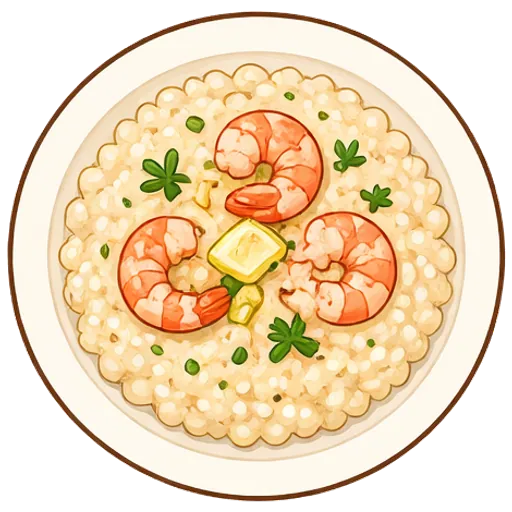
Instant Pot shrimp risotto
Creamy lemon parmesan risotto with tender shrimp and sweet peas, without the standing and stirring the stovetop version asks for.
- 35 min total
- 15 min hands-on
- Follow-a-recipe easy
- Serves 4
- About $4.61 a serving
- 530 calories
- Gluten-free

Dolly says: Most of the time here is hands-off, so you can sit down while it cooks.
Ingredients
For 4 servings.
- 3 tbsp butter, divided
- 1 shallot, finely chopped
- 2 cloves garlic, minced
- 1½ cups arborio rice
- 4 cups vegetable broth
- 1 lb raw shrimp, peeled and deveined, thawed if frozen
- 1 cup frozen peas
- ½ cup parmesan wedge, finely grated
- 1 lemon, zested and juiced
From your pantry
- ½ tsp salt
- ¼ tsp black pepper
Each serving has about 530 calories, 34 g protein, 70 g carbs and 12 g fat, and costs about $4.61 at typical US grocery prices. Both are estimates from what the recipe uses.
Missing something?
- No butter? Ghee works.
- No raw shrimp? Frozen raw shrimp works.
- No frozen peas? Frozen mixed vegetables work.
- No parmesan wedge? Grated parmesan works.
- No lemons? Limes work.
Steps
Tap an underlined word for a quick explanation.
Set the pressure cooker to and 2 tablespoons of the butter. Cook the shallot for 2 minutes, then add the garlic for 30 seconds.
Sauté. Sautéing means cooking cut-up food in a little oil or butter over medium to medium-high heat, stirring now and then. It cooks things quickly and browns them lightly without burning.
How you’ll know: You hear a steady, lively sizzle, not a hiss and spit, and the edges start to soften and color.
Melt. Melting means gently heating something solid, like butter or cheese, until it turns liquid. Low or medium heat keeps it from browning or burning.
How you’ll know: It’s smooth and liquid, and butter may foam a little but hasn’t turned brown.
Timer: 2 min 30 sec
Add the rice and for 2 minutes, until the edges of the grains look .
Stir. Stirring means moving food around with a spoon or spatula so it cooks evenly and doesn’t stick. Unless the recipe says constantly, every so often is plenty, and it gives food time to brown.
How you’ll know: When you drag the spoon across the bottom, nothing is sticking or scorching.
Translucent. Translucent means onions have cooked until they turn from white to slightly see-through. It shows they’re soft and sweet but haven’t started to brown.
How you’ll know: The onion looks glossy and a little see-through, bends easily, and has barely any color.
Timer: 2 min
Pour in the broth and salt, scrape the bottom clean and turn off .
Sauté. Sautéing means cooking cut-up food in a little oil or butter over medium to medium-high heat, stirring now and then. It cooks things quickly and browns them lightly without burning.
How you’ll know: You hear a steady, lively sizzle, not a hiss and spit, and the edges start to soften and color.
Lock the lid, set the valve to sealing and cook on high pressure for 6 minutes.
Timer: 6 min
Turn the valve to venting to release the pressure, keeping your hand away from the steam.
Set the pot to , stir in the shrimp and peas and cook, , for 3 to 4 minutes, until the shrimp are pink and opaque.
Sauté. Sautéing means cooking cut-up food in a little oil or butter over medium to medium-high heat, stirring now and then. It cooks things quickly and browns them lightly without burning.
How you’ll know: You hear a steady, lively sizzle, not a hiss and spit, and the edges start to soften and color.
Stir. Stirring means moving food around with a spoon or spatula so it cooks evenly and doesn’t stick. Unless the recipe says constantly, every so often is plenty, and it gives food time to brown.
How you’ll know: When you drag the spoon across the bottom, nothing is sticking or scorching.
Timer: 3 min 30 sec
 Dolly’s tip: Risotto should flow slowly off the spoon, like thick porridge. Add a splash of hot water if it tightens up.
Food safety: Shrimp are done when they turn pink and opaque all the way through and curl into a loose C. A tight O means overcooked, not unsafe.
Turn the pot off and in the parmesan, the rest of the butter, the lemon and juice and the pepper.
Stir. Stirring means moving food around with a spoon or spatula so it cooks evenly and doesn’t stick. Unless the recipe says constantly, every so often is plenty, and it gives food time to brown.
How you’ll know: When you drag the spoon across the bottom, nothing is sticking or scorching.
Zest. Zest is the thin, colored outer layer of citrus peel, rubbed off on the smallest holes of a grater. It holds the fruit’s fragrant oils, so it adds bright flavor without the sourness of juice.
How you’ll know: You see bright flecks and smell citrus right away; stop when you reach the white layer, which is bitter.
Serve right away, while it’s loose and creamy.

Plan this in Dollop, and get the grocery list
Dollop puts this dinner on a night that suits your week, lists only what you still need to buy, and walks you through each step while you cook.
More dinners like this
Instant Pot cheesy tuna and rice
40 min
Instant Pot shrimp burrito bowls
40 min
One-pot Cajun shrimp and rice
50 min
Air fryer shrimp
30 min
High-protein dinners ›Cozy comfort food ›What to make with frozen peas and parmesan ›