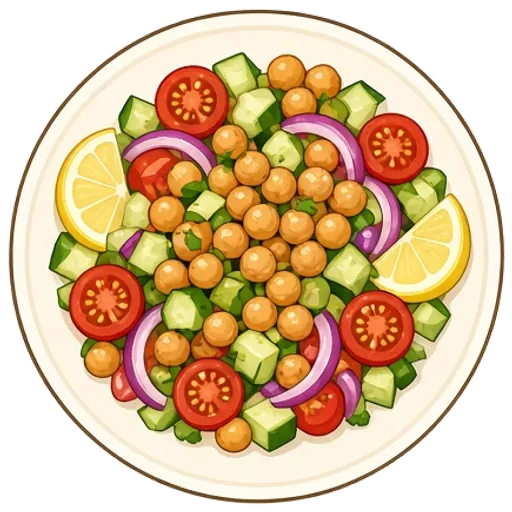
Mediterranean chickpea salad
Crunchy, lemony and full of color, this no-cook salad keeps for days and makes lunch feel like a small vacation.
- 25 min total
- 25 min hands-on
- Anyone can make this
- Serves 4
- About $2.79 a serving
- 440 calories
- Good the next day
- Vegan
- Gluten-free
- Dairy-free

Dolly says: I’d make this on a weeknight. It’s on the table in 25 minutes.
Ingredients
For 4 servings.
- 2 cans chickpeas, drained and rinsed
- ½ red onion, finely chopped
- 1 lemon, juiced
- 1 english cucumber, diced
- 1½ cups cherry tomatoes, halved
- 1 yellow bell pepper, diced
- ⅓ cup kalamata olives, halved
- ½ cup fresh parsley, chopped
- 1 clove garlic, minced
From your pantry
- ¾ tsp salt
- ¼ cup olive oil
- 1 tbsp red wine vinegar
- 1 tsp dried oregano
- ¼ tsp black pepper
Each serving has about 440 calories, 15 g protein, 48 g carbs and 22 g fat, and costs about $2.79 at typical US grocery prices. Both are estimates from what the recipe uses.
Missing something?
- No red onions? White onions or yellow onions work.
- No lemons? Limes work.
- No english cucumbers? Cucumbers or mini cucumbers work.
- No yellow bell peppers? Red bell peppers work.
- No kalamata olives? Black olives work.
- No fresh parsley? Cilantro works.
Steps
Tap an underlined word for a quick explanation.
the chickpeas in a colander, them, and leave them to drip while you .
Drain. Draining means pouring off liquid, like tipping pasta into a colander or spooning extra fat out of the pan. Pour hot grease into a can or jar, not the sink, where it hardens and clogs the pipes.
How you’ll know: Only a few drips are left, and the food isn’t sitting in a puddle.
Rinse. Rinsing means running cold water over rice or canned beans in a strainer while you swish them around. It washes off loose starch and can liquid, so rice cooks up fluffy and beans taste clean.
How you’ll know: The water running out goes from cloudy to mostly clear; it doesn’t have to be perfect.
Chop. Chopping means cutting food into bite-size pieces that don’t need to be neat. Keep them roughly the same size so everything cooks evenly.
How you’ll know: Your pieces are about half an inch and roughly alike, even if none of them are pretty.
the red onion and put it in a big bowl with the lemon juice and of salt.
Finely chop. Finely chopping means cutting food into small pieces, a little bigger than minced, about the size of a lentil. Small pieces spread their flavor through the dish and cook quickly.
How you’ll know: Nothing is bigger than a lentil, and the pile looks like confetti rather than paste.
Pinch. A pinch is what you can hold between your thumb and two fingers, less than an eighth of a teaspoon. It’s a small, forgiving amount, so there’s no need to measure.
How you’ll know: It’s a light sprinkle you can barely see on the food, not a little pile.
 Dolly’s tip: Halve the onion through the root and lay it flat side down so it can’t roll. The lemon softens its sharp bite while it sits.
Cut the cucumber into four long strips, then crosswise into small pieces.
Lengthwise. Lengthwise means cutting along the long side, from stem to tip, which gives long pieces. Crosswise is the other way, straight across the middle, which gives short, round ones.
How you’ll know: Lengthwise halves of a zucchini look like two little canoes; crosswise pieces look like coins.
Dolly’s tip: Long strips first, then straight across, is the fastest way to dice anything long.the cherry tomatoes and olives and the bell pepper.
Halve. Halving means cutting something into two equal pieces. Even halves cook at the same speed, so one doesn’t dry out while the other finishes.
How you’ll know: The two pieces look like mirror images of each other.
Dice. Dicing means cutting food into small, even cubes, usually a quarter to half an inch across. Pieces the same size cook at the same speed, so nothing burns while the rest catches up.
How you’ll know: Your pieces are little cubes about the size of a chickpea, and they all look close to the same.
the parsley and the garlic.
Chop. Chopping means cutting food into bite-size pieces that don’t need to be neat. Keep them roughly the same size so everything cooks evenly.
How you’ll know: Your pieces are about half an inch and roughly alike, even if none of them are pretty.
Mince. Mincing means chopping something into the tiniest pieces you can, smaller than a grain of rice. Tiny pieces melt into the dish, so you get the flavor without biting into a chunk of garlic.
How you’ll know: Every piece is tiny and about the same size, and the pile starts to look almost like a paste.
Dolly’s tip: Curl the fingertips of the hand holding the food under, so the knife only ever meets your knuckles.Add the garlic, olive oil, vinegar, oregano and pepper to the onions and with a fork.
Whisk. Whisking means beating quickly with a whisk or a fork to blend things together. It smooths out lumps and mixes eggs, oil or sauces evenly.
How you’ll know: It all looks one even color and texture, with no streaks or lumps.
Add the chickpeas, cucumber, tomatoes, pepper, olives and parsley and well. Taste and add salt until it tastes bright.
Toss. Tossing means gently lifting and turning food so everything gets coated, like pasta in sauce or vegetables in oil. It coats every piece evenly without mashing anything.
How you’ll know: Every piece looks glossy or evenly coated, with no dry spots hiding underneath.
Eat it right away or chill it for up to 3 days, stirring before you serve.

Plan this in Dollop, and get the grocery list
Dollop puts this dinner on a night that suits your week, lists only what you still need to buy, and walks you through each step while you cook.
More dinners like this
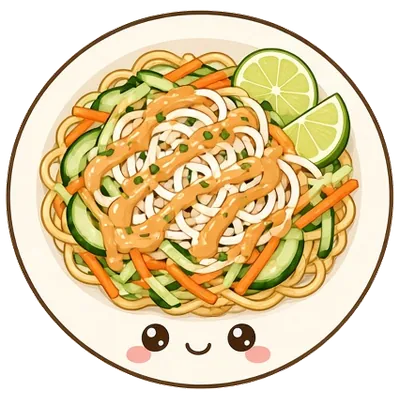
Peanut noodles with cucumber and carrots
25 min
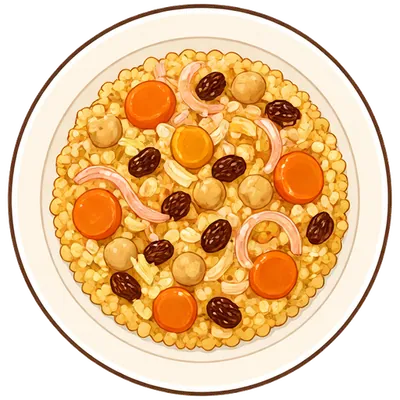
Moroccan-spiced couscous with chickpeas and carrots
25 min
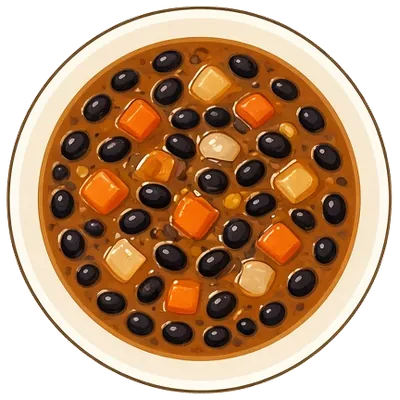
Smoky black bean soup
40 min
Red lentil soup with lemon
45 min
30-minute dinners ›Vegetarian dinners ›What to make with cucumber and tomatoes ›