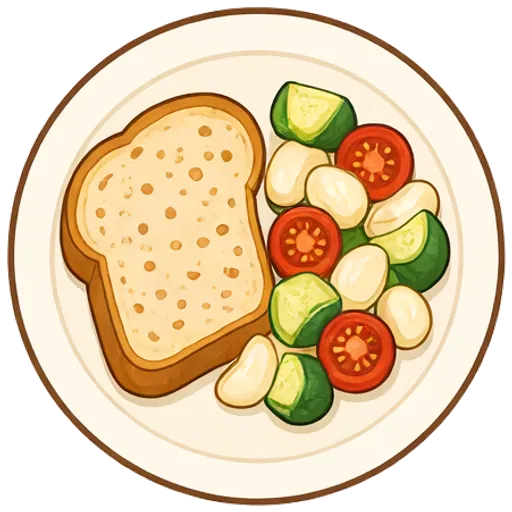
One-pan zucchini and white beans with parmesan
Browned zucchini, creamy white beans and burst cherry tomatoes with lemon and lots of parmesan, ready in about 25 minutes.
- 25 min total
- 25 min hands-on
- Follow-a-recipe easy
- Serves 2
- About $4.28 a serving
- 650 calories
- Vegetarian

Dolly says: Read the steps once before you start. Everything goes smoother after that.
Ingredients
For 2 servings.
- 2 slices sourdough bread
- 2 zucchini, medium
- 3 cloves garlic, minced
- 1 cup cherry tomatoes, halved
- 1 can cannellini beans, drained and rinsed
- 1 lemon
- ¾ cup grated parmesan, divided
- 4 sprigs fresh basil, leaves torn (optional)
From your pantry
- 2 tbsp olive oil, divided
- ¼ tsp red pepper flakes
- ½ tsp salt
- 2 tbsp water
- ¼ tsp black pepper
Each serving has about 650 calories, 32 g protein, 75 g carbs and 26 g fat, and costs about $4.28 at typical US grocery prices. Both are estimates from what the recipe uses.
Missing something?
- No sourdough bread? French bread works.
- No zucchini? Yellow squash works.
- No lemons? Limes work.
- No grated parmesan? Parmesan wedge works.
Steps
Tap an underlined word for a quick explanation.
Cut the zucchini into ½-inch half-moons, the garlic, the tomatoes and the beans.
Mince. Mincing means chopping something into the tiniest pieces you can, smaller than a grain of rice. Tiny pieces melt into the dish, so you get the flavor without biting into a chunk of garlic.
How you’ll know: Every piece is tiny and about the same size, and the pile starts to look almost like a paste.
Halve. Halving means cutting something into two equal pieces. Even halves cook at the same speed, so one doesn’t dry out while the other finishes.
How you’ll know: The two pieces look like mirror images of each other.
Drain. Draining means pouring off liquid, like tipping pasta into a colander or spooning extra fat out of the pan. Pour hot grease into a can or jar, not the sink, where it hardens and clogs the pipes.
How you’ll know: Only a few drips are left, and the food isn’t sitting in a puddle.
Toast the bread in a large dry over medium heat until , about 2 minutes per side. Set it on a plate.
Skillet. A skillet is a frying pan: wide and flat with low, sloped sides. The shape lets steam escape, so food browns instead of stewing.
How you’ll know: It’s the pan you’d fry an egg in, and a 10 or 12 inch one handles most recipes.
Golden brown. Golden brown is the color of good toast, somewhere between yellow and light brown. It means the outside is cooked and crisp but not burnt.
How you’ll know: It looks like toast and smells toasty; dark brown with a bitter smell means it went too far.
Medium heatTimer: 4 min
Add 1½ tablespoons oil to the and turn the heat to medium-high.
Skillet. A skillet is a frying pan: wide and flat with low, sloped sides. The shape lets steam escape, so food browns instead of stewing.
How you’ll know: It’s the pan you’d fry an egg in, and a 10 or 12 inch one handles most recipes.
Medium-high heat
Spread the zucchini out in one layer and leave it alone until underneath, about 3 minutes.
Brown. Browning means cooking until the outside turns brown, which is where a lot of savory flavor comes from. Give food room and time without stirring, or it steams and stays gray.
How you’ll know: The food looks brown rather than gray, and the kitchen smells toasty and savory.
Medium-high heatTimer: 3 min
 Dolly’s tip: Don’t stir too soon. Zucchini only browns when it sits still.
Stir and cook 2 minutes more.
Medium-high heatTimer: 2 min
Add the garlic and pepper flakes and stir for 30 seconds, .
Fragrant. Fragrant means cooking until you can clearly smell it, usually garlic or spices, often in about 30 seconds. That’s the moment the flavor is ready, just before it can burn.
How you’ll know: You can smell it from a step back, and garlic is pale gold, not brown.
Medium-high heat
Add the tomatoes, beans, salt and water. Cook, stirring gently, until the tomatoes start to slump and the beans are hot, 3 to 4 minutes.
Medium heatTimer: 4 min
Off the heat, in the lemon , squeeze in half the juice and stir in half the parmesan.
Grate. Grating means rubbing food across the holes of a grater to make fine shreds or flakes. It spreads cheese, garlic or ginger evenly through a dish so it melts right in.
How you’ll know: Even shreds fall off the back of the grater, and you stop while the piece is still big enough to hold.
Zest. Zest is the thin, colored outer layer of citrus peel, rubbed off on the smallest holes of a grater. It holds the fruit’s fragrant oils, so it adds bright flavor without the sourness of juice.
How you’ll know: You see bright flecks and smell citrus right away; stop when you reach the white layer, which is bitter.
Spoon into bowls, with the last of the oil, then add the rest of the parmesan, black pepper and basil. Serve with the toast.
Drizzle. Drizzling means pouring a thin, slow stream over the top of something. A thin stream spreads a little flavor a long way.
How you’ll know: You see thin lines across the food, not a puddle collecting underneath.

Plan this in Dollop, and get the grocery list
Dollop puts this dinner on a night that suits your week, lists only what you still need to buy, and walks you through each step while you cook.
More dinners like this
Garlicky white beans and spinach with fried eggs
25 min
Lemony white beans with artichokes and olives
20 min
Sheet pan white beans and broccoli with lemon and parmesan
30 min
Eggs in purgatory
25 min
30-minute dinners ›One-pan dinners ›What to make with tomatoes and parmesan ›What to make with zucchini and parmesan ›What to make with cannellini beans and parmesan ›