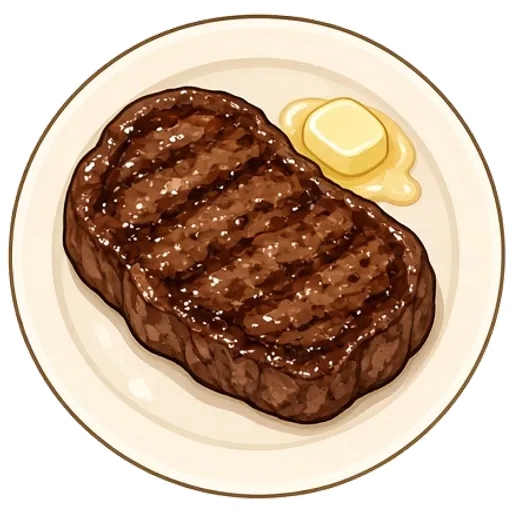
Pan-seared steak with butter
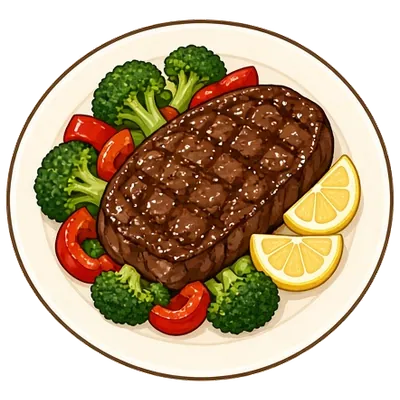
A deep brown crust and foaming butter spooned over the top: the steak that makes you feel like you can really cook.
- 50 min total
- 15 min hands-on
- Follow-a-recipe easy
- Serves 2
- About $11.70 a serving
- 810 calories
- Gluten-free

Dolly says: Most of the time here is hands-off, so you can sit down while it cooks.
Ingredients
For 2 servings.
- 2 new york strip steak, about 1 inch thick
- 1 tbsp ghee
- 2 tbsp butter
From your pantry
- 1½ tsp salt
- 1 tsp black pepper
Each serving has about 810 calories, 72 g protein, 1 g carbs and 58 g fat, and costs about $11.70 at typical US grocery prices. Both are estimates from what the recipe uses.
Missing something?
- No new york strip steak? Ribeye steak or sirloin steak works.
Steps
Tap an underlined word for a quick explanation.
Take the steaks out of the fridge 30 minutes before cooking, them dry with paper towels, and both sides well with the salt and pepper.
Pat dry. Patting dry means pressing paper towels onto food to soak up the moisture on its surface. Wet food steams instead of browning, so this is how you get a good sear and crisp skin.
How you’ll know: The surface feels tacky, not wet, and the last paper towel comes away barely damp.
Season. Seasoning means adding salt, pepper or spices to bring out a food’s flavor. A little at a few stages tastes better than a lot all at the end.
How you’ll know: When you taste it, it tastes bright and like itself, not flat and not salty.
Timer: 30 min
 Dolly’s tip: A dry surface is what browns. A wet one steams and turns gray.
Set a large heavy , cast iron if you have one, over medium-high heat for 2 minutes, then add the ghee and swirl it around.
Skillet. A skillet is a frying pan: wide and flat with low, sloped sides. The shape lets steam escape, so food browns instead of stewing.
How you’ll know: It’s the pan you’d fry an egg in, and a 10 or 12 inch one handles most recipes.
Medium-high heatTimer: 2 min
Lay the steaks in the pan, away from you, and let them untouched for 4 minutes, until a deep crust forms underneath.
Sear. Searing means cooking the outside of meat or fish in a hot pan, without moving it, until a deep brown crust forms. The crust is packed with flavor, and it only forms on a dry surface.
How you’ll know: It sizzles loudly the moment it goes in, and it lets go of the pan on its own when the crust is ready.
Brown. Browning means cooking until the outside turns brown, which is where a lot of savory flavor comes from. Give food room and time without stirring, or it steams and stays gray.
How you’ll know: The food looks brown rather than gray, and the kitchen smells toasty and savory.
Medium-high heatTimer: 4 min
Dolly’s tip: It will spit and smoke a little. Turn on the fan and don’t move them; the crust needs the time.Flip the steaks with tongs and cook 3 minutes more.
Medium-high heatTimer: 3 min
to medium, add the butter, and tilt the pan so it pools. Spoon the foaming butter over the steaks for 1 to 2 minutes.
Reduce the heat. It means turning the burner down, usually to medium-low or low, so food cooks gently instead of hard. Electric burners cool slowly, so lift the pan off for a moment if it’s bubbling hard.
How you’ll know: Within a minute the bubbling calms to a gentle simmer, or the sizzle turns quiet.
Medium heatTimer: 1 min 30 sec
Dolly’s tip: Tip the pan toward you and the butter collects at the edge, where a spoon can scoop it.Check the thickest part with a thermometer. At 145°F, move the steaks to a board and let them for 5 minutes.
Rest. Resting means letting cooked meat sit for a few minutes before you cut it. It keeps cooking gently, and more of the juice stays in the meat instead of running onto the board.
How you’ll know: Loosely covered with foil, it stays hot, and very little juice runs out when you slice it.
Timer: 5 min
Dolly’s tip: Pour the butter left in the pan into a small bowl while they rest. That’s your sauce.Food safety: Steak, pork chops and other whole cuts are safe at 145°F in the middle, then let them rest for 3 minutes before cutting.
the steaks across the grain into thick strips and spoon the pan butter over the top.
Slice. Slicing means cutting food into flat pieces of about the same thickness. Even slices cook evenly, so none are raw while others burn.
How you’ll know: Lay a few side by side: they’re close to the same thickness from one end to the other.
Dolly’s tip: The grain is the lines running through the meat. Cut across them and every bite is tender.

Plan this in Dollop, and get the grocery list
Dollop puts this dinner on a night that suits your week, lists only what you still need to buy, and walks you through each step while you cook.