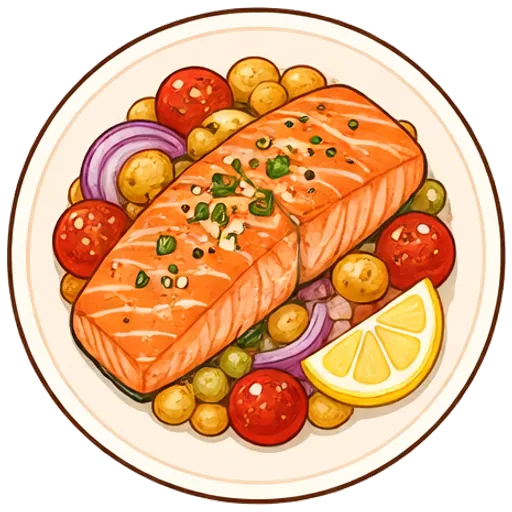
Sheet pan salmon with chickpeas and tomatoes
Crispy roasted chickpeas and jammy cherry tomatoes under lemony salmon, a Mediterranean dinner with almost no prep.
- 40 min total
- 10 min hands-on
- Anyone can make this
- Serves 4
- About $5.94 a serving
- 700 calories
- Gluten-free

Dolly says: Most of the time here is hands-off, so you can sit down while it cooks.
Ingredients
For 4 servings.
- 2 cans chickpeas, drained, rinsed and patted dry
- 2 cups cherry tomatoes
- ½ red onion, cut into thin wedges
- 4 salmon fillets, about 6 oz each
- 1 lemon, zested, then cut into wedges
- ⅓ cup feta cheese, crumbled (optional)
- 2 tbsp fresh parsley, chopped (optional)
From your pantry
- 3 tbsp olive oil, divided
- 1 tsp dried oregano
- ½ tsp ground cumin
- 1¼ tsp salt, divided
- ½ tsp black pepper, divided
Each serving has about 700 calories, 49 g protein, 41 g carbs and 37 g fat, and costs about $5.94 at typical US grocery prices. Both are estimates from what the recipe uses.
Missing something?
- No red onions? White onions or yellow onions work.
- No lemons? Limes work.
- No feta cheese? Goat cheese works.
- No fresh parsley? Cilantro works.
Steps
Tap an underlined word for a quick explanation.
the oven to 425°F.
Preheat. Preheating means turning the oven on before you start, so it’s fully hot when the food goes in. Food that starts in a cold oven cooks unevenly and doesn’t brown the same.
How you’ll know: The oven beeps or its light clicks off, usually 10 to 15 minutes after you turn it on.
the chickpeas, tomatoes and onion on a large with 2 tablespoons of the oil, the oregano, cumin, ¾ teaspoon of the salt and half the pepper.
Toss. Tossing means gently lifting and turning food so everything gets coated, like pasta in sauce or vegetables in oil. It coats every piece evenly without mashing anything.
How you’ll know: Every piece looks glossy or evenly coated, with no dry spots hiding underneath.
Sheet pan. A sheet pan is a flat metal baking tray with a low rim all the way around. The rim catches juices, and the wide surface lets food spread out and brown.
How you’ll know: Everything fits in one layer with a little space between the pieces.
for 15 minutes, until the chickpeas start to and the tomatoes .
Roast. Roasting means cooking in a hot oven, around 400°F to 450°F, usually spread out on a sheet pan. The dry heat browns the outside and brings out sweetness, especially in vegetables.
How you’ll know: The edges are browned and a little crisp, and a fork slides easily into the thickest piece.
Crispy. Crispy means the outside is dry, firm and crunchy. It comes from high heat, a little oil and room in the pan, because crowded food steams and goes soft.
How you’ll know: It sounds crunchy when you tap or bite it, and it doesn’t flop when you lift it.
Softened. For vegetables it means cooked until they bend and lose their crunch; for butter, left out until it dents easily. Soft onions taste sweet, and soft butter mixes in smoothly.
How you’ll know: Onions squash easily against the pan with your spoon, and butter dents under a finger without looking greasy.
Timer: 15 min
 Dolly’s tip: Pat the chickpeas really dry first. Water is what stops them getting crunchy.
the salmon dry, rub it with the rest of the oil and with the lemon and the rest of the salt and pepper.
Pat dry. Patting dry means pressing paper towels onto food to soak up the moisture on its surface. Wet food steams instead of browning, so this is how you get a good sear and crisp skin.
How you’ll know: The surface feels tacky, not wet, and the last paper towel comes away barely damp.
Season. Seasoning means adding salt, pepper or spices to bring out a food’s flavor. A little at a few stages tastes better than a lot all at the end.
How you’ll know: When you taste it, it tastes bright and like itself, not flat and not salty.
Zest. Zest is the thin, colored outer layer of citrus peel, rubbed off on the smallest holes of a grater. It holds the fruit’s fragrant oils, so it adds bright flavor without the sourness of juice.
How you’ll know: You see bright flecks and smell citrus right away; stop when you reach the white layer, which is bitter.
the chickpeas, nestle the salmon among them and 12 to 15 minutes, until the salmon flakes easily.
Stir. Stirring means moving food around with a spoon or spatula so it cooks evenly and doesn’t stick. Unless the recipe says constantly, every so often is plenty, and it gives food time to brown.
How you’ll know: When you drag the spoon across the bottom, nothing is sticking or scorching.
Roast. Roasting means cooking in a hot oven, around 400°F to 450°F, usually spread out on a sheet pan. The dry heat browns the outside and brings out sweetness, especially in vegetables.
How you’ll know: The edges are browned and a little crisp, and a fork slides easily into the thickest piece.
Timer: 13 min
Food safety: Fish is done at 145°F, when the middle looks opaque and flakes apart easily with a fork.
Squeeze lemon over the pan and scatter the feta and parsley on top.

Plan this in Dollop, and get the grocery list
Dollop puts this dinner on a night that suits your week, lists only what you still need to buy, and walks you through each step while you cook.
More dinners like this
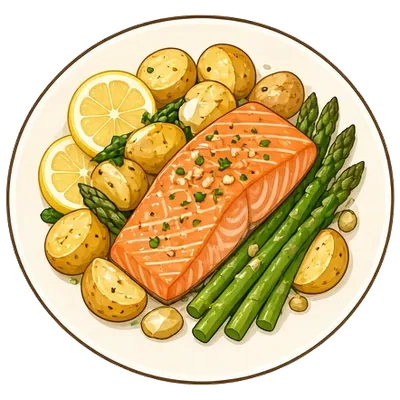
Sheet-pan lemon salmon with potatoes and asparagus
45 min
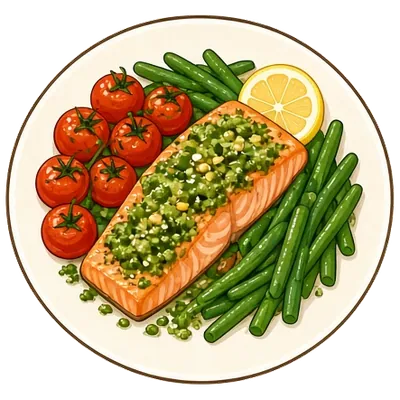
Pesto salmon with roasted tomatoes and green beans
35 min
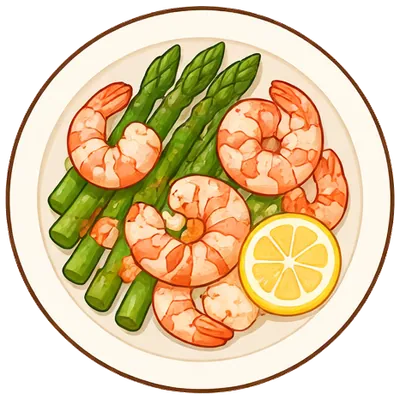
Sheet pan shrimp and asparagus
25 min
Garlic butter salmon and asparagus
30 min
One-pan dinners ›High-protein dinners ›What to make with tomatoes and feta cheese ›What to make with chickpeas and tomatoes ›What to make with chickpeas and feta cheese ›