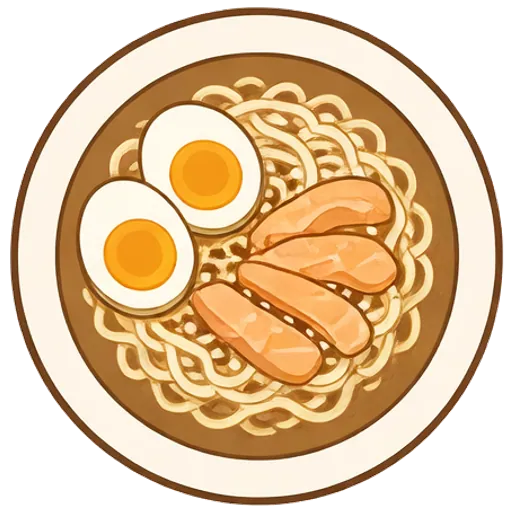
Spicy miso chicken ramen
A rich, spicy miso broth with sliced seared chicken, chewy noodles, a jammy egg and a pat of butter melting into sweet corn, ramen-shop style at home.
- 40 min total
- 35 min hands-on
- A little more hands-on
- Serves 2
- About $4.19 a serving
- 800 calories

Dolly says: Read the steps once before you start. Everything goes smoother after that.
Ingredients
For 2 servings.
- 2 large eggs
- 2 boneless chicken thighs, about 8 oz
- 1 tsp sesame oil
- 2 cloves garlic, minced
- 1 tsp fresh ginger, grated
- 4 cups chicken broth
- 3 tbsp miso paste
- 2 tsp chili garlic sauce
- 2 packages ramen noodles, seasoning packets discarded
- ½ cup frozen corn
- 1 cup baby spinach
- 1 tbsp butter (optional)
- 2 green onions, thinly sliced
From your pantry
- ¼ tsp salt
- 1 tbsp vegetable oil
- 1 tbsp soy sauce
Each serving has about 800 calories, 45 g protein, 72 g carbs and 36 g fat, and costs about $4.19 at typical US grocery prices. Both are estimates from what the recipe uses.
Missing something?
- No boneless chicken thighs? Chicken breasts or chicken tenderloins work.
- No chicken broth? Vegetable broth or bone broth works.
- No frozen corn? Canned corn works.
- No baby spinach? Kale or arugula works.
- No butter? Ghee works.
- No green onions? Chives work.
Steps
Tap an underlined word for a quick explanation.
Bring a medium of water over high heat. Lower in the eggs with a spoon and boil for exactly 6½ minutes, then move them to a bowl of cold water.
Saucepan. A saucepan is a pot with tall, straight sides and one long handle. It’s for things that need depth, like rice, sauces or a few boiled eggs.
How you’ll know: The food fills it about halfway, leaving room to bubble without spilling over.
Bring to a boil. It means heating a liquid on high until it’s fully boiling before you move on. A lid on the pot gets it there faster, which makes it a good moment to chop something.
How you’ll know: Big bubbles break all over the surface, and they keep coming when you lift the lid.
High heatTimer: 6 min 30 sec
 Dolly’s tip: Keep that water boiling. You’ll cook the noodles in it later.
Food safety: Soft yolks are a small risk. If you’re pregnant, or cooking for small children or older people, cook the eggs until the yolks are firm, or use pasteurized eggs.
the chicken with the salt.
Season. Seasoning means adding salt, pepper or spices to bring out a food’s flavor. A little at a few stages tastes better than a lot all at the end.
How you’ll know: When you taste it, it tastes bright and like itself, not flat and not salty.
Heat the vegetable oil in a over medium-high heat and cook the chicken for 5 to 6 minutes per side, until it reads 165°F.
Skillet. A skillet is a frying pan: wide and flat with low, sloped sides. The shape lets steam escape, so food browns instead of stewing.
How you’ll know: It’s the pan you’d fry an egg in, and a 10 or 12 inch one handles most recipes.
Medium-high heatTimer: 11 min
Food safety: Chicken and turkey are done at 165°F in the thickest part. A thermometer is the only sure check. Without one, cut into the thickest piece: it should be white all the way through, with no pink.
Let it rest on a board.
While the chicken cooks, warm the sesame oil in a second pot over medium heat and stir the garlic and ginger for 1 minute. Add the broth and .
Simmer. Simmering means keeping a liquid just below a boil, with small bubbles rising gently. It cooks food evenly and lets a sauce thicken without scorching on the bottom.
How you’ll know: Small, lazy bubbles break the surface every second or so, and nothing is churning.
Medium heatTimer: 1 min
the miso with a ladle of the hot broth in a bowl until smooth, then stir it back into the pot with the soy sauce and chili garlic sauce. Keep it hot but not boiling.
Whisk. Whisking means beating quickly with a whisk or a fork to blend things together. It smooths out lumps and mixes eggs, oil or sauces evenly.
How you’ll know: It all looks one even color and texture, with no streaks or lumps.
Low heat
Dolly’s tip: Boiling miso dulls its flavor, so keep the broth just below a simmer from here on.Cook the noodles in the boiling egg water for 3 minutes, then .
Drain. Draining means pouring off liquid, like tipping pasta into a colander or spooning extra fat out of the pan. Pour hot grease into a can or jar, not the sink, where it hardens and clogs the pipes.
How you’ll know: Only a few drips are left, and the food isn’t sitting in a puddle.
High heatTimer: 3 min
Stir the corn and spinach into the broth for 1 minute, until the spinach . the eggs and the chicken.
Wilt. Wilting means cooking leafy greens just until they go soft and collapse. Greens shrink a lot, so a big pile of spinach becomes a small handful, and that’s normal.
How you’ll know: The leaves turn soft and deep green and slump into the pan, usually within a minute or two.
Peel. Peeling means removing the skin with a vegetable peeler or a small knife. It takes off tough or bitter skins, though potato and carrot skins are fine to leave on unless the recipe insists.
How you’ll know: The color underneath is even all over, with no patches of skin left behind.
Slice. Slicing means cutting food into flat pieces of about the same thickness. Even slices cook evenly, so none are raw while others burn.
How you’ll know: Lay a few side by side: they’re close to the same thickness from one end to the other.
Low heatTimer: 1 min
Divide the noodles between two big bowls and ladle the broth and vegetables over. Top with the chicken, eggs, a of butter and green onions.
Halve. Halving means cutting something into two equal pieces. Even halves cook at the same speed, so one doesn’t dry out while the other finishes.
How you’ll know: The two pieces look like mirror images of each other.
Pat dry. Patting dry means pressing paper towels onto food to soak up the moisture on its surface. Wet food steams instead of browning, so this is how you get a good sear and crisp skin.
How you’ll know: The surface feels tacky, not wet, and the last paper towel comes away barely damp.

Plan this in Dollop, and get the grocery list
Dollop puts this dinner on a night that suits your week, lists only what you still need to buy, and walks you through each step while you cook.
More dinners like this
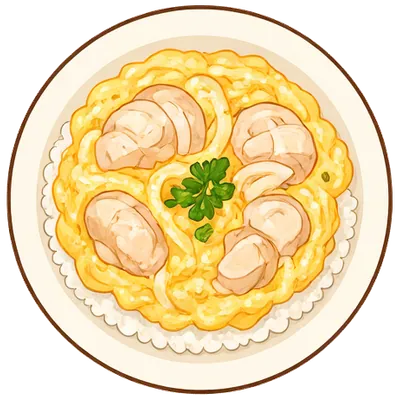
Oyakodon (Japanese chicken and egg rice bowl)
35 min
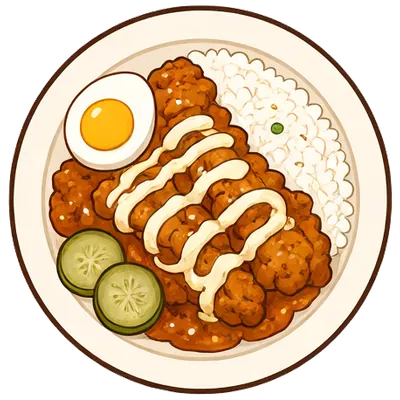
Air fryer chicken nanban
50 min
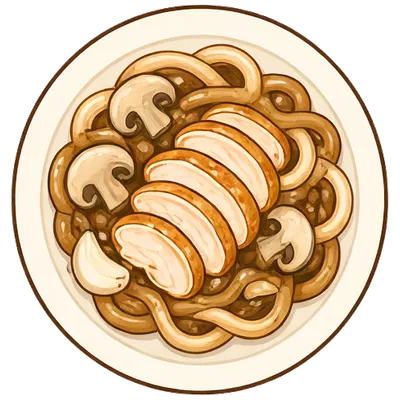
Chicken yaki udon
30 min
Microwave soboro don (chicken and egg rice bowl)
15 min
High-protein dinners ›Cozy comfort food ›What to make with eggs and spinach ›What to make with chicken and eggs ›What to make with chicken and corn ›