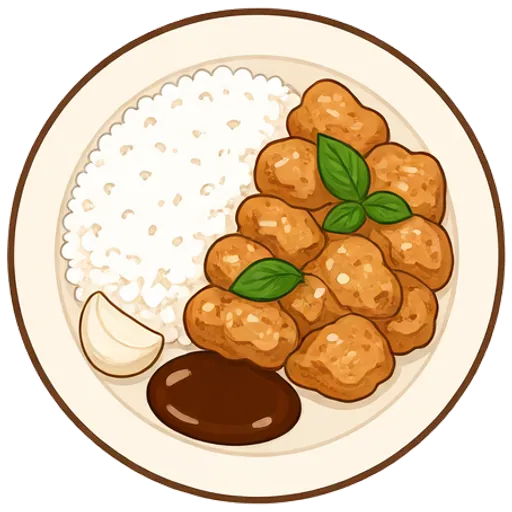
Thai basil chicken
A salty, garlicky, chile-flecked stir-fry with a big handful of basil, spooned over jasmine rice with a crispy fried egg on top.
- 35 min total
- 25 min hands-on
- Follow-a-recipe easy
- Serves 2
- About $3.52 a serving
- 700 calories
- Good the next day
- Dairy-free

Dolly says: Make the full amount. It’s just as good for lunch the next day.
Ingredients
For 2 servings.
- 1 cup jasmine rice, rinsed
- ¾ lb chicken breasts, chopped into small pieces
- 1 tbsp oyster sauce
- 1 tsp fish sauce
- 4 cloves garlic, minced
- 1 shallot, thinly sliced
- 1 serrano pepper, thinly sliced
- ½ cup fresh basil, leaves
- 2 large eggs (optional)
From your pantry
- 1¼ cups water
- 1 tbsp soy sauce
- 1 tsp brown sugar
- 2 tbsp vegetable oil, divided
Each serving has about 700 calories, 47 g protein, 83 g carbs and 19 g fat, and costs about $3.52 at typical US grocery prices. Both are estimates from what the recipe uses.
Missing something?
- No jasmine rice? Long-grain white rice or basmati rice works.
- No chicken breasts? Boneless chicken thighs or chicken tenderloins work.
Steps
Tap an underlined word for a quick explanation.
Put the rice and 1¼ cups of water in a small and bring it over high heat.
Rinse. Rinsing means running cold water over rice or canned beans in a strainer while you swish them around. It washes off loose starch and can liquid, so rice cooks up fluffy and beans taste clean.
How you’ll know: The water running out goes from cloudy to mostly clear; it doesn’t have to be perfect.
Saucepan. A saucepan is a pot with tall, straight sides and one long handle. It’s for things that need depth, like rice, sauces or a few boiled eggs.
How you’ll know: The food fills it about halfway, leaving room to bubble without spilling over.
Bring to a boil. It means heating a liquid on high until it’s fully boiling before you move on. A lid on the pot gets it there faster, which makes it a good moment to chop something.
How you’ll know: Big bubbles break all over the surface, and they keep coming when you lift the lid.
High heat
once, cover, turn the heat to low and cook 15 minutes, then take it off the heat with the lid on.
Stir. Stirring means moving food around with a spoon or spatula so it cooks evenly and doesn’t stick. Unless the recipe says constantly, every so often is plenty, and it gives food time to brown.
How you’ll know: When you drag the spoon across the bottom, nothing is sticking or scorching.
Low heatTimer: 15 min
the chicken into small pieces about the size of a peanut, then wash your hands and board.
Chop. Chopping means cutting food into bite-size pieces that don’t need to be neat. Keep them roughly the same size so everything cooks evenly.
How you’ll know: Your pieces are about half an inch and roughly alike, even if none of them are pretty.
 Dolly’s tip: Small pieces soak up more sauce. Take your time; a sharp knife makes it easy.
Food safety: Wash your hands, the board and the knife with hot soapy water after touching raw meat, and don’t rinse raw chicken in the sink.
the oyster sauce, soy sauce, fish sauce, brown sugar and 2 tablespoons of water together in a cup.
Stir. Stirring means moving food around with a spoon or spatula so it cooks evenly and doesn’t stick. Unless the recipe says constantly, every so often is plenty, and it gives food time to brown.
How you’ll know: When you drag the spoon across the bottom, nothing is sticking or scorching.
Heat 1 tablespoon of oil in a large over high heat. Add the garlic, shallot and serrano and for 30 seconds, .
Skillet. A skillet is a frying pan: wide and flat with low, sloped sides. The shape lets steam escape, so food browns instead of stewing.
How you’ll know: It’s the pan you’d fry an egg in, and a 10 or 12 inch one handles most recipes.
Stir. Stirring means moving food around with a spoon or spatula so it cooks evenly and doesn’t stick. Unless the recipe says constantly, every so often is plenty, and it gives food time to brown.
How you’ll know: When you drag the spoon across the bottom, nothing is sticking or scorching.
Fragrant. Fragrant means cooking until you can clearly smell it, usually garlic or spices, often in about 30 seconds. That’s the moment the flavor is ready, just before it can burn.
How you’ll know: You can smell it from a step back, and garlic is pale gold, not brown.
High heatTimer: 30 sec
Add the chicken, spread it out, and cook 4 to 5 minutes, often, until no pink is left and the biggest piece reads 165°F.
Stir. Stirring means moving food around with a spoon or spatula so it cooks evenly and doesn’t stick. Unless the recipe says constantly, every so often is plenty, and it gives food time to brown.
How you’ll know: When you drag the spoon across the bottom, nothing is sticking or scorching.
High heatTimer: 4 min 30 sec
Food safety: Chicken and turkey are done at 165°F in the thickest part. A thermometer is the only sure check. Without one, cut into the thickest piece: it should be white all the way through, with no pink.
Pour in the sauce and for 1 minute, until the chicken is glossy.
Stir. Stirring means moving food around with a spoon or spatula so it cooks evenly and doesn’t stick. Unless the recipe says constantly, every so often is plenty, and it gives food time to brown.
How you’ll know: When you drag the spoon across the bottom, nothing is sticking or scorching.
High heatTimer: 1 min
Take the pan off the heat and in the basil until it . Spoon the chicken into a bowl.
Stir. Stirring means moving food around with a spoon or spatula so it cooks evenly and doesn’t stick. Unless the recipe says constantly, every so often is plenty, and it gives food time to brown.
How you’ll know: When you drag the spoon across the bottom, nothing is sticking or scorching.
Wilt. Wilting means cooking leafy greens just until they go soft and collapse. Greens shrink a lot, so a big pile of spinach becomes a small handful, and that’s normal.
How you’ll know: The leaves turn soft and deep green and slump into the pan, usually within a minute or two.
Dolly’s tip: Regular basil stands in for Thai holy basil. It’s a little sweeter, and the dish is still wonderful.Wipe the , heat the last tablespoon of oil over medium-high, and fry the eggs 2 to 3 minutes, until the whites are set and the edges are .
Skillet. A skillet is a frying pan: wide and flat with low, sloped sides. The shape lets steam escape, so food browns instead of stewing.
How you’ll know: It’s the pan you’d fry an egg in, and a 10 or 12 inch one handles most recipes.
Crispy. Crispy means the outside is dry, firm and crunchy. It comes from high heat, a little oil and room in the pan, because crowded food steams and goes soft.
How you’ll know: It sounds crunchy when you tap or bite it, and it doesn’t flop when you lift it.
Medium-high heatTimer: 2 min 30 sec
Food safety: For the safest eggs, cook until the whites are fully set and the yolks begin to thicken. Dishes made with eggs are done at 160°F.
Serve the chicken over the rice with a fried egg on top.

Plan this in Dollop, and get the grocery list
Dollop puts this dinner on a night that suits your week, lists only what you still need to buy, and walks you through each step while you cook.
More dinners like this

Chicken yakitori
35 min
Microwave char siu chicken with rice and bok choy
35 min
Miso chicken thighs
35 min
Oyakodon (Japanese chicken and egg rice bowl)
35 min
High-protein dinners ›Easy Thai dinner recipes ›What to make with chicken and rice ›What to make with eggs and rice ›What to make with chicken and eggs ›