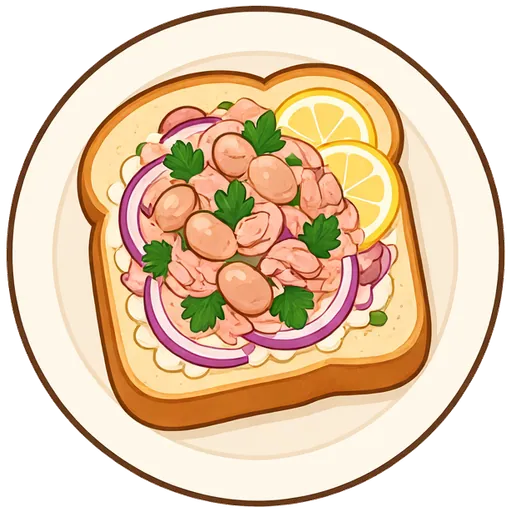
Tuna and white bean salad on toast
Flaky tuna, creamy white beans and lemony onion tossed with good olive oil and piled on toast, a no-cook Italian dinner that takes 15 minutes.
- 15 min total
- 15 min hands-on
- Anyone can make this
- Serves 2
- About $3.23 a serving
- 730 calories
- Good the next day
- Dairy-free

Dolly says: I’d make this on a weeknight. It’s on the table in 15 minutes.
Ingredients
For 2 servings.
- ¼ red onion, very thinly sliced
- 1 lemon, zested and juiced
- 1 can cannellini beans, drained and rinsed
- 2 cans canned tuna, 5 oz each, drained
- ¼ cup fresh parsley, chopped (optional)
- 4 slices sourdough bread
From your pantry
- ½ tsp salt
- 3 tbsp olive oil, plus more for serving
- ¼ tsp black pepper
Each serving has about 730 calories, 49 g protein, 83 g carbs and 24 g fat, and costs about $3.23 at typical US grocery prices. Both are estimates from what the recipe uses.
Missing something?
- No red onions? White onions or yellow onions work.
- No lemons? Limes work.
- No canned tuna? Canned salmon works.
- No fresh parsley? Cilantro works.
- No sourdough bread? French bread or white bread or whole wheat bread works.
Steps
Tap an underlined word for a quick explanation.
Put the onion in a large bowl with the lemon juice and salt and let it sit 5 minutes.
Timer: 5 min
 Dolly’s tip: The lemon takes the harsh bite out of raw onion, so it tastes crisp and sweet instead.
in the olive oil, lemon and pepper.
Whisk. Whisking means beating quickly with a whisk or a fork to blend things together. It smooths out lumps and mixes eggs, oil or sauces evenly.
How you’ll know: It all looks one even color and texture, with no streaks or lumps.
Zest. Zest is the thin, colored outer layer of citrus peel, rubbed off on the smallest holes of a grater. It holds the fruit’s fragrant oils, so it adds bright flavor without the sourness of juice.
How you’ll know: You see bright flecks and smell citrus right away; stop when you reach the white layer, which is bitter.
Add the beans and tuna, breaking the tuna into big flakes, and gently with the parsley.
Toss. Tossing means gently lifting and turning food so everything gets coated, like pasta in sauce or vegetables in oil. It coats every piece evenly without mashing anything.
How you’ll know: Every piece looks glossy or evenly coated, with no dry spots hiding underneath.
Food safety: Rotisserie chicken, deli meat, canned tuna and cooked shrimp are already cooked. Keep them cold until you use them, and heat them until steaming hot if the recipe warms them.
Toast the bread until and .
Golden brown. Golden brown is the color of good toast, somewhere between yellow and light brown. It means the outside is cooked and crisp but not burnt.
How you’ll know: It looks like toast and smells toasty; dark brown with a bitter smell means it went too far.
Crispy. Crispy means the outside is dry, firm and crunchy. It comes from high heat, a little oil and room in the pan, because crowded food steams and goes soft.
How you’ll know: It sounds crunchy when you tap or bite it, and it doesn’t flop when you lift it.
Taste the salad and add salt or more lemon if it needs it. Pile it onto the toast and with a little more oil.
Drizzle. Drizzling means pouring a thin, slow stream over the top of something. A thin stream spreads a little flavor a long way.
How you’ll know: You see thin lines across the food, not a puddle collecting underneath.

Plan this in Dollop, and get the grocery list
Dollop puts this dinner on a night that suits your week, lists only what you still need to buy, and walks you through each step while you cook.