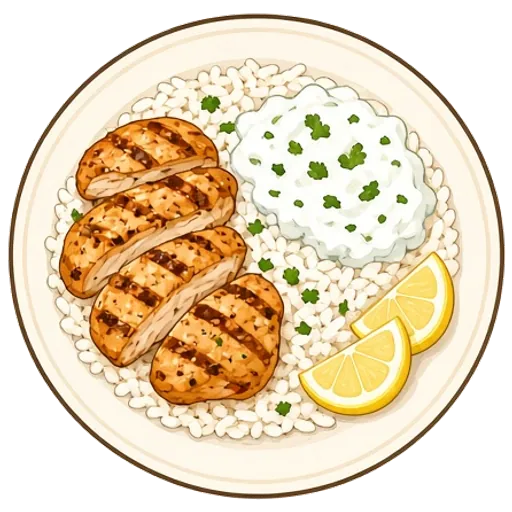
Chicken souvlaki bowls with tzatziki
Lemony, oregano-scented chicken over rice with cool tzatziki and a crunchy salad, like your favorite Greek spot at home.
- 55 min total
- 35 min hands-on
- A little more hands-on
- Serves 4
- About $3.71 a serving
- 670 calories
- Good the next day
- Gluten-free

Dolly says: Make the full amount. It’s just as good for lunch the next day.
Ingredients
For 4 servings.
- 1½ lb boneless chicken thighs, cut into 1-inch pieces
- 2 lemons, 1 zested and juiced, 1 cut into wedges
- 4 cloves garlic, minced, divided
- 1½ cups long-grain white rice, rinsed
- 1 cup plain greek yogurt
- 1 english cucumber, half grated, half chopped
- 1 tbsp fresh dill, chopped
- 1½ cups cherry tomatoes, halved
- ¼ red onion, thinly sliced
- ⅓ cup kalamata olives (optional)
- ½ cup feta cheese, crumbled (optional)
From your pantry
- 4 tbsp olive oil, divided
- 2 tsp dried oregano
- 2 tsp salt, divided
- ½ tsp black pepper
- 2¼ cups water
Each serving has about 670 calories, 46 g protein, 69 g carbs and 22 g fat, and costs about $3.71 at typical US grocery prices. Both are estimates from what the recipe uses.
Missing something?
- No boneless chicken thighs? Chicken breasts or chicken tenderloins work.
- No lemons? Limes work.
- No long-grain white rice? Jasmine rice or basmati rice works.
- No plain greek yogurt? Plain yogurt or sour cream works.
- No english cucumbers? Cucumbers or mini cucumbers work.
- No red onions? White onions or yellow onions work.
- No kalamata olives? Black olives work.
- No feta cheese? Goat cheese works.
Steps
Tap an underlined word for a quick explanation.
Cut the chicken into 1-inch pieces and them in a bowl with the lemon and juice, 2 tablespoons of oil, 3 cloves of garlic, the oregano, 1 teaspoon of salt and the pepper.
Toss. Tossing means gently lifting and turning food so everything gets coated, like pasta in sauce or vegetables in oil. It coats every piece evenly without mashing anything.
How you’ll know: Every piece looks glossy or evenly coated, with no dry spots hiding underneath.
Zest. Zest is the thin, colored outer layer of citrus peel, rubbed off on the smallest holes of a grater. It holds the fruit’s fragrant oils, so it adds bright flavor without the sourness of juice.
How you’ll know: You see bright flecks and smell citrus right away; stop when you reach the white layer, which is bitter.
Food safety: Wash your hands, the board and the knife with hot soapy water after touching raw meat, and don’t rinse raw chicken in the sink.
Cover the bowl and put it in the fridge to while you make everything else.
Marinate. Marinating means letting food sit in a flavorful liquid, called a marinade, before you cook it. Always marinate in the fridge, and never reuse marinade from raw meat unless you boil it first.
How you’ll know: The food is coated all over, sealed in a bag or covered dish, and chilling in the fridge.
the rice, then put it in a with the water and ½ teaspoon of salt and over high heat.
Rinse. Rinsing means running cold water over rice or canned beans in a strainer while you swish them around. It washes off loose starch and can liquid, so rice cooks up fluffy and beans taste clean.
How you’ll know: The water running out goes from cloudy to mostly clear; it doesn’t have to be perfect.
Saucepan. A saucepan is a pot with tall, straight sides and one long handle. It’s for things that need depth, like rice, sauces or a few boiled eggs.
How you’ll know: The food fills it about halfway, leaving room to bubble without spilling over.
Bring to a boil. It means heating a liquid on high until it’s fully boiling before you move on. A lid on the pot gets it there faster, which makes it a good moment to chop something.
How you’ll know: Big bubbles break all over the surface, and they keep coming when you lift the lid.
High heat
Cover, to low and cook for 18 minutes without lifting the lid, then slide it off the heat and keep it covered.
Reduce the heat. It means turning the burner down, usually to medium-low or low, so food cooks gently instead of hard. Electric burners cool slowly, so lift the pan off for a moment if it’s bubbling hard.
How you’ll know: Within a minute the bubbling calms to a gentle simmer, or the sizzle turns quiet.
Low heatTimer: 18 min
half the cucumber, squeeze it dry in a paper towel and it into the yogurt with the last clove of garlic, the dill and of salt.
Grate. Grating means rubbing food across the holes of a grater to make fine shreds or flakes. It spreads cheese, garlic or ginger evenly through a dish so it melts right in.
How you’ll know: Even shreds fall off the back of the grater, and you stop while the piece is still big enough to hold.
Stir. Stirring means moving food around with a spoon or spatula so it cooks evenly and doesn’t stick. Unless the recipe says constantly, every so often is plenty, and it gives food time to brown.
How you’ll know: When you drag the spoon across the bottom, nothing is sticking or scorching.
Pinch. A pinch is what you can hold between your thumb and two fingers, less than an eighth of a teaspoon. It’s a small, forgiving amount, so there’s no need to measure.
How you’ll know: It’s a light sprinkle you can barely see on the food, not a little pile.
 Dolly’s tip: Squeezing out the water keeps the tzatziki thick instead of runny.
the rest of the cucumber and it with the tomatoes, onion, 1 tablespoon of oil and of salt.
Chop. Chopping means cutting food into bite-size pieces that don’t need to be neat. Keep them roughly the same size so everything cooks evenly.
How you’ll know: Your pieces are about half an inch and roughly alike, even if none of them are pretty.
Toss. Tossing means gently lifting and turning food so everything gets coated, like pasta in sauce or vegetables in oil. It coats every piece evenly without mashing anything.
How you’ll know: Every piece looks glossy or evenly coated, with no dry spots hiding underneath.
Pinch. A pinch is what you can hold between your thumb and two fingers, less than an eighth of a teaspoon. It’s a small, forgiving amount, so there’s no need to measure.
How you’ll know: It’s a light sprinkle you can barely see on the food, not a little pile.
Heat the last tablespoon of oil in a large over medium-high heat until it , then add the chicken in one layer, leaving the behind.
Skillet. A skillet is a frying pan: wide and flat with low, sloped sides. The shape lets steam escape, so food browns instead of stewing.
How you’ll know: It’s the pan you’d fry an egg in, and a 10 or 12 inch one handles most recipes.
Shimmering oil. Oil shimmers when it’s hot enough to cook: its surface looks rippled and wavy, like heat over a road. That’s your cue to add the food, just before the oil would start to smoke.
How you’ll know: The oil looks wavy and runs thin like water when you tilt the pan, with no smoke yet.
Marinate. Marinating means letting food sit in a flavorful liquid, called a marinade, before you cook it. Always marinate in the fridge, and never reuse marinade from raw meat unless you boil it first.
How you’ll know: The food is coated all over, sealed in a bag or covered dish, and chilling in the fridge.
Medium-high heat
without stirring for 4 minutes, until deep underneath, then turn the pieces and cook 4 to 5 minutes more, until all over and cooked through.
Sear. Searing means cooking the outside of meat or fish in a hot pan, without moving it, until a deep brown crust forms. The crust is packed with flavor, and it only forms on a dry surface.
How you’ll know: It sizzles loudly the moment it goes in, and it lets go of the pan on its own when the crust is ready.
Golden brown. Golden brown is the color of good toast, somewhere between yellow and light brown. It means the outside is cooked and crisp but not burnt.
How you’ll know: It looks like toast and smells toasty; dark brown with a bitter smell means it went too far.
Brown. Browning means cooking until the outside turns brown, which is where a lot of savory flavor comes from. Give food room and time without stirring, or it steams and stays gray.
How you’ll know: The food looks brown rather than gray, and the kitchen smells toasty and savory.
Medium-high heatTimer: 9 min
Dolly’s tip: Crowded chicken steams and stays pale. If it doesn’t fit in one layer, cook it in two batches.Food safety: Chicken is done at 165°F in the thickest part. A thermometer is the only sure check. Without one, cut into the thickest piece: it should be white all the way through, with no pink.
Fluff the rice and divide it among four bowls. Top with the chicken, the salad, a big spoonful of tzatziki, the olives, feta and a lemon wedge.

Plan this in Dollop, and get the grocery list
Dollop puts this dinner on a night that suits your week, lists only what you still need to buy, and walks you through each step while you cook.
More dinners like this
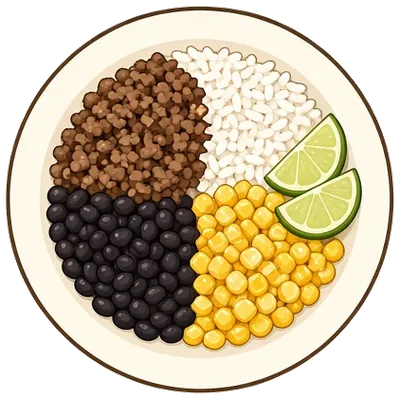
Beef burrito bowls
40 min
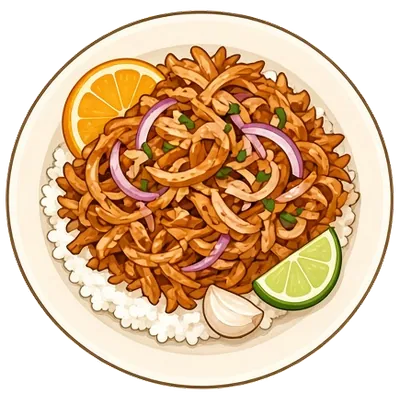
Stovetop carnitas rice bowls
150 min
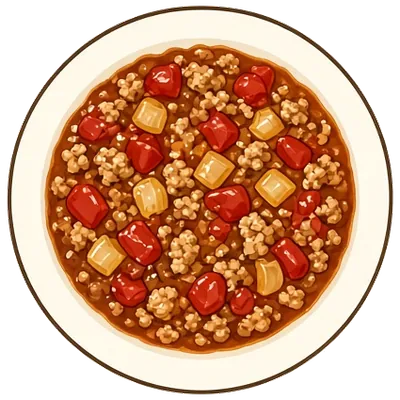
Turkey chili
55 min
Smoky chicken and sweet potato sheet pan
50 min
High-protein dinners ›Make-ahead and freezer-friendly ›What to make with chicken and rice ›What to make with cucumber and tomatoes ›What to make with rice and cucumber ›