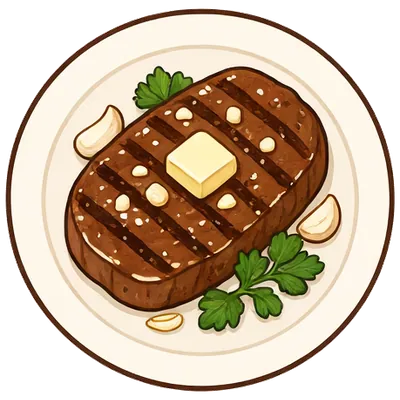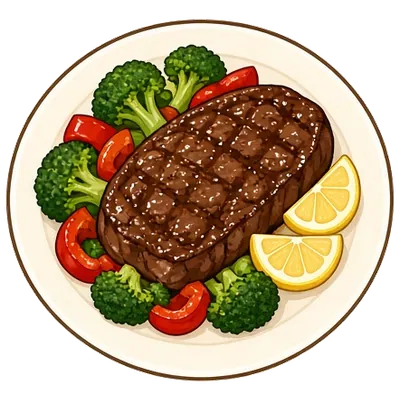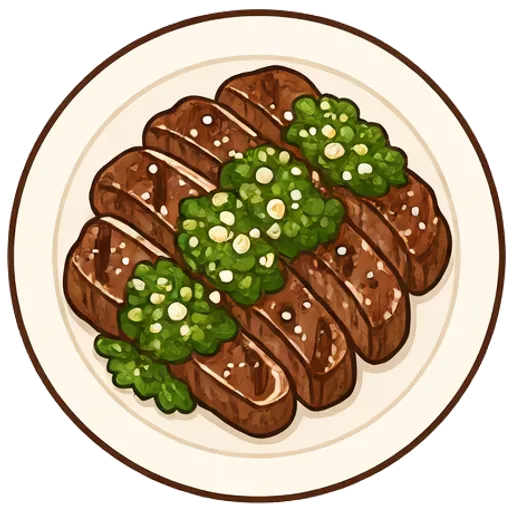
Flank steak with chimichurri
Broiled flank steak sliced thin and covered in a bright, garlicky parsley sauce you can make in five minutes.
- 40 min total
- 20 min hands-on
- Follow-a-recipe easy
- Serves 4
- About $5.16 a serving
- 440 calories
- Good the next day
- Gluten-free
- Dairy-free

Dolly says: Make the full amount. It’s just as good for lunch the next day.
Ingredients
For 4 servings.
- 1 bunch fresh parsley
- 3 cloves garlic
- 1 flank steak, about 1½ lb
From your pantry
- 2 tbsp red wine vinegar
- ⅓ cup olive oil
- 1 tsp dried oregano
- ¼ tsp red pepper flakes
- 1½ tsp salt, divided
- 1 tsp vegetable oil
- ½ tsp black pepper
Each serving has about 440 calories, 37 g protein, 2 g carbs and 31 g fat, and costs about $5.16 at typical US grocery prices. Both are estimates from what the recipe uses.
Missing something?
- No fresh parsley? Cilantro works.
- No flank steak? Skirt steak works.
Steps
Tap an underlined word for a quick explanation.
the parsley leaves and tender stems, and the garlic.
Finely chop. Finely chopping means cutting food into small pieces, a little bigger than minced, about the size of a lentil. Small pieces spread their flavor through the dish and cook quickly.
How you’ll know: Nothing is bigger than a lentil, and the pile looks like confetti rather than paste.
Mince. Mincing means chopping something into the tiniest pieces you can, smaller than a grain of rice. Tiny pieces melt into the dish, so you get the flavor without biting into a chunk of garlic.
How you’ll know: Every piece is tiny and about the same size, and the pile starts to look almost like a paste.
Stir the parsley, garlic, vinegar, olive oil, oregano, pepper flakes and ½ tsp of the salt together in a bowl and let it sit while you cook.
 Dolly’s tip: Chimichurri gets better as it sits. You can make it up to a day ahead.
Turn on the with a rack about 4 inches below it, and line a with foil.
Broil. Broiling means cooking under the oven’s top heating element, with strong heat from above. It browns and crisps the top in minutes, and it can burn fast, so stay close.
How you’ll know: The top bubbles and spots golden brown; check every minute and pull it before it blackens.
Sheet pan. A sheet pan is a flat metal baking tray with a low rim all the way around. The rim catches juices, and the wide surface lets food spread out and brown.
How you’ll know: Everything fits in one layer with a little space between the pieces.
the steak dry, rub it with the vegetable oil, and both sides with the rest of the salt and the pepper. Set it on the pan.
Pat dry. Patting dry means pressing paper towels onto food to soak up the moisture on its surface. Wet food steams instead of browning, so this is how you get a good sear and crisp skin.
How you’ll know: The surface feels tacky, not wet, and the last paper towel comes away barely damp.
Season. Seasoning means adding salt, pepper or spices to bring out a food’s flavor. A little at a few stages tastes better than a lot all at the end.
How you’ll know: When you taste it, it tastes bright and like itself, not flat and not salty.
5 to 6 minutes, flip, and broil 4 to 6 minutes more, until the thickest part reads 145°F.
Broil. Broiling means cooking under the oven’s top heating element, with strong heat from above. It browns and crisps the top in minutes, and it can burn fast, so stay close.
How you’ll know: The top bubbles and spots golden brown; check every minute and pull it before it blackens.
Timer: 5 min 30 sec
Food safety: Steak, pork chops and other whole cuts are safe at 145°F in the middle, then let them rest for 3 minutes before cutting.
Move the steak to a board and let it 10 minutes.
Rest. Resting means letting cooked meat sit for a few minutes before you cut it. It keeps cooking gently, and more of the juice stays in the meat instead of running onto the board.
How you’ll know: Loosely covered with foil, it stays hot, and very little juice runs out when you slice it.
Timer: 10 min
Dolly’s tip: Flank is thin and loses its juices if you cut it straight away. The wait keeps them inside.it thin across the grain, holding the knife at a slight angle, and spoon the chimichurri over.
Slice. Slicing means cutting food into flat pieces of about the same thickness. Even slices cook evenly, so none are raw while others burn.
How you’ll know: Lay a few side by side: they’re close to the same thickness from one end to the other.
Dolly’s tip: The grain on flank runs the length of the steak and is easy to see. Cutting across it is the difference between tender and chewy.

Plan this in Dollop, and get the grocery list
Dollop puts this dinner on a night that suits your week, lists only what you still need to buy, and walks you through each step while you cook.