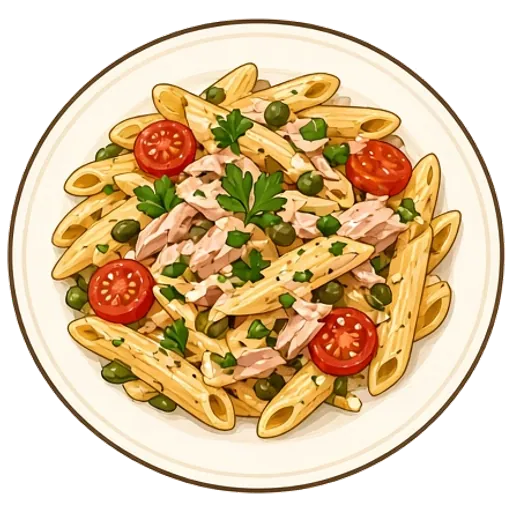
Lemony tuna pasta with capers
Pantry cans turn into a bright, garlicky pasta that tastes like a seaside lunch in Italy.
- 30 min total
- 15 min hands-on
- Anyone can make this
- Serves 4
- About $2.49 a serving
- 510 calories
- Good the next day
- Dairy-free

Dolly says: I’d make this on a weeknight. It’s on the table in 30 minutes.
Ingredients
For 4 servings.
- 12 oz penne
- 1½ cups cherry tomatoes, halved
- ½ cup fresh parsley, chopped
- 4 cloves garlic, thinly sliced
- 3 cans canned tuna, 5 oz each, drained
- 2 tbsp capers, drained
- 1 lemon, zested and juiced
From your pantry
- 1 tbsp salt
- 3 tbsp olive oil
- ¼ tsp red pepper flakes
- ¼ tsp black pepper
Each serving has about 510 calories, 31 g protein, 69 g carbs and 13 g fat, and costs about $2.49 at typical US grocery prices. Both are estimates from what the recipe uses.
Missing something?
- No penne? Rigatoni or elbow macaroni works.
- No fresh parsley? Cilantro works.
- No canned tuna? Canned salmon works.
- No lemons? Limes work.
Steps
Tap an underlined word for a quick explanation.
Bring a large pot of water over high heat and add the salt.
Bring to a boil. It means heating a liquid on high until it’s fully boiling before you move on. A lid on the pot gets it there faster, which makes it a good moment to chop something.
How you’ll know: Big bubbles break all over the surface, and they keep coming when you lift the lid.
High heat
Add the penne and cook, now and then, until .
Stir. Stirring means moving food around with a spoon or spatula so it cooks evenly and doesn’t stick. Unless the recipe says constantly, every so often is plenty, and it gives food time to brown.
How you’ll know: When you drag the spoon across the bottom, nothing is sticking or scorching.
Al dente. Al dente is Italian for “to the tooth”: pasta cooked until tender but with a slight firm bite in the center. It holds up in sauce and keeps softening a little after you drain it.
How you’ll know: Bite a piece a minute before the package time: tender, with a slight firm bite in the middle and no crunch.
High heatTimer: 10 min
 Dolly’s tip: The package time is a guide. Taste a piece 1 minute early: it should be tender with a little bite.
the tomatoes and the parsley while the pasta cooks.
Halve. Halving means cutting something into two equal pieces. Even halves cook at the same speed, so one doesn’t dry out while the other finishes.
How you’ll know: The two pieces look like mirror images of each other.
Chop. Chopping means cutting food into bite-size pieces that don’t need to be neat. Keep them roughly the same size so everything cooks evenly.
How you’ll know: Your pieces are about half an inch and roughly alike, even if none of them are pretty.
Scoop a mug of out of the pot, then the penne.
Reserve pasta water. It means scooping out a cup of the starchy cooking water before you drain the pasta. A splash helps the sauce cling and turn silky, and it’s the step everyone forgets.
How you’ll know: A mug of cloudy water is sitting by the stove before the pasta goes into the colander.
Drain. Draining means pouring off liquid, like tipping pasta into a colander or spooning extra fat out of the pan. Pour hot grease into a can or jar, not the sink, where it hardens and clogs the pipes.
How you’ll know: Only a few drips are left, and the food isn’t sitting in a puddle.
Set the empty pot over low heat and add the oil, garlic and red pepper flakes. Cook, , for 1 to 2 minutes, until the garlic is pale gold.
Stir. Stirring means moving food around with a spoon or spatula so it cooks evenly and doesn’t stick. Unless the recipe says constantly, every so often is plenty, and it gives food time to brown.
How you’ll know: When you drag the spoon across the bottom, nothing is sticking or scorching.
Low heatTimer: 1 min 30 sec
Dolly’s tip: Low heat is the point. Browned garlic tastes bitter, so pull it at pale gold.Add the penne back with the tuna, capers, lemon and juice, and ½ cup of . for about a minute, until glossy.
Zest. Zest is the thin, colored outer layer of citrus peel, rubbed off on the smallest holes of a grater. It holds the fruit’s fragrant oils, so it adds bright flavor without the sourness of juice.
How you’ll know: You see bright flecks and smell citrus right away; stop when you reach the white layer, which is bitter.
Reserve pasta water. It means scooping out a cup of the starchy cooking water before you drain the pasta. A splash helps the sauce cling and turn silky, and it’s the step everyone forgets.
How you’ll know: A mug of cloudy water is sitting by the stove before the pasta goes into the colander.
Toss. Tossing means gently lifting and turning food so everything gets coated, like pasta in sauce or vegetables in oil. It coats every piece evenly without mashing anything.
How you’ll know: Every piece looks glossy or evenly coated, with no dry spots hiding underneath.
Low heatTimer: 1 min
Food safety: Rotisserie chicken, deli meat, canned tuna and cooked shrimp are already cooked. Keep them cold until you use them, and heat them until steaming hot if the recipe warms them.
Turn off the heat and the tomatoes, parsley and pepper, adding more if it looks dry.
Fold. Folding means mixing gently by scooping from the bottom and turning it over the top, instead of stirring hard. It keeps light mixtures airy and soft things like berries or herbs in one piece.
How you’ll know: You use slow, wide strokes and stop as soon as there are no streaks left.
Splash. A splash is a small, quick pour, about a teaspoon to a tablespoon. It’s there to loosen or brighten a dish, so the exact amount doesn’t matter.
How you’ll know: The dish looks a little looser or tastes a little brighter, not soupy.
Reserve pasta water. It means scooping out a cup of the starchy cooking water before you drain the pasta. A splash helps the sauce cling and turn silky, and it’s the step everyone forgets.
How you’ll know: A mug of cloudy water is sitting by the stove before the pasta goes into the colander.
Taste, add more salt if it needs it, and serve warm or at .
Pinch. A pinch is what you can hold between your thumb and two fingers, less than an eighth of a teaspoon. It’s a small, forgiving amount, so there’s no need to measure.
How you’ll know: It’s a light sprinkle you can barely see on the food, not a little pile.
Room temperature. It means letting something sit out until it’s no longer fridge-cold, about 30 to 60 minutes for butter or eggs. It helps things blend smoothly, but never leave raw meat out over 2 hours.
How you’ll know: It feels cool, not cold, and butter dents easily when you press it.

Plan this in Dollop, and get the grocery list
Dollop puts this dinner on a night that suits your week, lists only what you still need to buy, and walks you through each step while you cook.