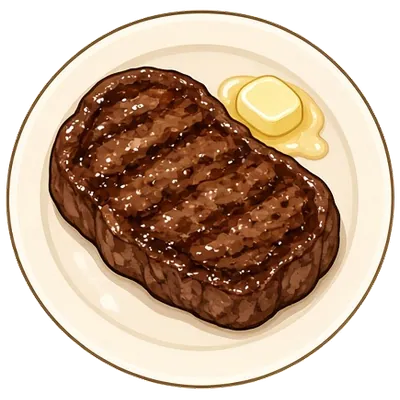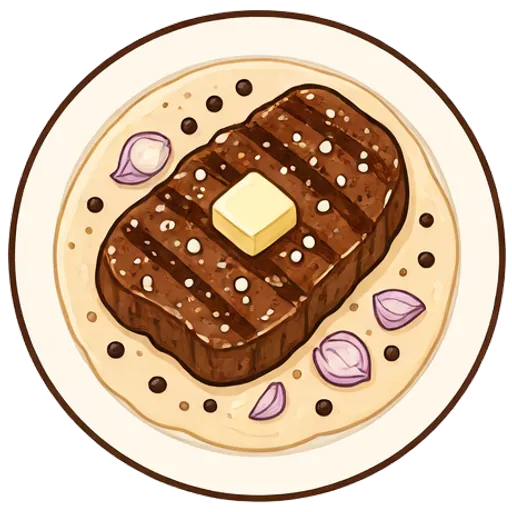
Peppercorn steak (steak au poivre)
A peppery crusted strip steak with a creamy pan sauce, the French bistro classic made at home in one skillet.
- 55 min total
- 25 min hands-on
- A little more hands-on
- Serves 2
- About $12.41 a serving
- 920 calories
- Gluten-free

Dolly says: Most of the time here is hands-off, so you can sit down while it cooks.
Ingredients
For 2 servings.
- 2 New York strip steak, about 1 inch thick
- 1 tbsp butter
- 1 shallot, minced
- ½ cup beef broth
- ⅓ cup heavy cream
- 1 tsp Dijon mustard
From your pantry
- 1 tsp salt
- 1 tbsp black pepper, coarsely ground
- 1 tbsp vegetable oil
Each serving has about 920 calories, 74 g protein, 6 g carbs and 67 g fat, and costs about $12.41 at typical US grocery prices. Both are estimates from what the recipe uses.
Missing something?
- No New York strip steak? Ribeye steak or sirloin steak works.
- No butter? Ghee works.
- No beef broth? Bone broth works.
Steps
Tap an underlined word for a quick explanation.
Take the steaks out of the fridge 30 minutes early, them dry, and both sides with the salt.
Pat dry. Patting dry means pressing paper towels onto food to soak up the moisture on its surface. Wet food steams instead of browning, so this is how you get a good sear and crisp skin.
How you’ll know: The surface feels tacky, not wet, and the last paper towel comes away barely damp.
Season. Seasoning means adding salt, pepper or spices to bring out a food’s flavor. A little at a few stages tastes better than a lot all at the end.
How you’ll know: When you taste it, it tastes bright and like itself, not flat and not salty.
Timer: 30 min
Press the coarse pepper firmly into both sides of the steaks so it sticks.
 Dolly’s tip: Coarse pepper makes a crunchy crust. If yours is finely ground, use half as much.
Heat the oil in a large heavy over medium-high until it . the steaks 4 minutes without moving them, until a dark crust forms.
Skillet. A skillet is a frying pan: wide and flat with low, sloped sides. The shape lets steam escape, so food browns instead of stewing.
How you’ll know: It’s the pan you’d fry an egg in, and a 10 or 12 inch one handles most recipes.
Shimmering oil. Oil shimmers when it’s hot enough to cook: its surface looks rippled and wavy, like heat over a road. That’s your cue to add the food, just before the oil would start to smoke.
How you’ll know: The oil looks wavy and runs thin like water when you tilt the pan, with no smoke yet.
Sear. Searing means cooking the outside of meat or fish in a hot pan, without moving it, until a deep brown crust forms. The crust is packed with flavor, and it only forms on a dry surface.
How you’ll know: It sizzles loudly the moment it goes in, and it lets go of the pan on its own when the crust is ready.
Medium-high heatTimer: 4 min
Flip and cook 3 to 5 minutes more, until the middle reads 145°F. Move the steaks to a board to .
Rest. Resting means letting cooked meat sit for a few minutes before you cut it. It keeps cooking gently, and more of the juice stays in the meat instead of running onto the board.
How you’ll know: Loosely covered with foil, it stays hot, and very little juice runs out when you slice it.
Medium-high heatTimer: 4 min
Food safety: Steak, pork chops and other whole cuts are safe at 145°F in the middle, then let them rest for 3 minutes before cutting.
Spoon off all but a thin film of fat, turn the heat to medium, and cook the butter and shallot 1 to 2 minutes, stirring, until soft.
Medium heatTimer: 1 min 30 sec
Dolly’s tip: Tip the pan away from you and spoon the fat into a heatproof mug. Never pour it down the sink.Pour in the broth, and pepper, and let it bubble 2 to 3 minutes, until by half.
Scrape up the browned bits. It means loosening the brown bits stuck to the pan with a wooden spoon, usually right after adding liquid. Those bits are concentrated flavor, and they melt into the sauce.
How you’ll know: The bottom of the pan looks clean again, and the liquid turns darker and richer.
Reduce. Reducing means simmering a liquid with the lid off so some of the water steams away. The sauce gets thicker and its flavor gets stronger.
How you’ll know: The level drops in the pan, and the sauce coats the back of a spoon instead of running off.
Medium-high heatTimer: 2 min 30 sec
Stir in the cream and mustard and 1 to 2 minutes, until the sauce is thick enough to coat a spoon.
Simmer. Simmering means keeping a liquid just below a boil, with small bubbles rising gently. It cooks food evenly and lets a sauce thicken without scorching on the bottom.
How you’ll know: Small, lazy bubbles break the surface every second or so, and nothing is churning.
Medium heatTimer: 1 min 30 sec
Pour the juices from the board into the sauce, then spoon it over the steaks, whole or sliced across the grain.
Dolly’s tip: Taste the sauce first. The pepper crust salts it too, so it may not need more.

Plan this in Dollop, and get the grocery list
Dollop puts this dinner on a night that suits your week, lists only what you still need to buy, and walks you through each step while you cook.