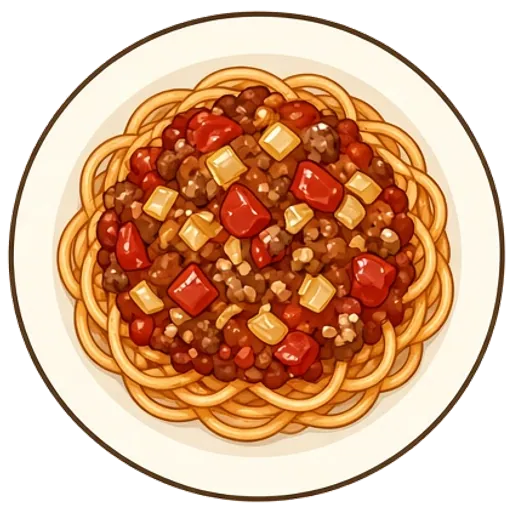
Spaghetti with meat sauce
A rich, meaty tomato sauce over a big plate of spaghetti, the classic you’ll keep making for years.
- 45 min total
- 20 min hands-on
- Follow-a-recipe easy
- Serves 4
- About $2.80 a serving
- 790 calories
- Good the next day

Dolly says: Make the full amount. It’s just as good for lunch the next day.
Ingredients
For 4 servings.
- 1 yellow onion, diced
- 1 lb ground beef (85/15)
- 4 cloves garlic, minced
- 2 tbsp tomato paste
- 1 can crushed tomatoes
- 1 lb spaghetti
- ¼ cup grated parmesan (optional)
- ¼ cup fresh basil, torn (optional)
From your pantry
- 1½ tbsp salt, divided
- 1 tbsp olive oil
- 2 tsp italian seasoning
- ½ tsp black pepper
Each serving has about 790 calories, 40 g protein, 106 g carbs and 23 g fat, and costs about $2.80 at typical US grocery prices. Both are estimates from what the recipe uses.
Missing something?
- No yellow onions? White onions or red onions work.
- No ground beef? Lean ground beef works.
- No crushed tomatoes? Diced tomatoes work.
- No spaghetti? Fettuccine works.
- No grated parmesan? Parmesan wedge works.
Steps
Tap an underlined word for a quick explanation.
Fill a large pot with water, add 1 tablespoon salt, cover, and set it on high to come while you make the sauce.
Bring to a boil. It means heating a liquid on high until it’s fully boiling before you move on. A lid on the pot gets it there faster, which makes it a good moment to chop something.
How you’ll know: Big bubbles break all over the surface, and they keep coming when you lift the lid.
High heat
Heat the oil in a large over medium, add the onion and of salt, and cook about 5 minutes, stirring now and then, until soft.
Skillet. A skillet is a frying pan: wide and flat with low, sloped sides. The shape lets steam escape, so food browns instead of stewing.
How you’ll know: It’s the pan you’d fry an egg in, and a 10 or 12 inch one handles most recipes.
Pinch. A pinch is what you can hold between your thumb and two fingers, less than an eighth of a teaspoon. It’s a small, forgiving amount, so there’s no need to measure.
How you’ll know: It’s a light sprinkle you can barely see on the food, not a little pile.
Medium heatTimer: 5 min
Turn the heat to medium-high, add the beef, and break it into small pieces with a wooden spoon. Then leave it alone for 2 minutes to .
Brown. Browning means cooking until the outside turns brown, which is where a lot of savory flavor comes from. Give food room and time without stirring, or it steams and stays gray.
How you’ll know: The food looks brown rather than gray, and the kitchen smells toasty and savory.
Medium-high heatTimer: 2 min
 Dolly’s tip: Don’t stir constantly. Meat that sits still turns brown, and brown is where the flavor is.
Stir and cook 4 to 5 minutes more, breaking up clumps, until no pink is left anywhere.
Medium-high heatTimer: 4 min 30 sec
Food safety: Ground beef, pork and lamb are done at 160°F. When it’s cooked through there’s no pink left anywhere in the pan.
Tilt the pan and spoon any pool of fat into a heatproof mug or an empty can, leaving about a tablespoon behind.
Dolly’s tip: Never pour grease down the sink. Let it harden, then throw it away.Turn the heat to medium, stir in the garlic and tomato paste, and cook 1 minute, until the paste turns a shade darker.
Medium heat
Add the crushed tomatoes, Italian seasoning, pepper and 1 teaspoon salt. , then turn the heat to low and simmer 15 minutes, stirring now and then.
Simmer. Simmering means keeping a liquid just below a boil, with small bubbles rising gently. It cooks food evenly and lets a sauce thicken without scorching on the bottom.
How you’ll know: Small, lazy bubbles break the surface every second or so, and nothing is churning.
Low heatTimer: 15 min
When the sauce has 10 minutes left, add the spaghetti to the boiling water. Stir for the first minute so it doesn’t stick, and cook until .
Al dente. Al dente is Italian for “to the tooth”: pasta cooked until tender but with a slight firm bite in the center. It holds up in sauce and keeps softening a little after you drain it.
How you’ll know: Bite a piece a minute before the package time: tender, with a slight firm bite in the middle and no crunch.
High heatTimer: 10 min
Scoop out a mug of , the spaghetti, and return it to the pot. Pour in the sauce and with of the water until glossy.
Reserve pasta water. It means scooping out a cup of the starchy cooking water before you drain the pasta. A splash helps the sauce cling and turn silky, and it’s the step everyone forgets.
How you’ll know: A mug of cloudy water is sitting by the stove before the pasta goes into the colander.
Drain. Draining means pouring off liquid, like tipping pasta into a colander or spooning extra fat out of the pan. Pour hot grease into a can or jar, not the sink, where it hardens and clogs the pipes.
How you’ll know: Only a few drips are left, and the food isn’t sitting in a puddle.
Toss. Tossing means gently lifting and turning food so everything gets coated, like pasta in sauce or vegetables in oil. It coats every piece evenly without mashing anything.
How you’ll know: Every piece looks glossy or evenly coated, with no dry spots hiding underneath.
Splash. A splash is a small, quick pour, about a teaspoon to a tablespoon. It’s there to loosen or brighten a dish, so the exact amount doesn’t matter.
How you’ll know: The dish looks a little looser or tastes a little brighter, not soupy.
Low heat
Serve with parmesan and torn basil on top.

Plan this in Dollop, and get the grocery list
Dollop puts this dinner on a night that suits your week, lists only what you still need to buy, and walks you through each step while you cook.
More dinners like this
Hearty no-bean beef chili
60 min

Beef stuffed peppers with cauliflower rice
60 min
One-pot cheeseburger pasta
30 min
Stuffed pepper skillet
50 min
High-protein dinners ›Cozy comfort food ›What to make with pasta and parmesan ›What to make with canned tomatoes and pasta ›